Human trafficking has been a continuous and deeply disturbing issue in the Association of Southeast Asian Nations (ASEAN) region, where large numbers of people have fallen victim to scams or have been trapped by criminal networks. These schemes often involve fake job offers that attract job seekers, who then end up being kidnapped and forced to work as scammers or into prostitution. The International Organization for Migration (IOM) reported that 10,045 people have been trafficked across Southeast Asia, and 24,707 Southeast Asian citizens have become victims of human trafficking since 2002. This alarming number has prompted governments such as the United States (US) to impose sanctions on ASEAN states, including Cambodia, due to their lack of effective rule of law in combating human trafficking. Although there have been numerous summits and frameworks such as the ASEAN Guidelines on the Implementation of the Non-Punishment Principle for the Protection of Victims of Trafficking in Persons, these efforts alone may not be sufficient. Regardless of how many frameworks and declarations ASEAN produces, human trafficking cannot be effectively addressed if member states fail to enforce the rule of law, as demonstrated by the persistent human trafficking problem in Cambodia.
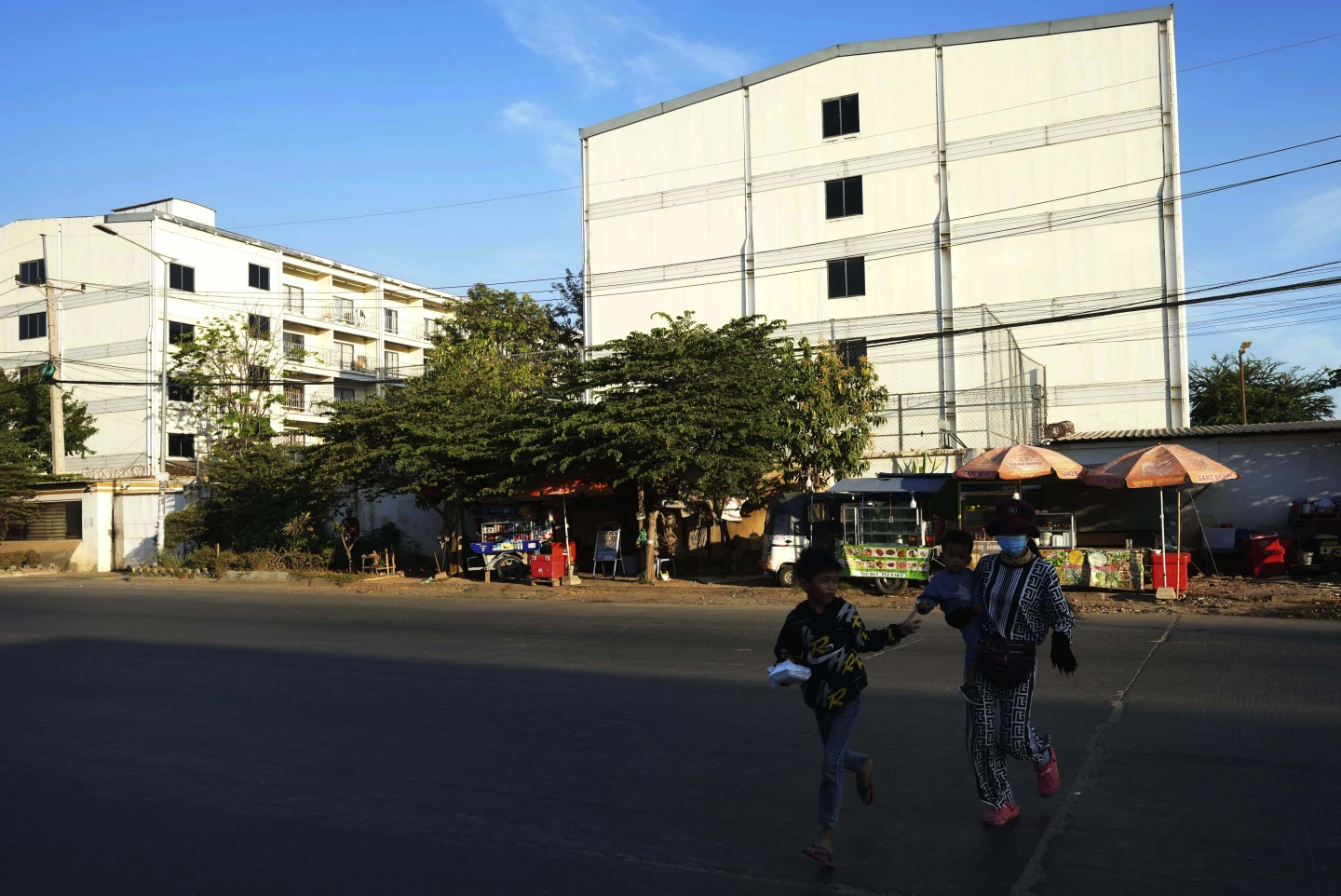
Cambodia is a prime example of a country within ASEAN that severely suffers from human trafficking. Amnesty International believes that the government is ignoring them due to the large amount of modern slavery happening in Cambodia. These human trafficking activities happened from online job scams, where job advertisements posted on online platforms offer high-paying jobs that require minimal experience, attracting numerous job seekers, especially fresh graduates. Once they are accepted, the victims are forced to work in isolated buildings with little to no payment and freedom. While on the other hand women and children are one of the largest number of human trafficking victims where most are kidnapped for sexual purposes. UN Women also stated that every year there are 225,000 amounts of women and children trafficked to Cambodia. Analysts believe that this happens due to the lack of border controls conducted by the Cambodian government and also ASEAN member states, followed by the economic problems suffered by ASEAN citizens. Hence this is a very urgent issue that needs to be tackled by the ASEAN government.
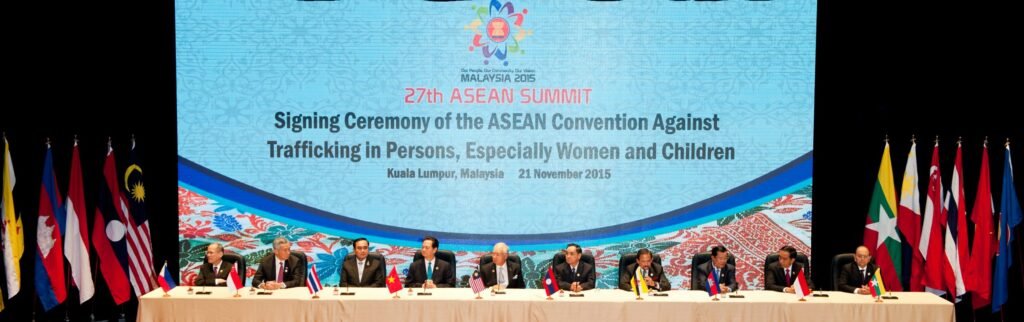
Signing Ceremony of the ASEAN convention Against Trafficking in Persons, Especially Women and Children. Source : asean.org
Aside from multilateral cooperations conducted in ASEAN, there are also bilateral cooperations conducted with Cambodia to counter the past human trafficking incidents. One example is the signing of the combating human trafficking and cyber crime Memorandum of Understanding (MoU) between Indonesia Minister of Immigration and Correction Agus Adrianto and Cambodia’ immigration officials. Agus Adrianto claims that this MoU has provided a great impact in both countries’ security, since there are already 500 human trafficking victims that were able to return home to Indonesia. However, this still led to a question, is 500 victims enough, and are there actually more victims or to be precise more than 500? Now it is very true that this MoU can be a great foundation to combat this issue especially in terms of the cyber crime realms of human trafficking. However this foundation will not work if the strengthening of securities, and rule of law is not strengthened by Cambodia itself.
If we take a deeper observation towards the Cambodian government, rule of law tends to be lacking. This was proven due to the continuation of human trafficking activities that made Cambodia an international hub of it, where the Cambodian police authorities are believed to be lacking in law enforcement and maybe in a rough word; corrupted. Hence it is very important for the Cambodian government to improve law enforcement in order to eradicate these criminal acts. These may involve reforming the Cambodian police authority, and also providing a transparent platform where the Cambodian and global citizens may see how far their government has reformed its law enforcement.
Even though Cambodia takes the highest responsibility of solving this issue, ASEAN member states must all collaborate to strengthen border controls and regional security in order to avoid more ASEAN citizen becoming a victim of scams and human trafficking, in which as the writer, I do hope that nations such as Indonesia, Philippines, Thailand and Malaysia would actively cooperate with Cambodia to find solution or catalyst to stop these crimes, to avoid more casualties and victims from every ASEAN member states. Aside from strengthening law enforcement by the Cambodian government and also cooperation between ASEAN states, every nation in Southeast Asia must increase its economic capacity and also provide its citizens with sustainable needs. This must be conducted to avoid more citizens getting lured into human trafficking traps, especially knowing that victims are mostly successfully manipulated with the promise of economic well-being.