The Conservative and populist Bhumjaithai (BJT) party led by incumbent prime minister Anutin Charnvirakul came up on top in Thailand’s three-way race for seats in the lower house on February 10th. Among 500 seats, the BJT bagged around 194 seats, the progressive People’s Party (PP) secured 116 seats while the Pheu Thai suffered the heaviest loss by only winning 76 seats. The results shocked domestic and global observers alike.
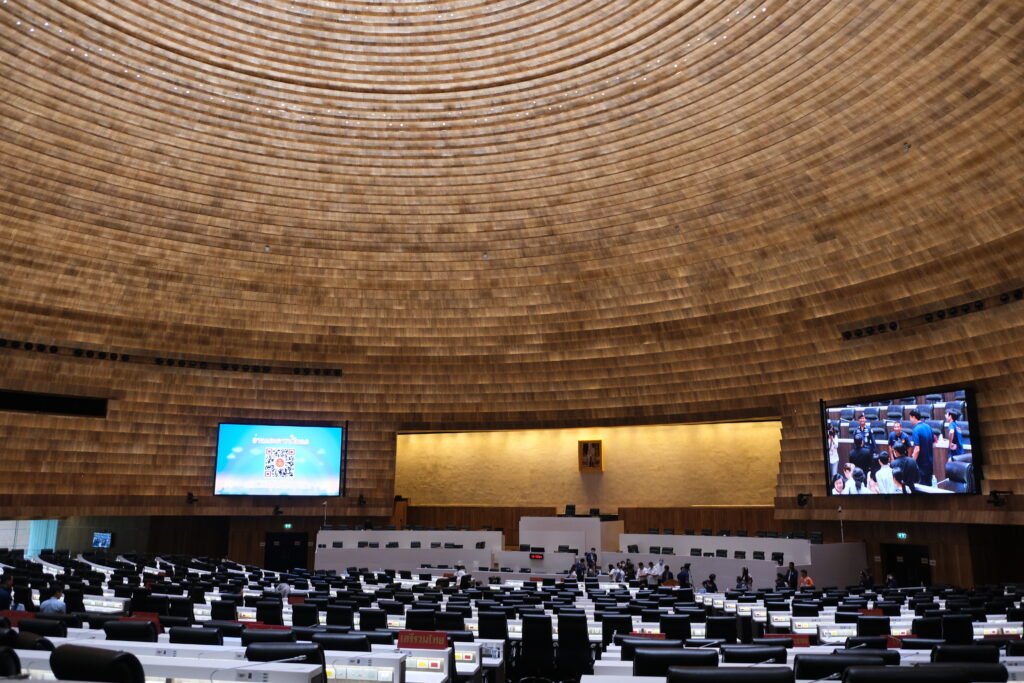
Thailand’s lower house. Source : Wikipedia
The new government will likely be a coalition between the BJT and its current rivals, led by Anutin. Many point towards BJT’s nationalistic rhetoric amidst the border skirmish with Cambodia for its victory. But that barely scratches the surface, a closer look at the competing parties and Thailand’s political and economic climate reveals why the BJT won.
In the past 3 years, Thailand had 3 different prime ministers and its economic growth remained at 1.5% while its Southeast Asian neighbours enjoyed 5 to 6% annually. This is chiefly due to high household debt and its tourism sector struggling to recover to pre pandemic levels. The BJT promised to fix just that.
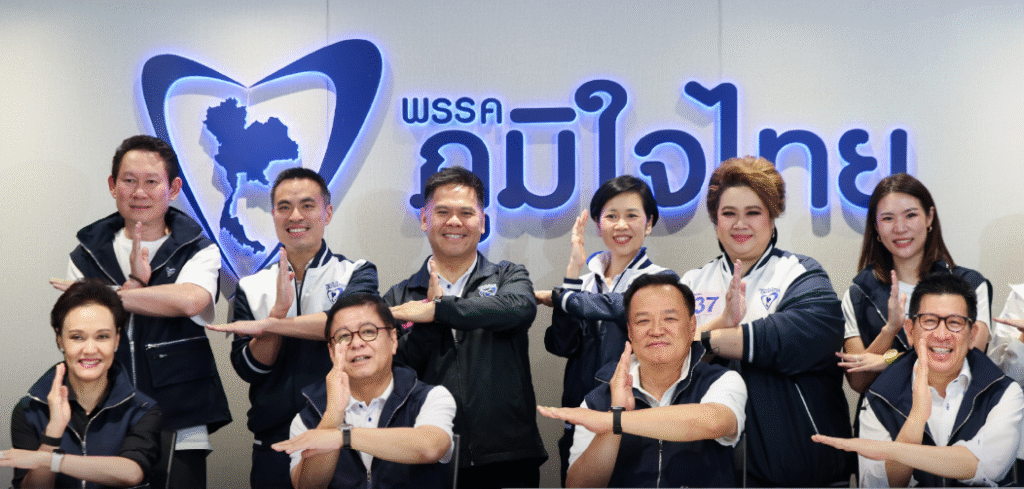
Incumbent Prime Minister Anutin Charnvirakul and his coalition. Source : X (Bhumjaithai_TH)
With incumbency already under his belt, Anutin and the BJT laid out the “10 plus” plan to restore confidence in the economy and stimulate growth. The plan chiefly focused on reducing cost of living and boosting investment and exports. Economic technocrats and well known business figures were recruited to the coalition as well. It was implied to voters that these personalities will be holding important offices in the upcoming coalition.
Aside from clear cut campaign promises, the BJT used its access to political families network that extends to rural areas. This network was gained from veteran politicians that defected to the BJT from smaller parties, an advantage unavailable to the untested PP whose campaign appealed mainly to the urban youth.
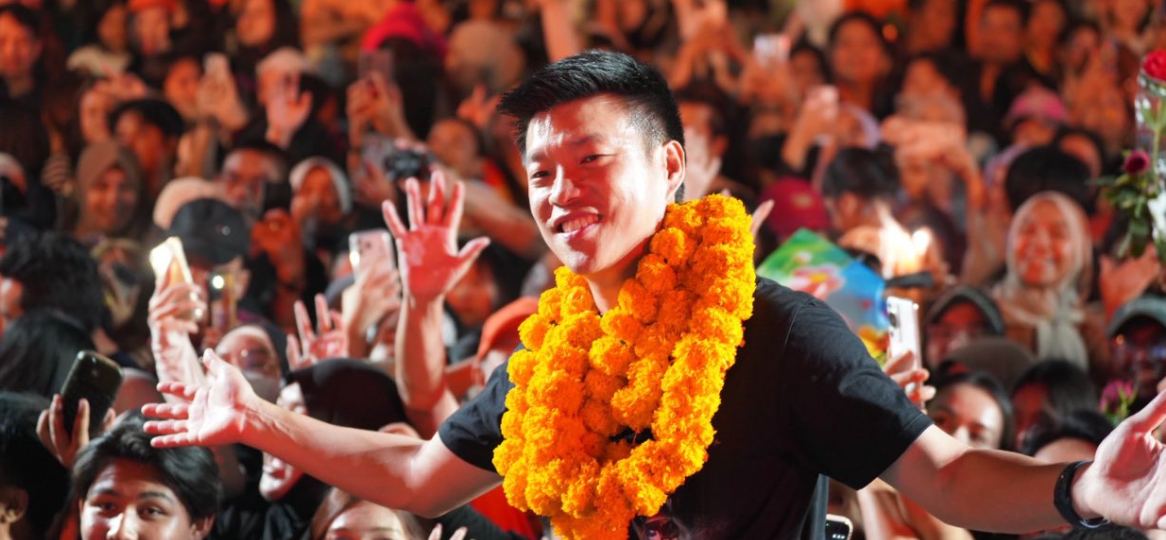
People’s Party leader Natthaphong Ruengpanyawut with his supporters. Source : X (@PPLETHAI)
Other blunders from the PP and Pheu Thai can be credited for BJT’s victory. Despite promoting itself as a reformist party, the PP supported the royalist Anutin’s bid to be the incumbent prime minister last September in exchange for amending the constitution. This made the PP look ideologically inconsistent which annoyed a sizable chunk of its supporters, even more so when the BJT did not hold their part of the bargain in amending the constitution.
Once an election winning machine, the Pheu Thai party suffered heavy blows. Being closely associated with ousted Prime Minister Paengtontarn Shinawarata and her political family, the party was a victim of the “uncle effect.” Leaked audio between Paengtorn and former Cambodian prime minister Hun Sen exposed her calling the elder Hun “uncle” and her own generals as the “opposition.” A scandal that effectively killed her and Pheu Thai credibility.
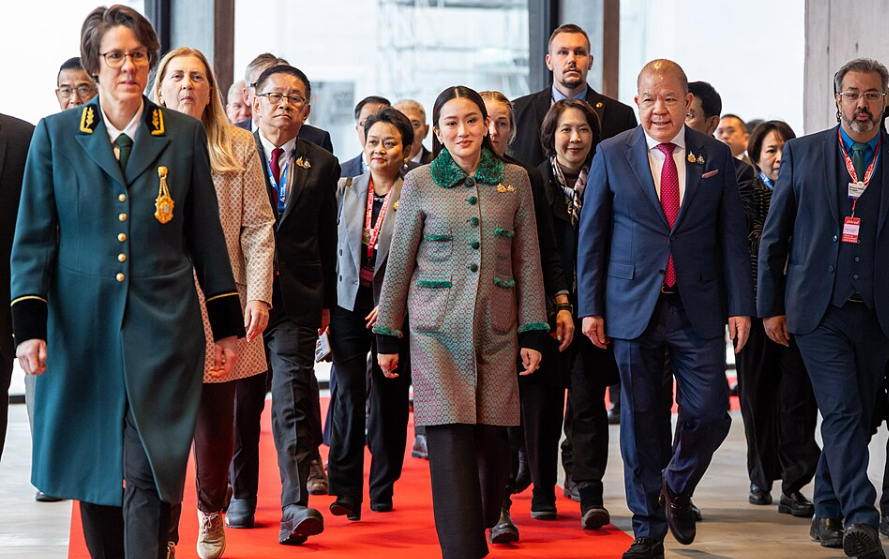
Former Thai Prime Minister Paetongtarn Shinawatra in Switzerland. Source : Wikipedia
Aside from these, PP’s and Pheu Thai’s campaign promises were plain unpalatable to the wider population. PP essentially failed to read the room with their campaign promise centered around structural change and reform while the majority of Thais were hungry for stability. Meanwhile, Pheu Thai’s promise to give 310 USD in digital cash handout to every eligible Thai aged 16 and above were met with lukewarm reactions.
In short, clear cut promises that gave into the Thais’ demands, deep connections to rural power brokers coupled with their rival’s self sabotaging behavior led to the BJT’s eventual victory. BJT’s position in the lower house is secured and Anutin is set to continue his prime ministership after the election in the coming months. However the question remains if Anutin and his cabinet can govern and finish a complete term.