On February 13, Myanmar’s junta ordered Timor Leste’s Charge De Affairs to leave the country within a week. The expulsion comes from Dili’s decision to accept a criminal case against the junta from the Chin Human Rights Organization (CHRO) which led to Dili opening legal proceedings against the junta for war crimes and crimes against humanity. A senior prosecutor was assigned to the case. The CHRO submitted the criminal case through the principle of universal jurisdiction. The criminal file allegedly details evidence of the Junta carrying out gang rape, massacres, slaughtering religious officials and hospital airstrikes.
This marks the first time that an ASEAN Member State (AMS) opened legal proceedings against another. Despite this unprecedented event, the only reaction came from the junta itself that accused Dili for violating ASEAN’s principles and ASEAN Parliamentarians for Human Rights (APHR) that praised Dili’s move.
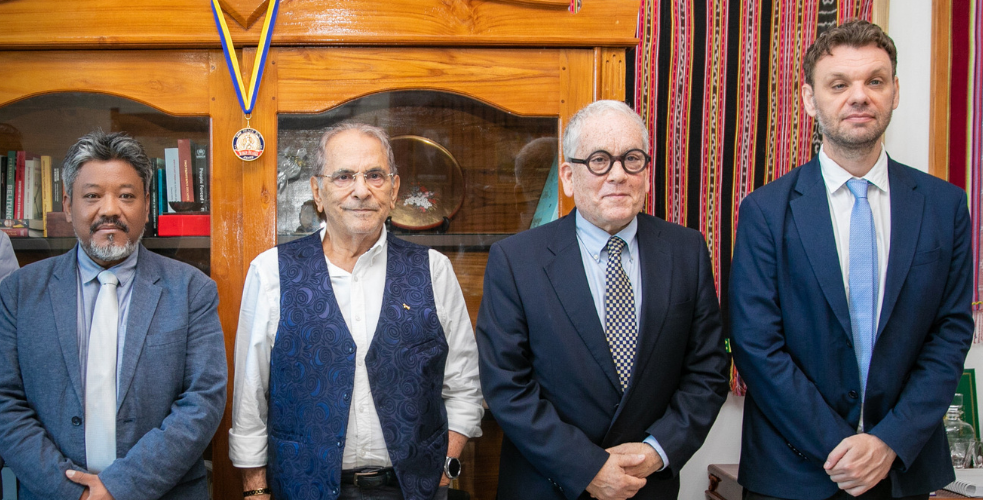
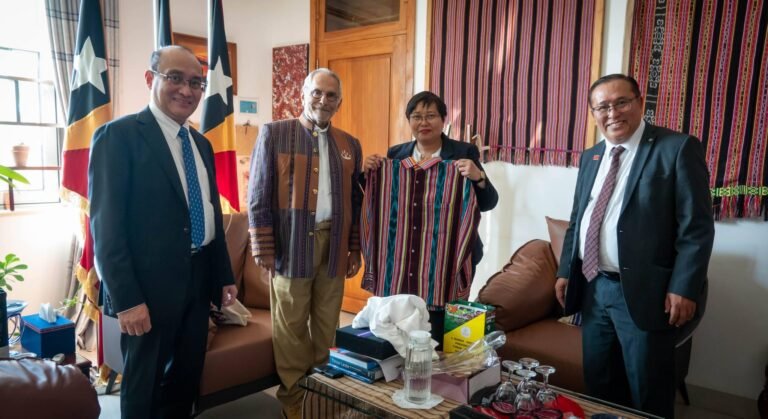
Members of National Unity Government (NUG) meets with President Jose Ramos Horta. Source : nugmyanmar.org
Dili’s decision to open legal proceedings on the junta contrasts against the majority of AMSs that are willing to accept the junta as a legitimate government in the interest of stability following the elections that ended in late January. It also further adds pressure on the junta that is currently defending itself from International Criminal Court prosecution over genocide allegation against the Rohingya minority. The case is especially more confusing considering that China, a donor to Timor Leste’s development projects, also openly endorses the junta out of need to secure its investment in Myanmar.
Although observers claim that it is unlikely that other AMS will be moved by Dili’s decision, it still begs the question; what is Timor Leste’s true motivation? Why make such a bold move despite having been an AMS only for months.
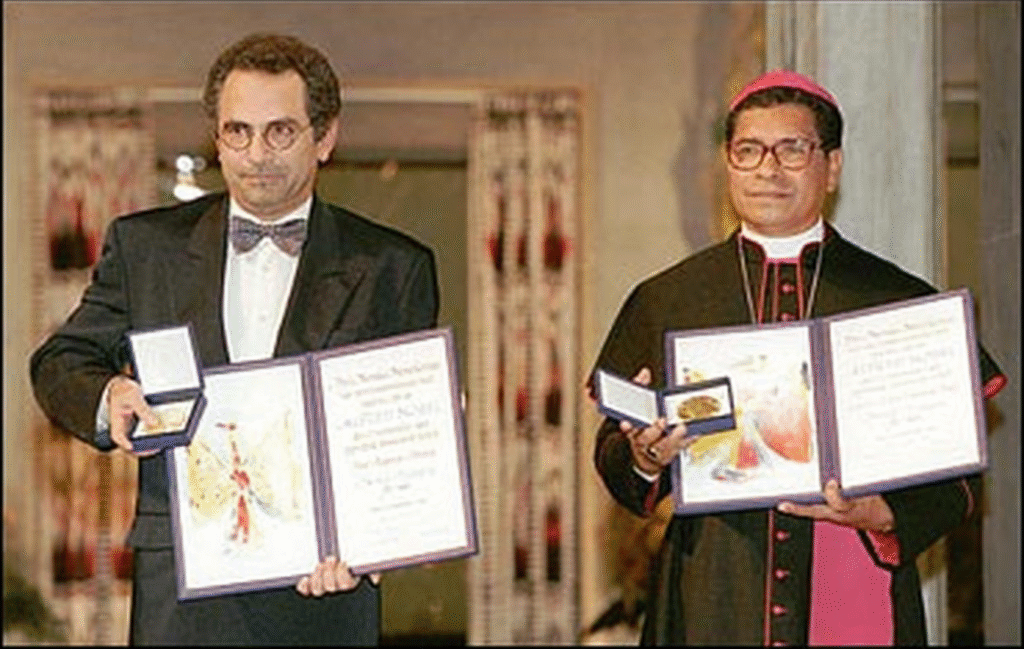
José Ramos-Horta and Timorese Bishop Carlos Ximenes Belo awarded the Nobel Peace Prize in 1996. Source : ramoshorta.com
When Timor Leste’s President Jose Ramos Horta’s personal principles are taken into account, Dili’s decision is not much of a stretch. Ramos Horta’s political career is defined by championing human rights and democracy since Timor Leste’s independence movement. His efforts in contributing to a peaceful solution to conflict in Timor Leste 1996 won him a Nobel peace prize, he is also one of only few sitting Southeast Asian head of states to publicly support LGBT rights.
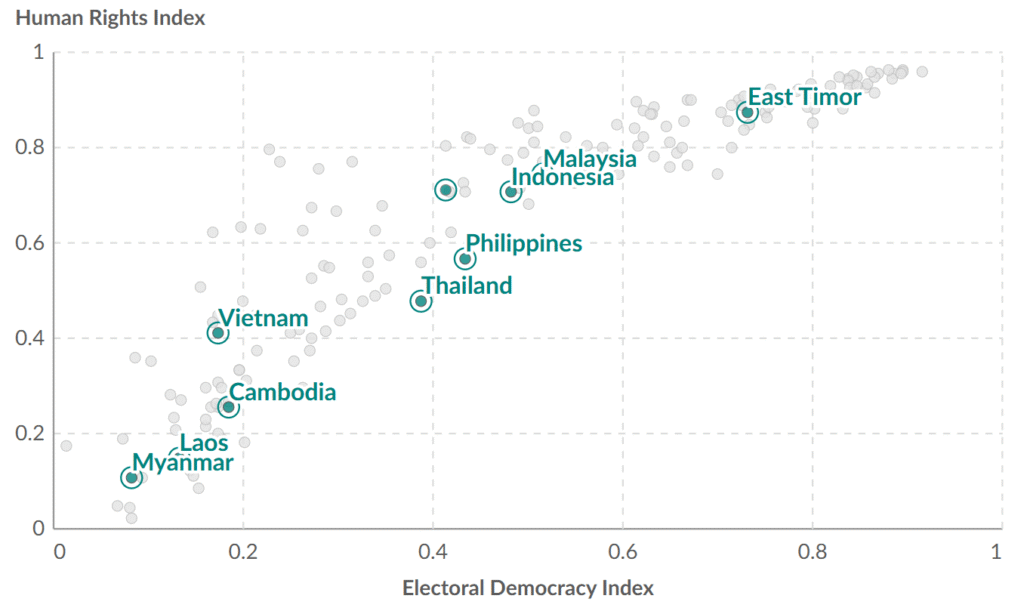
Aside from Ramos Horta’s personal conviction, Timor Leste’s foreign policy could simply be reflecting its establishment’s values in upholding human rights and democracy. According to Our World in Data, a UK based non profit, Timor Leste ranks the highest among Southeast Asian countries in the electoral democracy and human rights index by a long shot as of 2024. Its score even rivals South Korea’s.
Human rights and electoral democracy index in a chart. Source : ourworldindata.org
However if Timor Leste’s history with Myanmar is considered, this simply could be another addition to their tit for tat episodes. In fact this is not the first time a Timorese senior diplomat was expelled by the junta. In 2023, Timor Leste’s Charge De Affair was expelled for engaging with an opposition group, the National Unity Government (NUG). In 2025 Myanmar took a step further and objected to Timor Leste’s accession to ASEAN. Timor Leste accepting the criminal file from CHRO could be its way of taking a swing at Myanmar knowing that the political cost will be low due to Myanmar’s limited capacity as an AMS.
Ramos Horta’s personal conviction, values championed by the Timor Leste’s establishment, a bitter history between Timor Leste and Myanmar or a little bit of all it could be Timor Leste’s motivation behind its decision. True motivation behind is still up to debate much like the likely outcome of this unprecedented event.