
Editor – Southeast Asia Analyst.
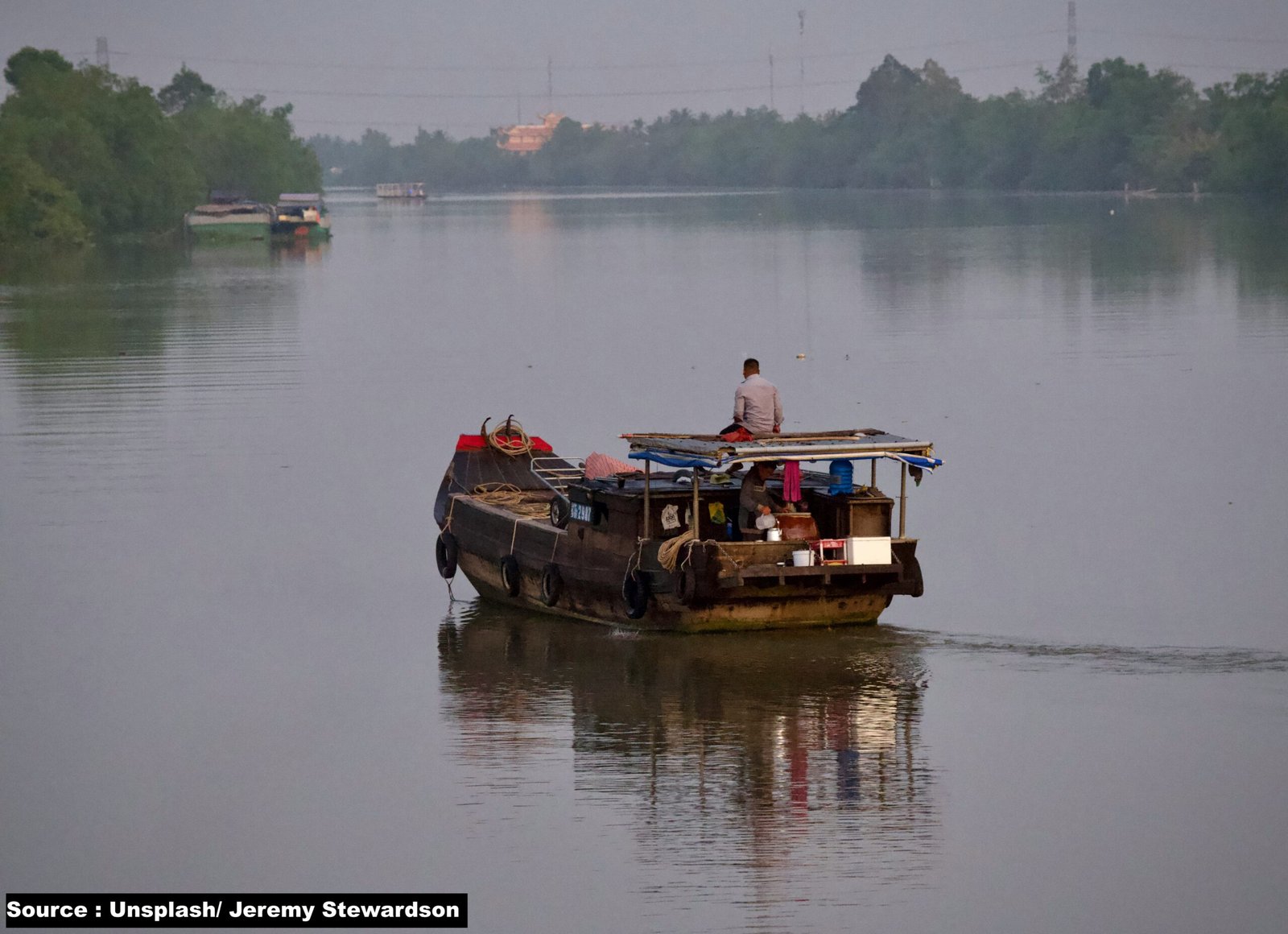
Over the past two decades, Vietnam became a major production hub for global companies. Many foreign companies invested heavily in Vietnam for factories, supply chain and industrial plants, creating economic boom and rapid industrialization in many regions. Undoubtedly, this influx of capital creates opportunities, and also demand for large industrial zones. The construction industry is the largest consumer of sand as a key component in concrete, and additionally, construction-grade sand is crucial for reclamation. To meet this demand, the Mekong Delta has become a hotspot for sand mining, owing to abundant natural sediment and low transportation costs. As a result, the sand river mining became a key resource for Vietnam’s development.
Data from the Mekong River Commission indicate that annual sand extraction in the Mekong Delta can exceed 40.2 million tons. Though there is an effort for restoration, only 6.96 million tons of sand are deposited into the Mekong Delta every year, which mostly will end up in the sea regardless. This difference results in a shortage of 39.6 million tons of river sand annually. Some researchers have concluded that unless there’s a change in the supply and demand of sand in the delta, the remaining sand reserves will vanish by 2035. This extensive sand mining led to widespread bank erosion and collapse around the riverbank.
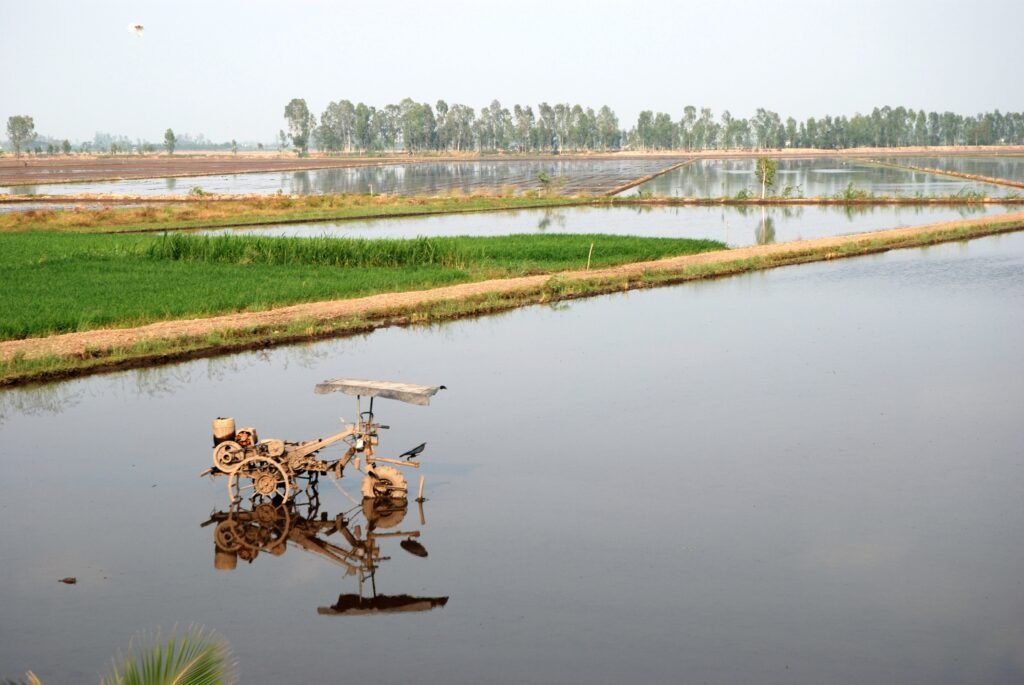
In Vietnam’s Mekong Delta, riverbank erosion led to houses falling into the river, and official statistics indicate that between 2018 and 2020 alone, approximately 1,808 houses sank into the river or sea due to erosion. It is equivalent to five villages being wiped out completely, with total damage around VND 200 billion or 8,6 million USD. With the latest report in 2025, there were about 10 houses plunged into the river due to erosion. This continuous collapse creates human security problems where communities are forced to relocate, people lose homes, and many roads & farmlands are destroyed. Additionally the sand extraction led to saltwater intrusion. Environmental degradation in the river has worsened the saltwater intrusion from the sea, threatening agriculture in the Mekong. The saltwater intrusion invaded rice fields, killing crops and eventually destroying the soil. The land damage due to saltwater intrusion is also often linked to drought. There are many phenomena recorded where the most severe droughts are linked or caused by the saltwater intrusion in the soil. There are ecological impacts of this as well. Fish breeding areas result in biodiversity loss, and the decrease in fish population in the river.
This land loss crisis demands proper regulations and laws. However, even after monitoring and regulations from Vietnam’s government, there are many reports that, even when the mines are licensed, the operations are often still a mystery to the local community. After all, sand mining firms are not required to publicize their operations, sand sales, and profits to the public except to the government inspection team. A former employee in a sand mining firm revealed, “They exploit 4,000-5,000 cubic meters (4,800-6,000 tons of sand) per day, but only issue invoices and record 200 cubic meters in the logbook, which means only about 4-5% have invoices. The rest are sold loosely, without papers.”. They also admit that even if they are issued a legal permit to mine in site A, they would mine in sites B, C, and D, intentionally leaving sand on site A, so if the inspector comes, they would extend the mining license. This raises a question: how far will the government tighten the regulations to protect the communities?
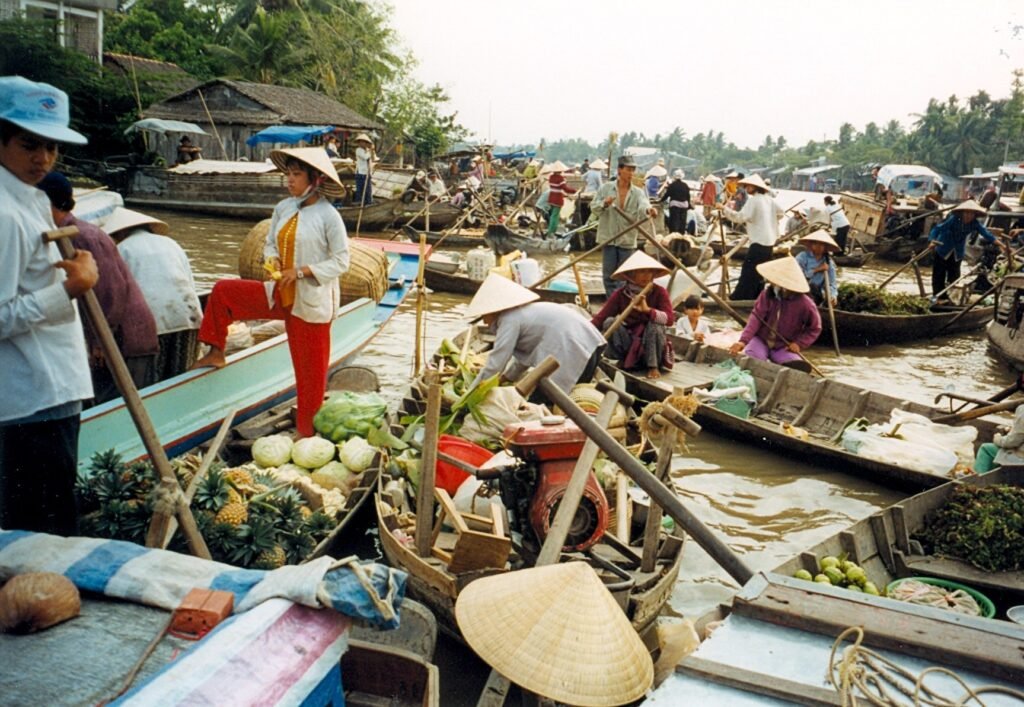
For communities that live by the riverbank area, the consequences are not some abstract environmental statistics, but the daily reality they face. Homes collapse into the river without warning, and families are forced to relocate from the land that sustained them for generations. As one resident put it, “They scoop up the sand for sale, and we bear the consequences.” But as Vietnam continues to build cities, the question remains: how long can the Mekong endure being eroded?
Stefani Sanjaya is a MBA Student in Univeristas Gajah Mada