Although Min Aung Hlaing and his inner circle were insensitive to reputational damage since the coup in early 2021, the junta posing as a civilian administration is now taking a different approach. Legitimacy is one of the primary elements that a government needs to ensure that it receives its people’s support and is recognized by its foreign counterparts. Hlaing and his men are now proactively chasing this and experienced varying degrees of success.
First sign in pursuing legitimacy came when the junta announced plans to hold a 3 part election in late 2025 to ensure smooth transition into a civilian government. Despite the claims, several factors raised red flags; the military decided on which parties could join the race and unsurprisingly Aung Sa Syu Ki’s National League for Democracy was barred. Worst yet, the chance to vote was only given to residents in junta controlled areas which only accounted for less than a quarter of the country’s land mass.
Foreign observers saw this as a new hope or at least a step towards stability in the war torn country. Despite ASEAN’s firm refusal to recognize election results, neighbouring countries such as Vietnam, Cambodia and Thailand sent observers eager to accept a chance for stability. However, domestic informants saw it for what it was, a classic method in the playbook for autocrats. None the less their weariness compelled them to accept the results.
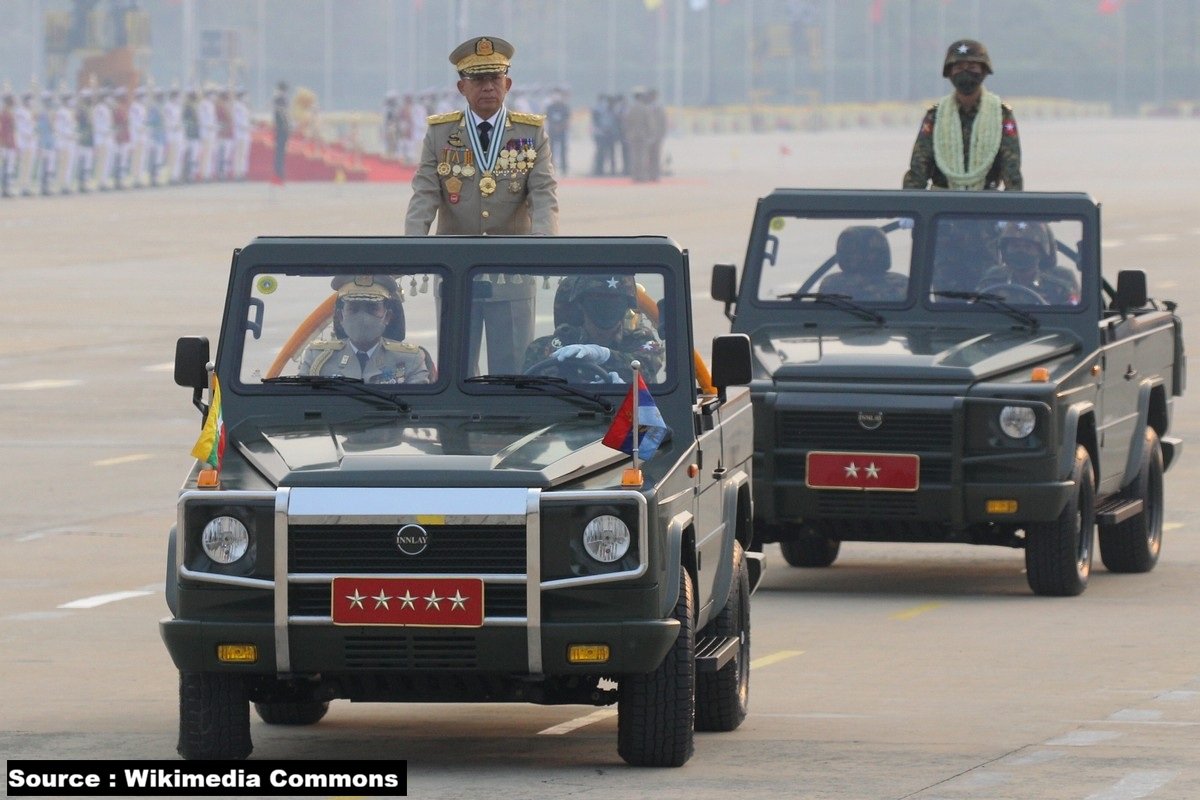
With the election over, It took less than 3 months for the military backed MPs to elect Hlaing as Myanmar’s 11th president who packaged himself as a leader of a civilian administration returning to a democratic path during his inauguration 10 April 2026.
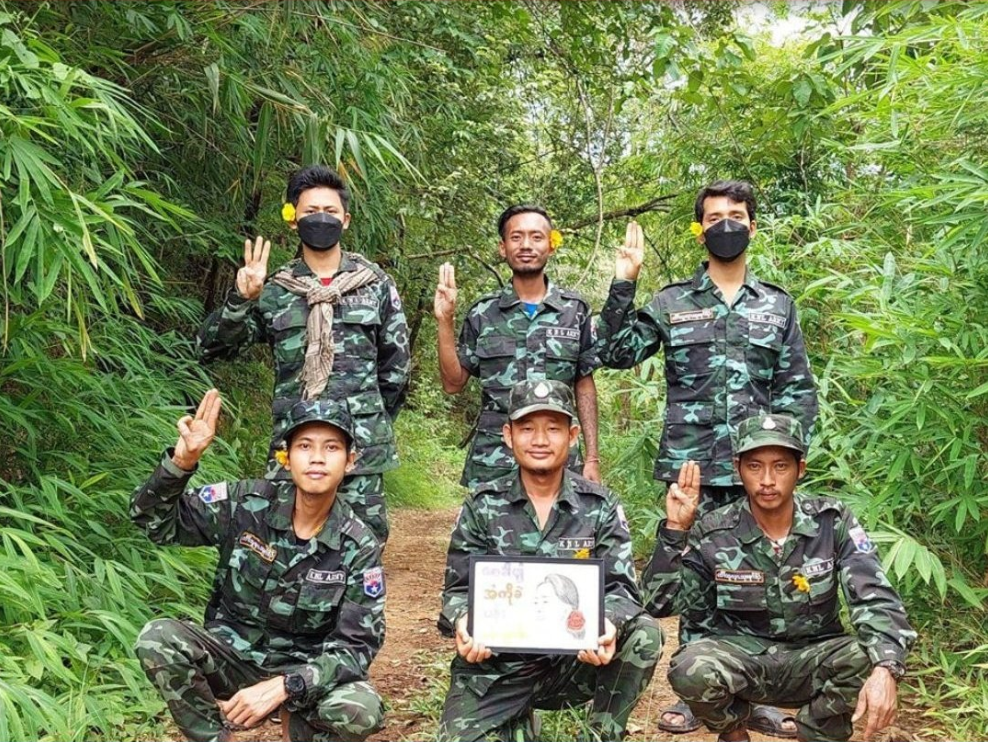
Members of Karen National Liberation Army. Source : X.com/ @NantEiThandar
In an attempt to boil down the diverse oppositions to a manageable unit, Hlaing extended a vague olive branch to the oppositions that mostly consisted of Ethnic Armed Organizations (EAOs) to partake in peace talks. The organizations were urged to align their aspirations to that of the country and refrain from making “unrealistic” demands which will sustain and strengthen only itself. Conditions to the peace agreements remained murky and were given a narrow deadline that expires on July 31st. The leading opposition National Unity Government (NUG) declined to partake in talks claiming that the offer was “aimed at prolonging people’s subjugation under military rule.”
Finally, to appease the public, Hlaing reduced sentences on the wildly popular Aung San Suu Kyi and her ally and former president Win Myint was pardoned under strict yet unclear conditions. These decisions were part of the government’s move that granted amnesty to over 4000 prisoners. The decision came right after Myanmar’s traditional Thingyan New Year. Rights groups urged foreign observers to not view this as leniency and continued to demand for Suu Kyi’s proof of life.
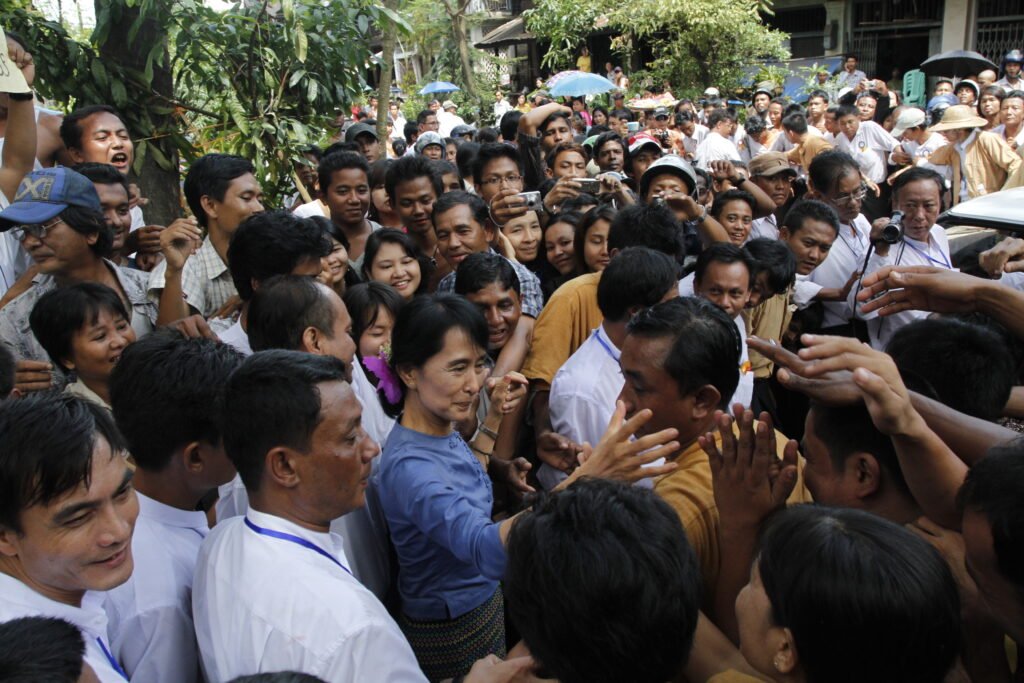
Aung San Syu Kyi meeting her supporters in 2011. Source : Wikimedia Commons
Essentially these are easy gestures that earn hope from outsiders and gain tolerance from Myanmarese who yearn for stability in the country, but it does not create any meaningful change.
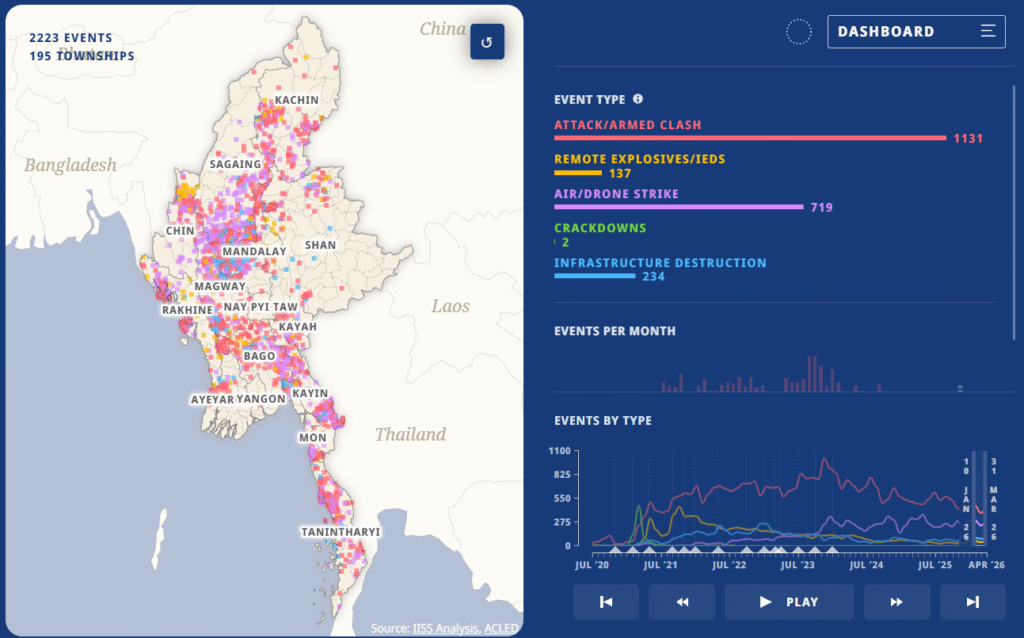
Interacting map showing conflict frequency in Myanmar from January 2026 to March 2026. Source : IISS
Behind the facade, the military’s counter-offensive is escalating and gaining ground. With fattened ranks through conscription and support from Chinese made drones conducting airstrikes at civilian targets, the military punched its way through the Mandalay region that lies at the heart of the country. It is continuing to push north into Sagaing region, a vital trade hub that borders India. Naval blockades by the military are also ramping up in the Southern Rakhine state that faces the Bengal bay. The province with the Arakan Army (AA) is essentially getting choked from both sides. There were even reports of fishing boats being detained upon leaving the coast. Amidst the expansion, civilians are being looted for valuables by regime forces.
The juxtaposition between Hlaing’s speeches and the atrocities committed by his army is painfully striking. It only goes to prove there is no intention to truly democratize and the gestures are only performative assurance to gaining legitimacy from anxious foreign neighbours, it is not by mere coincidence that there were Thai, Chinese and Indian representatives during Hlaing presidential inauguration.
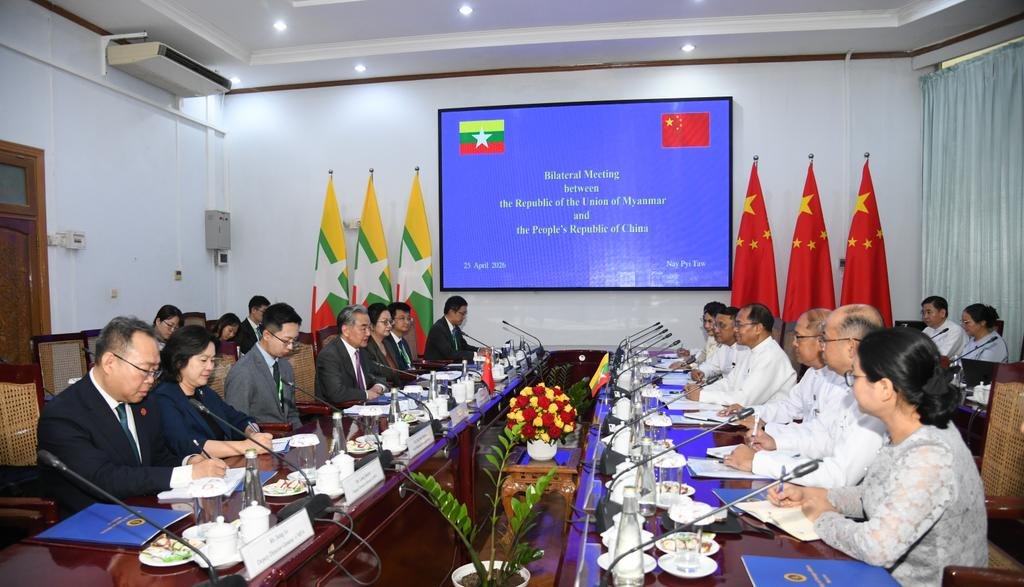
Mynamr’s Foreign Ministry and its Chinese counterpart. Source : X.com/ @MOFA_Myanmar
The new administration got itself in a risky position. By using instruments at its disposal, the new administration and the junta before it only sustained its dominance, refused to build industries or tend to its people’s grievances. As a result it got itself dangerously dependent on foreign approval and aid.
Faced with these circumstances, Myanmarese are not backing down, instead the opposite is happening. Over 200 CSOs gathered their voice and sent a collective open letter to ASEAN, urging them to not recognize the “pseudo regime” and to stop supplying weapons and jet fuels that are being used for airstrikes against civilians. Some right groups have gone as far to submit criminal files against the military to Indonesia and Timor Leste under the universal jurisdiction principle. The files detailed charges on mass killings, rapes and other war crimes the military conducted against civilians.
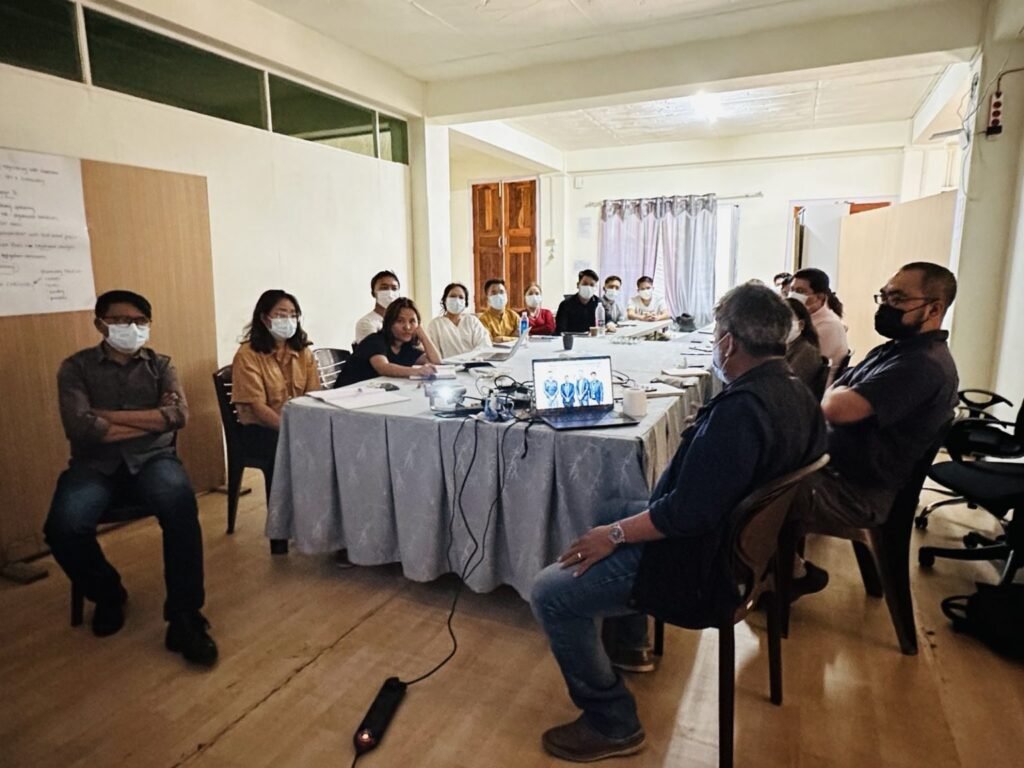
Chin Human Rights Organization members. Source : chinhumanrights.org
With the civilian organizations exhausting every possible method from peaceful protest and reaching across borders to taking up arms themselves, the ball is now in Southeast Asia’s court to address the Myanmar civil war.
This must serve as a wake up call to ASEAN member states to approach the situation in Myanmar with more determination. While some autocrats in Southeast Asia could welcome another authoritarian government into the neighbourhood, they must realise that they are held hostage by the situation in Myanmar. Not only is it a blow to ASEAN’s credibility but it prolongs the idea that Southeast Asian states have no agency and are dependent on foreign interference.
Manh Chien Nguyen is a Mainland Southeast Asia columnist for Southeast Asia Analyst, based in Hanoi.