
Editor – Southeast Asia Analyst.
A trainwreck in east Bekasi district took place on 27th April, 20:57 killing 15 and leaving 84 injured. The disaster began when an electric taxi stopped in the middle of the train track, failing to make it across to the other road before being smashed by an oncoming passenger train.
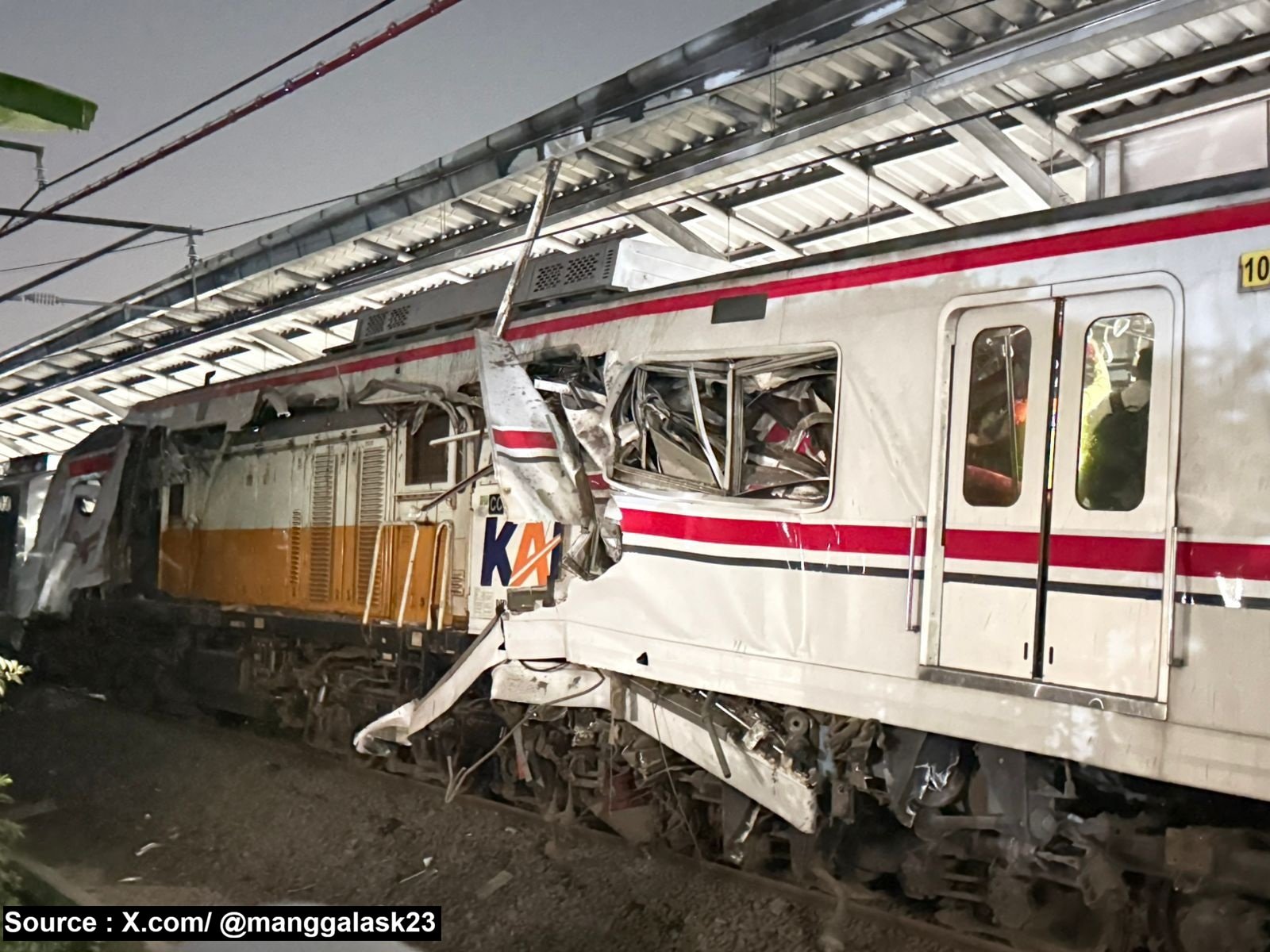
The crash resulted in the train on the adjacent track bound for Cikarang to stop at east Bekasi station, before the train itself was hit from behind by a long distance train travelling at 110 kilometers per hour. This resulted in the last carriage on the Cikarang bound train to splinter into pieces, injuring and killing passengers on board. With the last carriage on every commuter line train in metropolitan Jakarta reserved for female passengers, the death victims were all women. Rescue workers and commuter line employees soon rushed in to help the trapped victims.
It did not take long for the story to reach international headlines and the clips of the disaster to spread throughout various social media platforms. Netizens offered condolences to victims and their families while pointing the blame to the taxi that attempted to cross the train tracks despite seeing the lowering barricades.
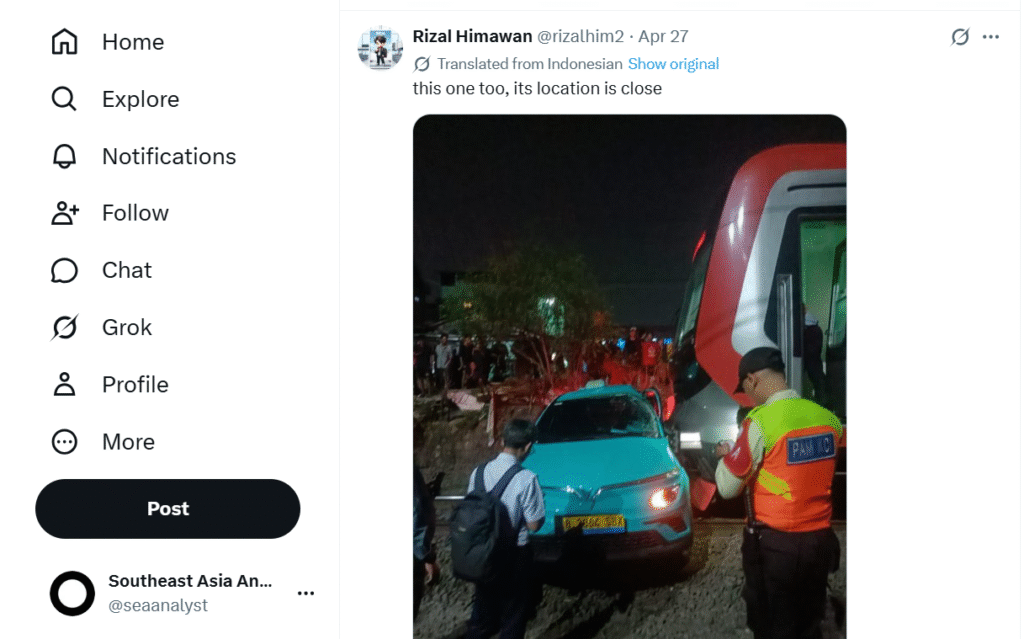
Hundreds of posts on X and Instagram revealed that the taxies from the same electric taxi company (Green SM) were involved with various similar accidents in the past where a taxi would malfunction and get smashed by a train.
Under such scrutiny, Green SM offered a public statement that insisted the accident is under investigation and transparency and safety remain their priority. The public statement as well came under netizens’ review who quickly pointed out there was no language that expressed apologies.

Car – train collision accidents are fairly common in the metropolitan Jakarta area with 1 accident occurring per week. Leading causes are inadequate barricades, car engine failure but also risky behaviour from drivers that believe they can “beat the train.” The sheer number of victims in the east Bekasi accident however makes it an outlier, thus garnering scrutiny from the public and swirling frenzy from the government.
President Prabowo made a visit to the accident site the next day. While speaking to reporters, he assured that the tragedy will be investigated and similar accidents in the future will be mitigated. He added an overpass will be built over the crossing point. Although there are some junctions that fully separates traffic from train tracks, high cost and dense urban areas hinders progress.

Ministers from his cabinet followed suit and provided their own statements to the public and reporters alike. Aside from the usual condolence and vow to “take care” of the accident, a few stood out. The transport ministry announced that the Green SM taxi operator will be summoned to conduct an evaluation.
Simultaneously, the communication and digital affairs minister urged the public to refrain from sharing sensitive information and hoaxes regarding the accident. On the other hand, a proposal from the women empowerment minister to move the female carriage to the middle of the train was ridiculed and dismissed as a half baked solution. The infrastructure coordinator minister as well rebutted this statement saying that, what matters is safety and not which demographic is placed at the back of the train.
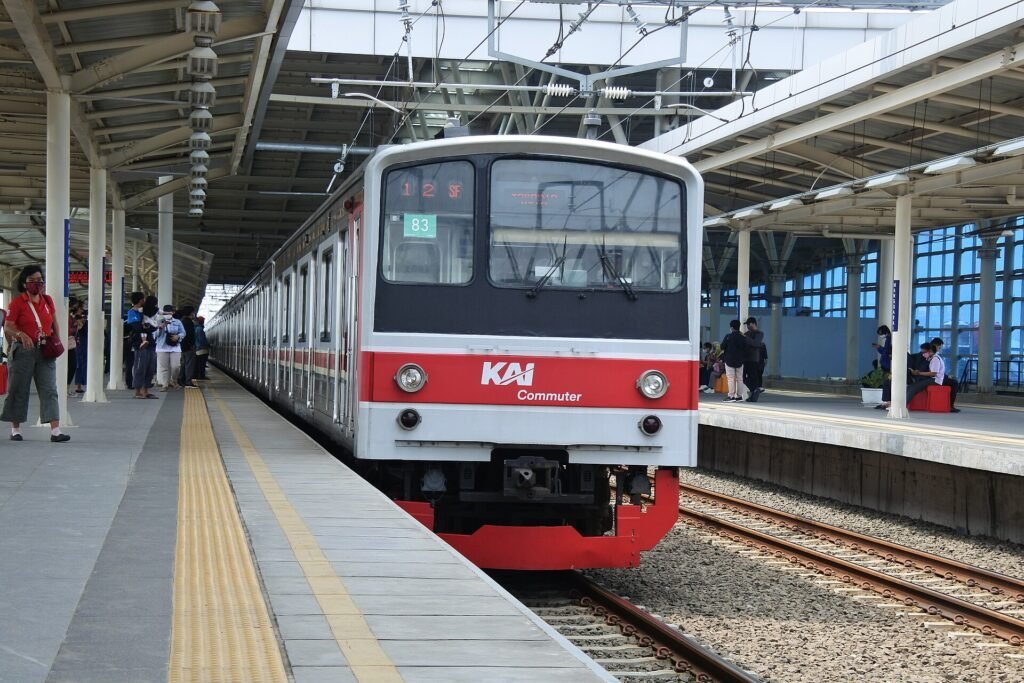
Amidst the focus on the accidents and concerns regarding plummeting credibility towards public transport, the accountability question still lingers. While the state owned railway enterprise promised financial support for funeral and medical aid to the victims and their families, no amount of compensation can bring back innocent lives lost to inadequate due diligence. As mentioned before, accidents such as these are fairly common, but they rarely prompt response or statements from ministerial level officials. Which begs the question, how many taxpayers must die before authorities spring into action?
The private sector is not free from criticism either. With Green SM taxis repeatedly being involved in traffic accidents, it is in the best interest for them to tighten screening procedures before hiring drivers. Not only will it regain public trust but it is a step towards a more sustainable business practice. Corporations must realize that cutting corners will only backfire.
As of writing this article, the victims are still being treated for their wounds in state hospitals and the shell of the last carriage remains in east Bekasi station.
Han Kyeol Kim is an editor in Southeast Asia Analyst.