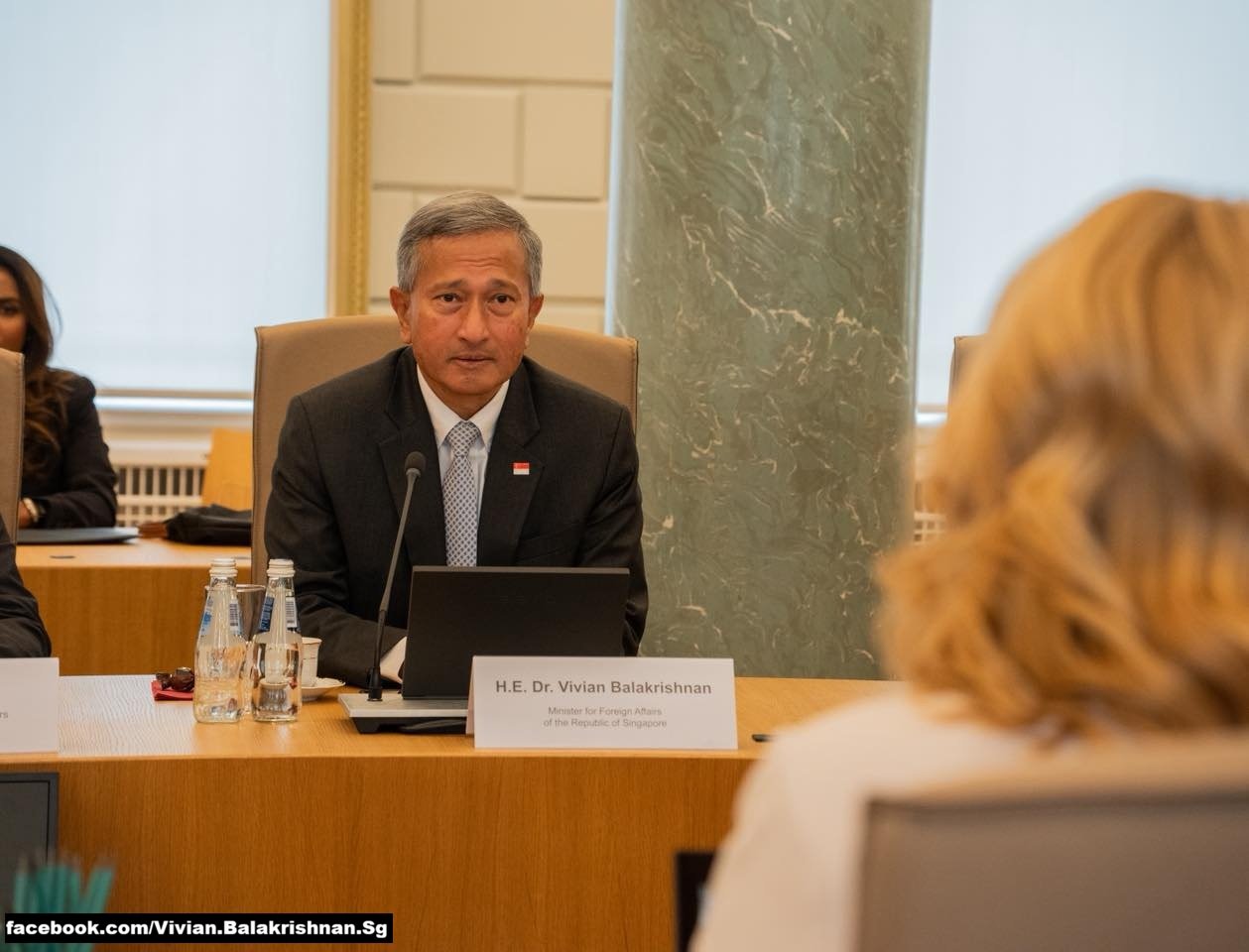
On April 7th, Singaporean Foreign Minister Vivian Balakhrishnan claimed that the government will not negotiate on safe passage for Singaporean vessels along the Hormuz strait with the Iranian government. While answering questions from opposition law maker, Fadli Fawzi, Balakhrishnan emphasized that passage through waterways is not a privilege but a right enshrined in the United Nations Convention on the Law of the Sea, to which Singapore is a signatory but Iran is not.
He likened the Hormuz strait to Singapore and Malacca strait as an international waterway and that negotiating passage from Iran will be “eroding” international law principles.
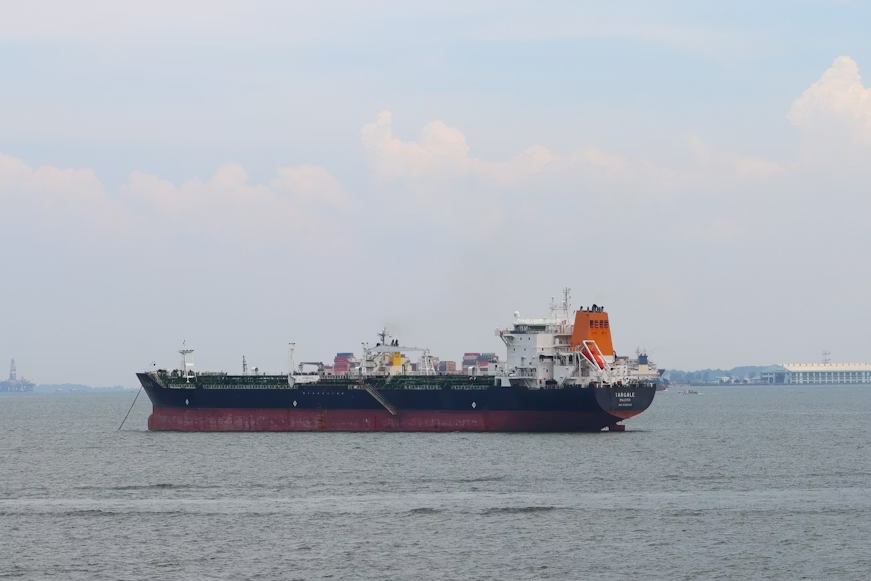
Vessel sailing through Singapore strait. Source : Unsplash.com (Alicja Ziaj)
During the same parliamentary session Balakrishnan also mentioned that the government is closely monitoring the situation in West Asia while the Maritime and Port Authority are maintaining contact with Singaporean shipowners and operators in the region. Balakrishnan added that Singapore would engage Iran in the future but leave out negotiations on safe passage through the Hormuz strait.
Singaporeans online generally agreed with Balakrishnan’s stance, admitting it was difficult yet “the right thing to do.” Some also commented on the consensus that Singapore is closer to the west anyway.
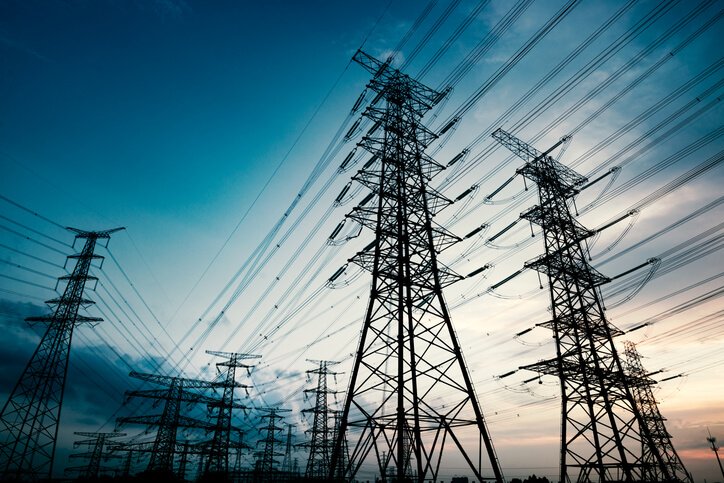
While Balakrishnan claims that the approach is based on principle and not obsession with international law or geopolitics, the decision could simply be a low hanging fruit that gives Singapore a chance to prove its credibility by showing its adherence to international law. Singapore’s power grid runs on LNG fuel piped in from Malaysia and Indonesia as opposed to crude oil shipped in from West Asia. These arrangements coupled with the rapidly increasing number of electric vehicles make Singapore less dependent on fuel that would have to pass through the Hormuz Strait.
Power grids in Singapore. Source : ema.gov.sg
Singapore’s stance shows a striking difference between itself and other ASEAN states’ reaction to blockade in Hormuz. Only through investing time and efforts from ASEAN foreign ministries with Iran, vessels from Southeast Asia were allowed passage. However Singapore’s diversified fuel source and modernized power grids gives it the luxury to adhere to international law.