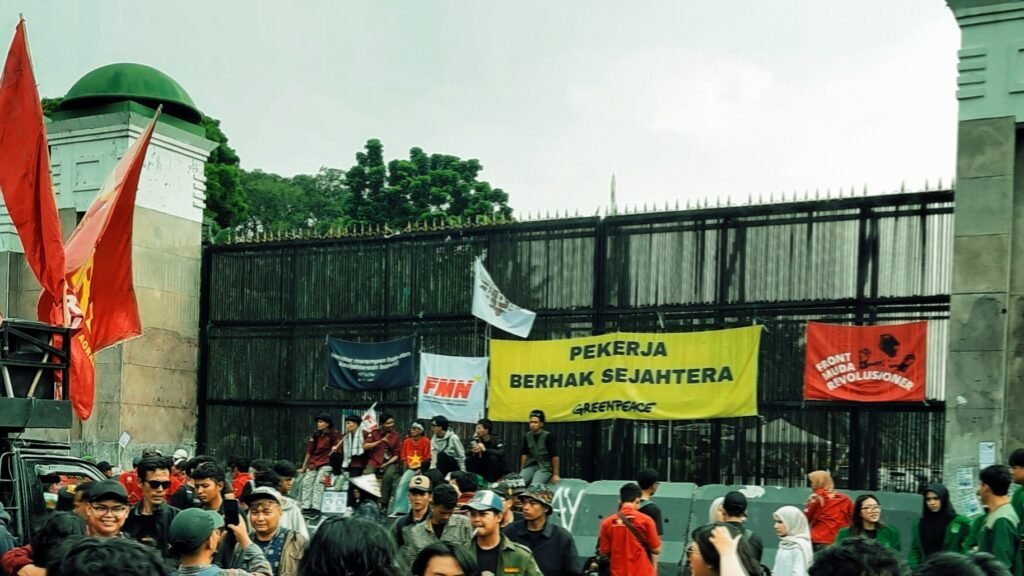
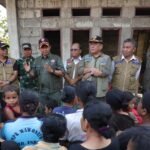
Trade unions led by Kongres Aliansi Serikat Buruh Indonesia (KASBI) (Congress of Indonesian Trade Union Alliance) staged a protest surrounding the parliamentary compound in Jakarta on May day, 1st May 2026.
“We from KASBI and GEBRAK (Gerakan Buruh Bersama Rakyat) (Labor and People Movement) will rally in front of the parliament building in Jakarta with an estimate of 10 000 thousand people.” said KASBI Chairman Sunarno on the previous day.
Sunarno emphasized that May Day is not simply a national holiday but momentum to reflect on commitment to equality, social justice and human dignity in the workplace. He also pointed out difficulties among workers to achieve full time employee status, a reality worsened by government regulation on expanding employment passed in 2021.
Workers rallied in front of the Indonesia’s parliamentary building on May day 2026. Source : X/ @ayamgota
Core demands from the workers included, regulations against union busting, mass firing, military involvement in civilian affairs and to revise labor laws.
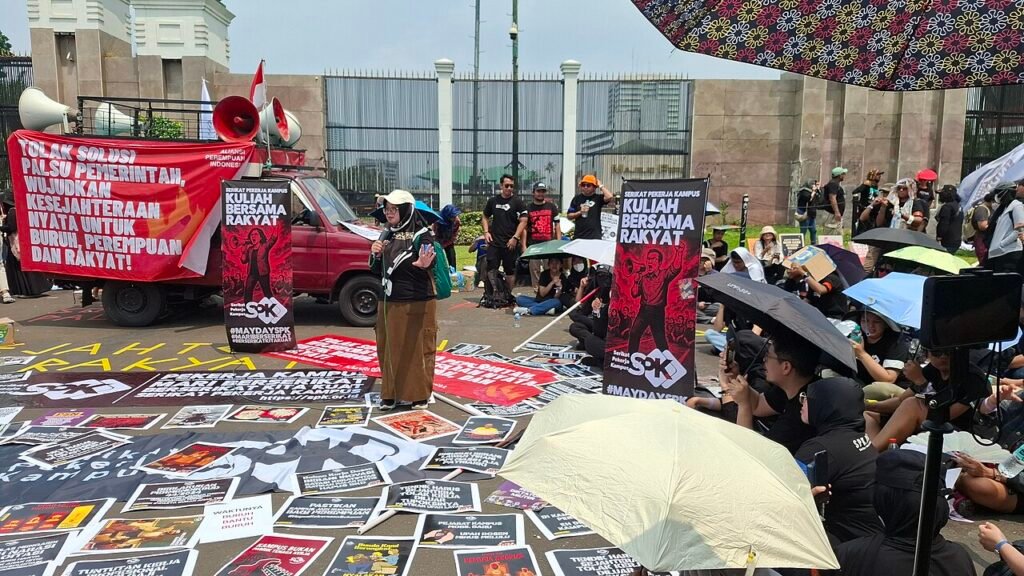
Dozens of Universities students decked out in their alma mater jackets joined the rallies while chanting “Long live university students, long live workers!” during their march. Some were carrying banners that showed an obscure hammer and sickle symbol, a forbidden icon in Indonesia.
The peaceful march around the parliamentary compound concluded with a music performance from the Jakarta based band The Brandals . “Even though we are workers, it is our taxes that pay for the government’s harmful programs such as the free nutritious meal program” said their vocalist.
“True labour movements have to be independent and not trampled by political interest or power politics which will disadvantage workers” Sunarno added, a possible jab at the labour party and Konfederasi Serikat Pekerja Indonesia (KSPI) (Confederation of Indonesian Trade Unions).
Campus workers union rallied in front Indonesia’s parliamentary building on May day 2026. Source : X/ @pekerjakampus.
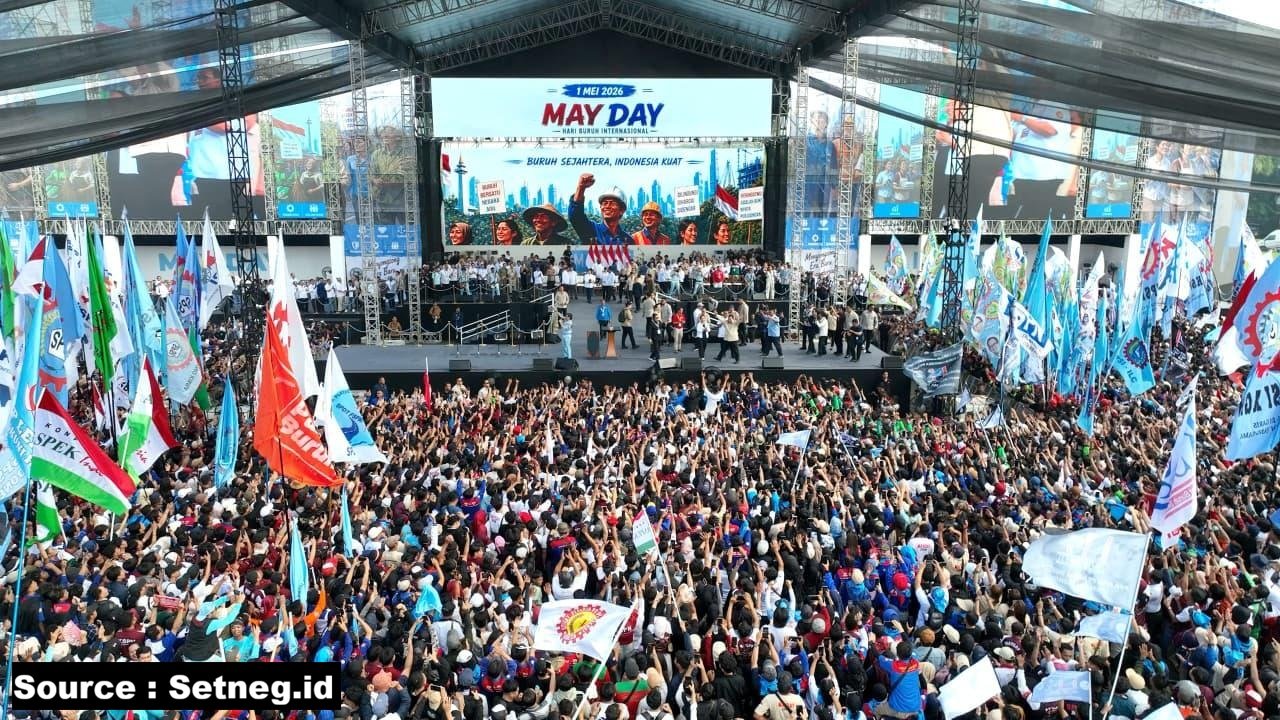
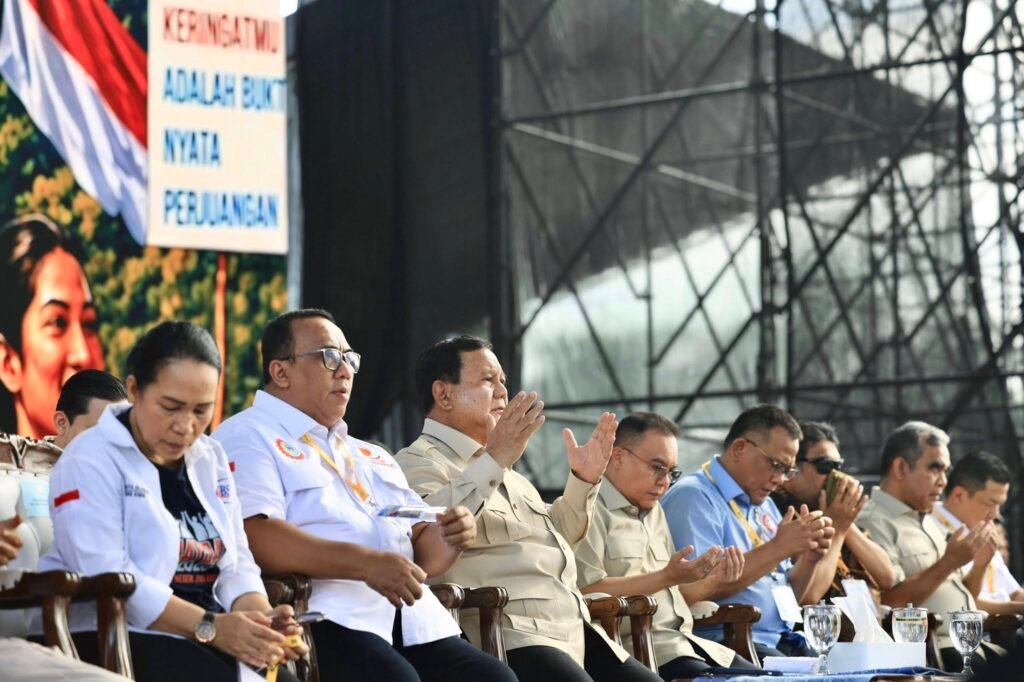
On the other side of the city around the national monument compound, a May day celebration orchestrated by The presidential palace, KSPI and the labour party bore a lighter and shallower tone. President Prabowo took center stage promising the workers day care their children and affordable housing around industrial areas. Cadres from participating labour unions and the labour party took turns addressing the crowd while mostly focusing on achievements made by the President.
President Prabowo and trade union cadres during May day festival at the national monument compound in Jakarta. Source : Facebook/ Prabowo Subianto
Government officials aided and military personnel handed out goodie bags containing rice, sugar, oil and other kitchen essentials to attendees, some of whom traveled for up to 7 hours from central Java province. The attendees voiced their aspiration to reporters, hoping for basic goods prices to no longer rise and to keep the state provided groceries to keep flowing. “The point is, I hope the government takes care of workers’ welfare,” said an attendees.
Amidst the seemingly charitable effort from the government, netizens criticized the goodie backs, calling them an the government’s instrument to distract workers from their struggles.
The division between the two major workers union organizations became known days prior when the labor party president, Said Iqbal publicized the decision to celebrate May day with Prabowo. Iqbal clarified saying that the decision was made so Prabowo can discuss proposals from the attending workers.
Prabowo proves to be the only Southeast Asia head of state to directly join May day celebrations in the region, making Indonesia’s may day celebration unusually state backed. This is not his first time leveraging the public holiday as his political platform as well. In 2025 he pulled a similar move. Prabowo’s direct engagement towards labor unions only started after winning the 2024 presidential election.
With the labor party remaining as one of only a handful political parties that refused to officially join Prabowo’s coalition, the collaboration between the 2 is concerning despite the labor party’s limited influence as it sends a message to neutral observers that soon enough more will be under Prabowo’s command.
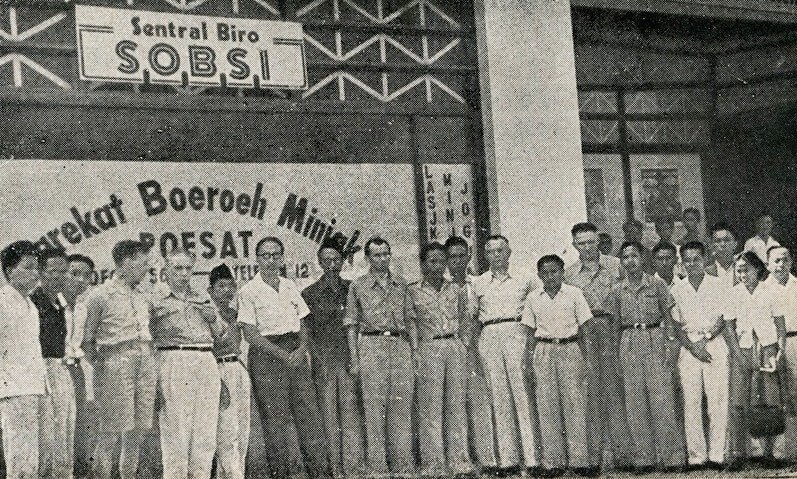
Despite labour unions existing since Indonesia’s independence era their functions and strength in numbers were mainly appropriated to support in maintaining the new republic’s independence as opposed to leveraging against capitalists for better pay and working conditions.
Trade union members gathered in Malang in 1947. Source : Wikimedia Commons
During President Soeharto’s 30 year governance cold war era, workers were forced to join Serikat Pekerja Seluruh Indonesia (SPSI) (All Indonesian Worker Union) a government controlled labour union designed to restrict independence and ideological deviation from the government. The government only legalized independent trade unions that created meaningful change after the reformation in 1998. Despite this, progress has been slow due to labour unions’ limited popularity and the government ignoring their demands to reduce risk in losing foreign direct investments. Labour unions’ position in Indonesia’s political economic chessboard is still fragile.
With many observers likening Prabowo’s administration to his father in law Soeharto’s, trade unions must stay vigilant to maintain their autonomy and strength in fighting for better pay, working conditions and job stabilities for workers.
Han Kyeol Kim is an editor in Southeast Asia Analyst.