Amidst the political chaos, Indonesia’ parliament whose majority is occupied by coalition party members passed legislation which will grant parliament power to remove members of the central bank’s board of governors.
Editor – Southeast Asia Analyst.
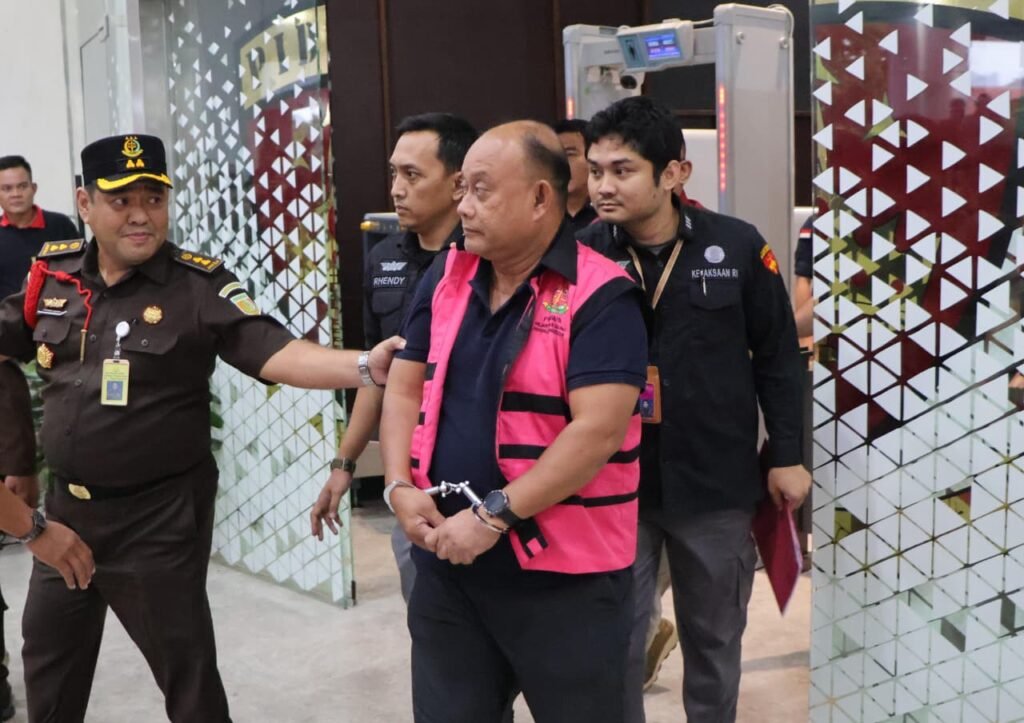
From June 2nd to 4th, Indonesia experienced what netizens are calling “Wild 72 hours.” Starting on June 2nd, President Prabowo removed the National Nutritional Agency boss Dadan Hindayan and his deputies from their position. In the early hours of the following morning, June 3rd, the prosecutor’s office took the trio into their custody under suspicion of corrupting the highly controversial free meal program funds. Video of Dadan weeping while surrounded by the prosecution officials flooded Indonesian social media.
Vice Immigration and correction minister, Silmy Karim turned himself in to the corruption eradication commission on the Night of June 3rd. Currently he is under investigation for involvement in receiving graft for accelerating documents processes for immigrants in Indonesia. Finally on June 4th the public fixed their focus and lamented over the Rupiah’s exchange rate that stands as 1 USD per 18,000 IDR.
Former head of National Nutrition Agency Dadan Hindayan under prosecutor custody. Source : kejaksaan.go.id
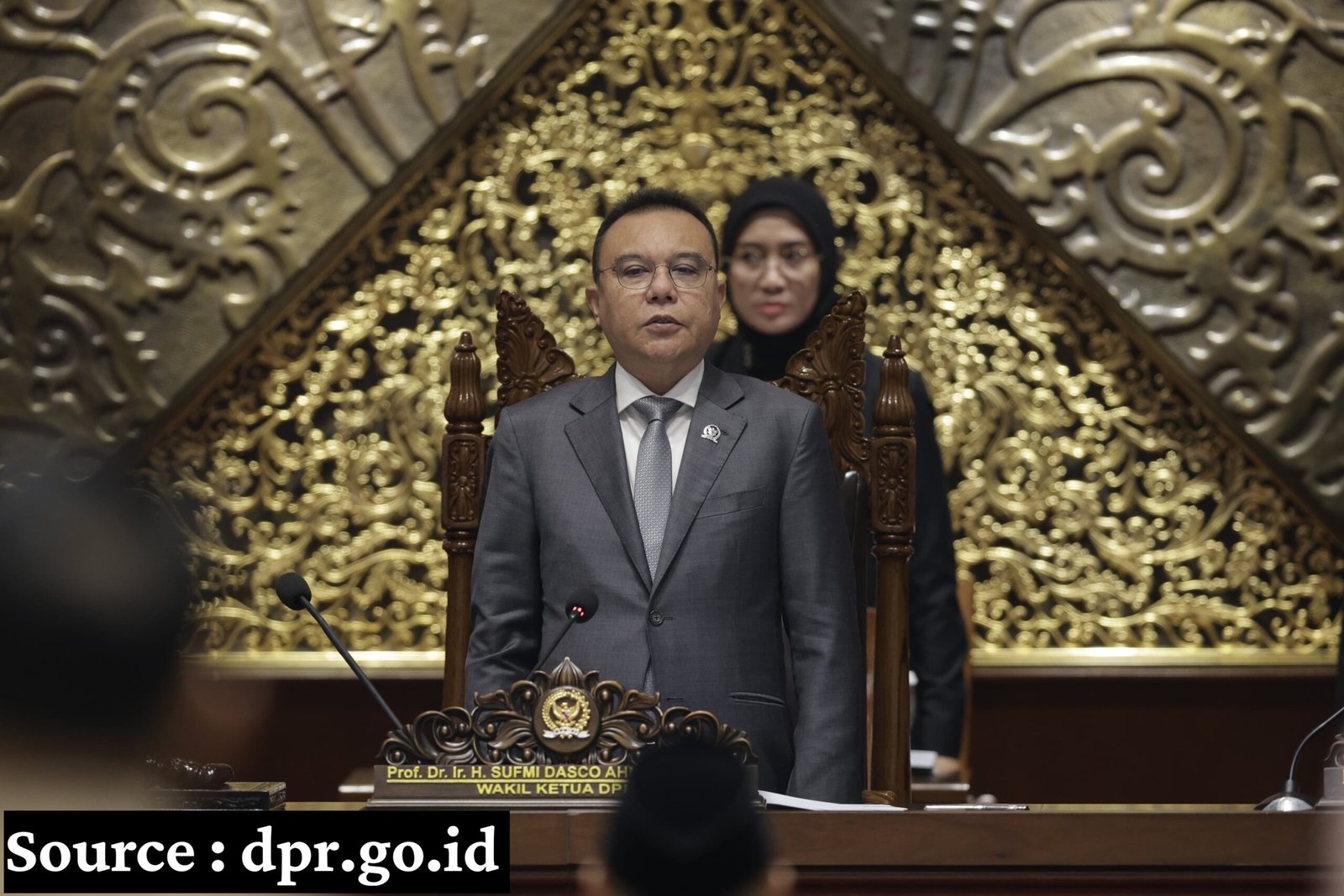
Amidst the political chaos, Indonesia’ parliament whose majority is occupied by coalition party members passed legislation which will grant parliament power to evaluate Indonesia’s Central Bank, Financial Services Authority and Indonesia Deposit Insurance Corporation and provide binding recommendations to them, including removing members of the central bank’s board of governors.
Strengthening the Indonesian Rupiah along with forming a task force to regulate online loans and gambling were among other elements reportedly included in the bill.
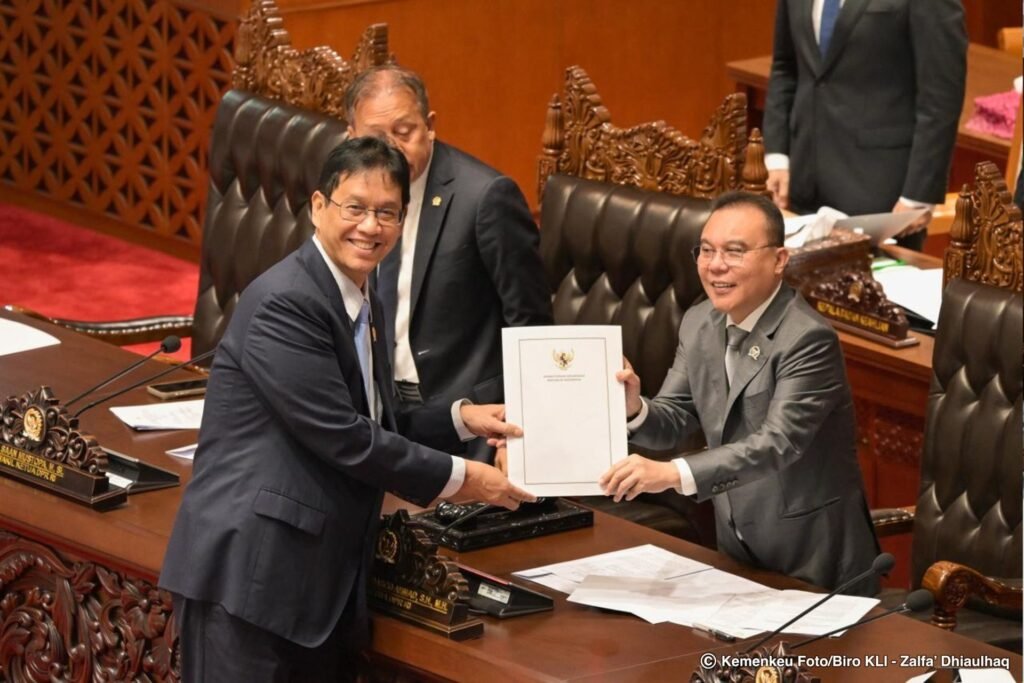
Finance Minister Purbaya Sadewa attends Parliamentary meeting. Source : dpr.go.id
Right off the bat, questions and concerns, especially regarding the central bank’s autonomy surfaced. Finance Minister Sadewa who also attended the parliamentary session, brushed off these concerns promising to uphold the central bank’s autonomy. The central bank has yet to provide a statement regarding the latest development.
A common talking point repeated by members of parliament and government officials alike was that the bill is intended to deepen the central bank’s role in supporting economic growth. Although the bill seems well intentioned and sensible on the surface, it must be noted that the central bank’s primary role is to stabilize the economy which will indirectly promote sustainable growth in the long run as opposed to directly imposing economic growth through its enormous money supply.
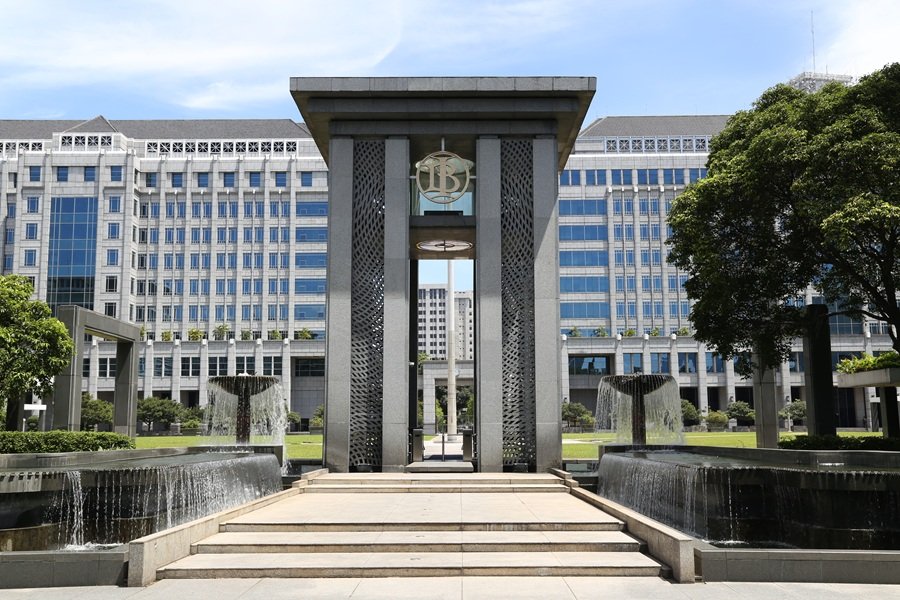
Indonesian central bank building in Jakarta. Source : bi.go.id
According to reuters, Bhima Adhinegara, executive director of the Center of Economic and Law Studies think tank criticized the bill claiming that most concerning part is on “the mechanism to remove members of the central bank’s board of governors … which could be thick with political intent.”
It is a reasonable concern, considering that early this year Prabowo’s nephew, Thomas Djwandono, a politician with little to no experience in finance was appointed as the deputy central bank governor winning against long term career central bank officials. This case also sparked outrage and concern for the same reason as the latest legislation.
Although this was an unprecedented decision since reformation in 1998 and rare occurrence in Southeast Asia, it does not come to anyone’s surprise. It is simply another case of the Indonesian government and its coalition in parliament creating new laws to expand its influence to domains it should not reach in order to reach its ambitious goal of reaching 8% economic growth per year. This also aligns with Prabowo’s vision in creating a state led economy and his reluctance to neo liberal system.
As of now the Indonesian media coverage over the issue remains limited. Additionally, the fact that the bill has been in the making since February this year casts reasonable suspicion over the arrests and investigations of the aforementioned government officials as a coordinated effort to distract the public while carrying out the strike.
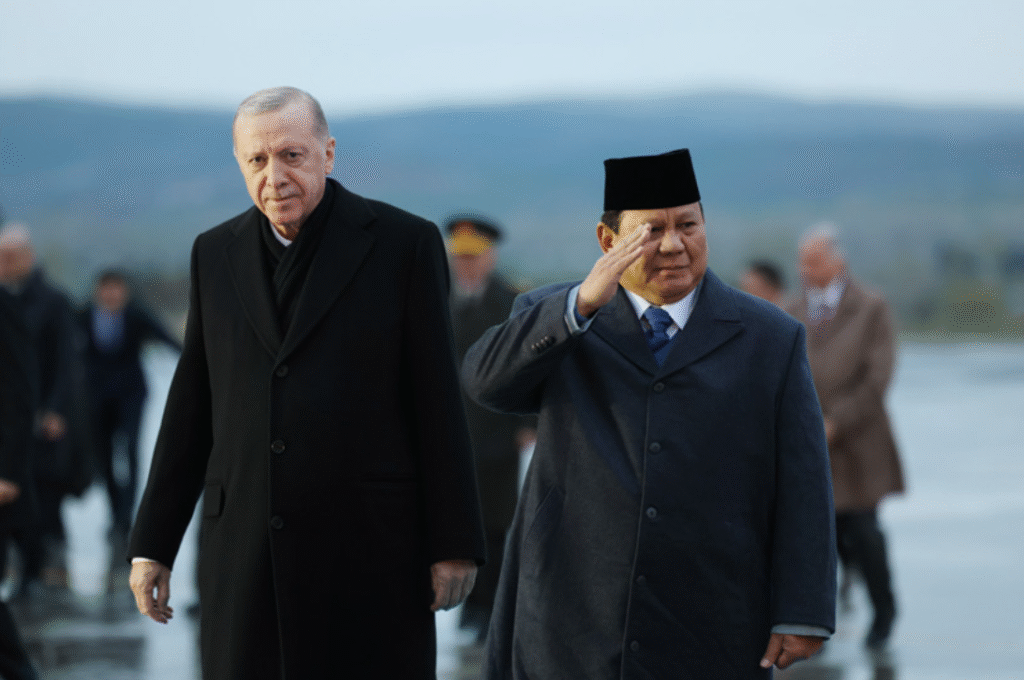
President Erdogan host President Prabowo in Turkiye in 2025. Source : tccb.gov.tr
Due to the rarity of such cases, it is difficult to gauge on how effective the Indonesian government’s encroachment on central bank’s autonomy will bring about economic growth along with other intended goals. The closest example can be found in Turkiye. From 2019 to 2022, President Erdogan repeatedly replaced central bank governors and other finance related officials who set interest rates and policies that did not match his economic views.
Despite Erdogan’s limited experience and expertise in finance, he justified his actions by claiming that high interest rates cause inflation, a view that differs from mainstream monetary economics. This resulted in the exact opposite of his objectives; surging inflation, a collapsed lira, and Turkish families struggling to afford the rent and food.
It is still unsure on how Prabowo will use his parliamentary allies to pull strings in the central bank, however the case study above proves that fiscal and monetary policies are best left to professionals. Prabowo is hell bent on strong-arming 8% growth economic growth, there is nothing that is inherently wrong about this, at the same time he must realize that the best way to achieve such growth simply could be to step away for a while.
Han Kyeol Kim is an Editor in Southeast Asia Analyst