“I, as the former Prime Minister with full powers, did not prepare for any fight. So, when the situation (border conflict) occurred, it was my fault, not the current prime minister’s fault,” Hun Sen said, clearing his son of the blame.
Editor – Southeast Asia Analyst.
Former Prime Minister and current senate head Hun Sen took responsibility for the Cambodian military’s weakness in facing off against its Thai counterpart in the border conflict that began in 2025 which remains unresolved. Although there is a ceasefire between the neighbouring countries, peace remains fragile.
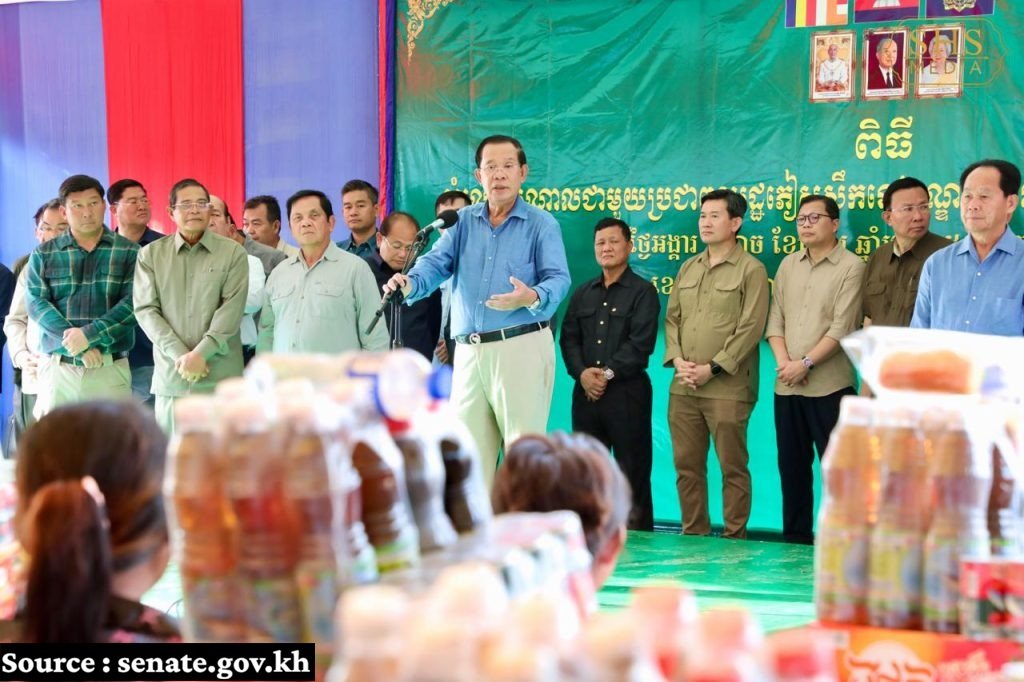
While addressing displaced families on 9th June in the thai bordering Banteay Meanchey Province, he claimed that Cambodia was not fully prepared for the conflict as he trusted his relations to the former Thai Prime Minister Prayut Chan-o-cha. He elaborated that he couldn’t predict a large scale border conflict between the 2 as he worked closely with the then Thai PM on border affairs.
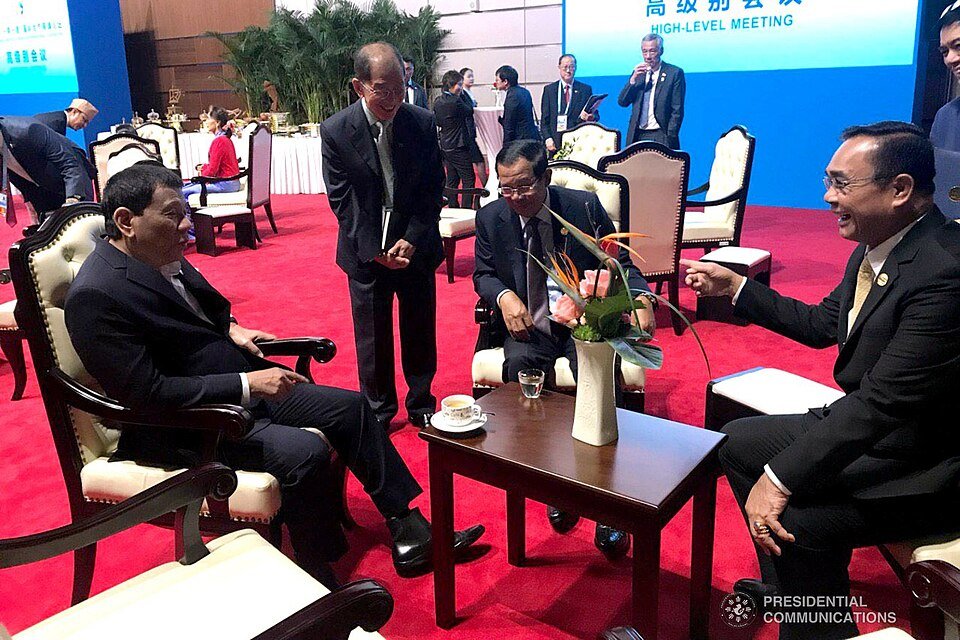
Filipino President Duterte, Cambodian Prime Minsiter Hun Sen and Thai Prime Minister Chan o Cha in the second Belt and Road Forum for International. Source : Philippine Presidential Communications Office.
“Because of this trust, I, as the former Prime Minister with full powers, did not prepare for any fight. So, when the situation (border conflict) occurred, it was my fault, not the current prime minister’s fault,” Hun Sen said, clearing his son of the blame. He further explained that it was this trust that made him allocate state budget to social services as opposed to national defense.
The apologetic gesture stirred up differing opinions from the observers. Commentators from state funded institutions stated that Hun Sen’s actions were a demonstration of political honesty and accountability and could serve as encouragement to current leaders to develop the national defense sector and prepare for future challenges, while pursuing deeper reforms.
Political analyst Em Sovannara remarked that saying sorry as an elected head of state when faced with an issue related to national interests, is not likely to satisfy the public as it does not constitute sufficient political accountability.
The exact reason for Hun Sen’s public apology is still unclear. Given from his speech it seems that he still places the blame on Thailand amidst the confusion on which side fired the first bullet. Besides this, it could likely be an attempt to support his son’s mediocre approval rates or simply slip ups that former heads of governments are prone to.
Despite handing over the premiership to his son Hun Manet in 2023, Hun Sen remains a highly polarizing yet a highly influential figure, many regard him as the de facto top decision maker. He was deeply involved in creating instability during the border dispute with Thailand and was also the person then Thai PM Paengtonrarn Shinawarata reached out to in an attempt to diffuse the tension in the early days of the conflict.
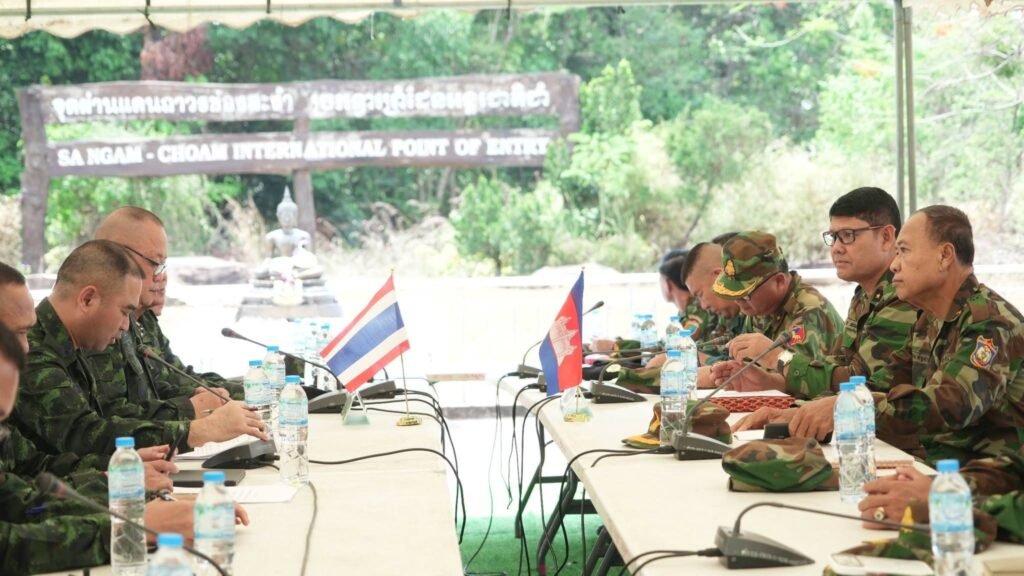
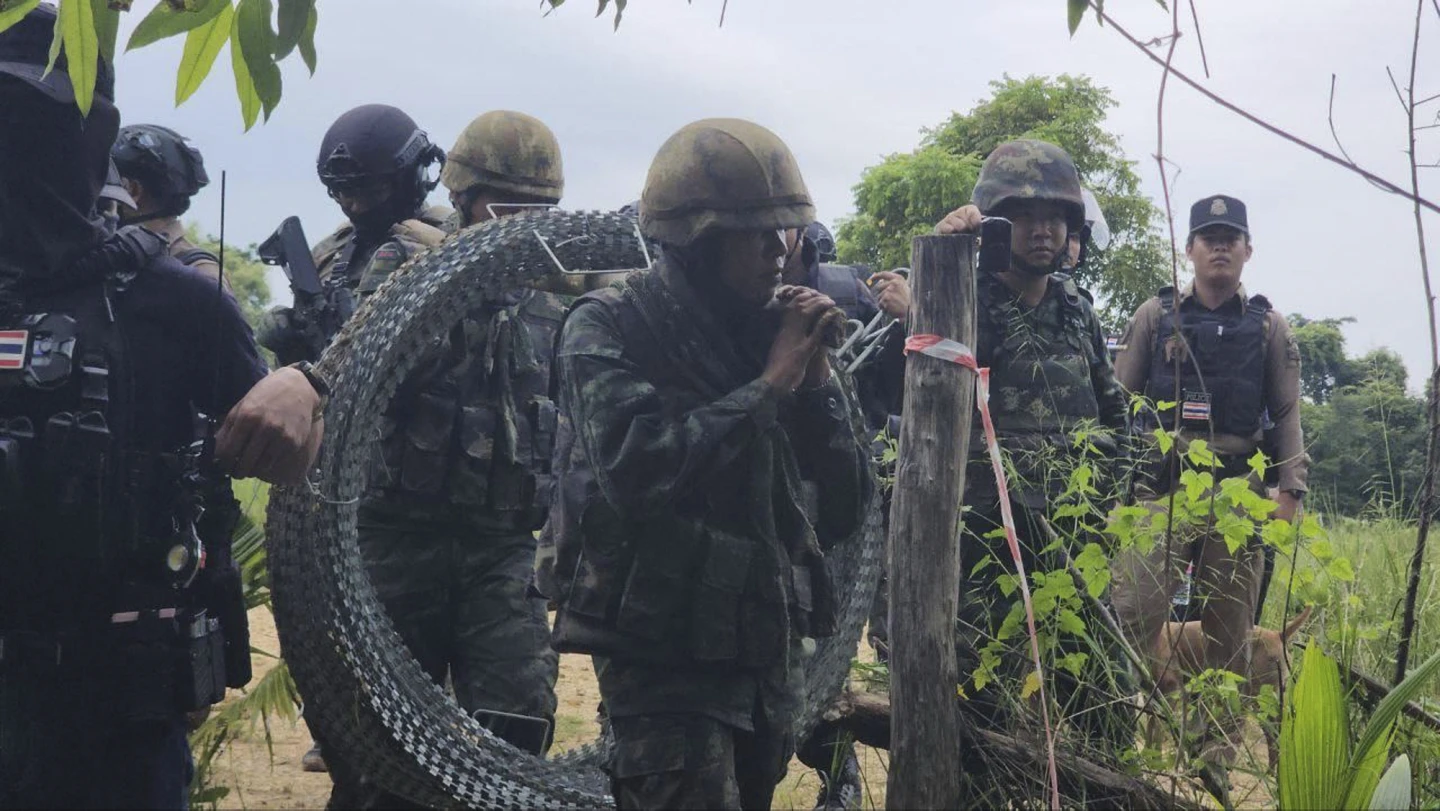
Thai and Cambodian military representatives engaged in discussion. Source : Facebook/ @Ministrydefense
What started as a skirmish between 2 armed forces that built up along the border resulted in a series of periodic open conflict involving airstrikes and ceasefire agreements lasting nearly a year. It even indirectly resulted in change in government in Thailand, politicians from both countries used it to fuel nationalistic sentiment and win over support and further complicated relations between the 2 countries. However there seem to be signs that the 2 are willing to move past this episode.
Although Thai PM Anutin Charnvirakul’s administration decided to unilaterally pull out of a UN supported maritime border agreement, the 2 countries agreed to a UN arbitration with Cambodia in early June. The maritime zone with overlapping claims is located in Thailand gulf and is estimated to be worth 300 billion USD in oil and gas.
Thai Prime Minister and his Cambodian counterparts in the sidelines of the ASEAN Future Forum. Source : Samdech Thipadei Hun Manet, Prime Minister of Cambodia
The PMs from the 2 countries also attended the Vietnam hosted ASEAN Future Forum on 9th June where they both acknowledged the tension along the border, the need for commitment from both sides and expressed good will to create and maintain peace while addressing the attendees. The 2 were also seen holding informal talks in the side lines of the forum. Although Hun Manet posted photos from the meeting on social media, details of the talk are still unknown.
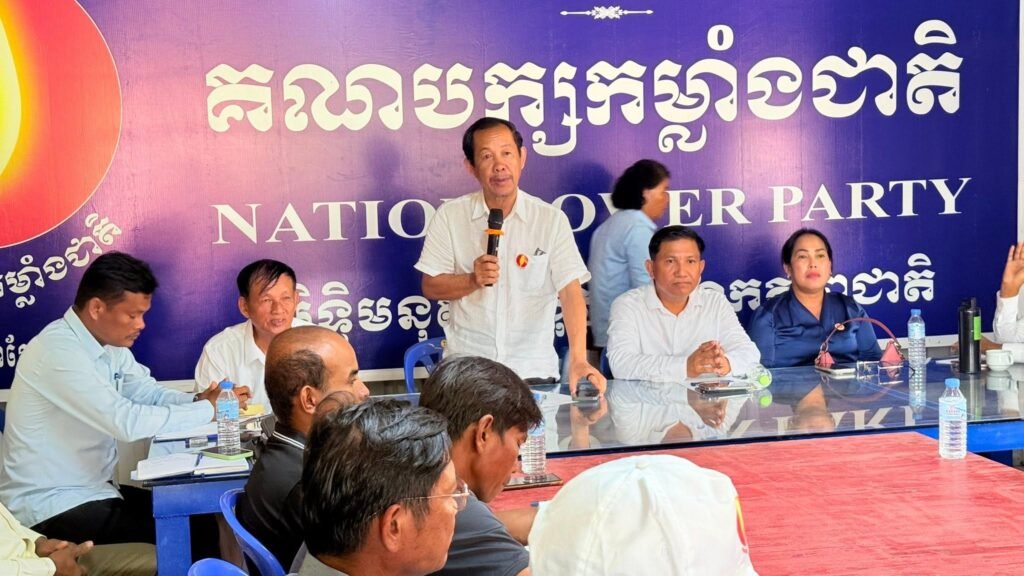
Cambodia’s opposition party on the other hand is not too eager to move on. On June 8th, one of the last remaining bastions of opposition, National Power Party advisor Rong Chhun announced that nearly 6000 supporters submitted their thumbprints to file a complaint to the International Criminal Court against an alleged “Thai invasion.”
Rong Chhun speaking at National Power Party press conference. Source : Facebook/ @Rongchhun
Chhun claimed that the Thai military is guilty of war crimes and listed, harming and displacing civilians, use of toxic gas and violating Cambodia’s sovereignty despite the ceasefire to support his claims. He further elaborated that as the opposition, the party will do their best on behalf of the opposition and their supporters. Chhun added that the thumbprints will be sent over the party’s network in Europe after the press conference.
Despite the opposition party’s ambition, it is unlikely that they will achieve their goal. Aside from Hun Manet’s desire for peace, Cambodia is now at a position where it can no longer afford any more skirmishes. The war’s detrimental effect is not only limited to people’s livelihood but also Cambodia’s credibility as a country that can maintain its own territorial integrity. By extension ASEAN’s credibility and marketability is also dependent on peace along the Thailand Cambodia border. It is high time for ASEAN and its members to stop accepting the Thailand – Cambodia conflict as an occurrence that pops up every decade or 2 and start holding the belligerents accountable for their actions.
Manh Chien Nguyen is a Mainland Southeast Asia columnist for Southeast Asia Analyst, based in Hanoi.