The Indonesian establishment must choose between competent individuals in service of the public or yes men who stick around for spoils of government
Editor – Southeast Asia Analyst
All eyes and headlines focused on Indonesia when its former education and culture minister Nadiem Makarim (41) was charged with 18 years in prison. The millennial was accused of corrupting the government’s chromebook procurement for students during the COVID 19 pandemic. Despite reportedly no evidence to back up the accusations, the prosecutors were firm in their decision and submitted their final request to the months-long trial on 13 May 2026.
International observers called this damaging to Indonesia’s democracy and rule law, domestic voices on the other hand were more focused on a different concern. They worried that this ruling would discourage their brightest and well-intentioned youth from stepping up to public office in order to serve the public in fear of ending up in Makarim’s situation.
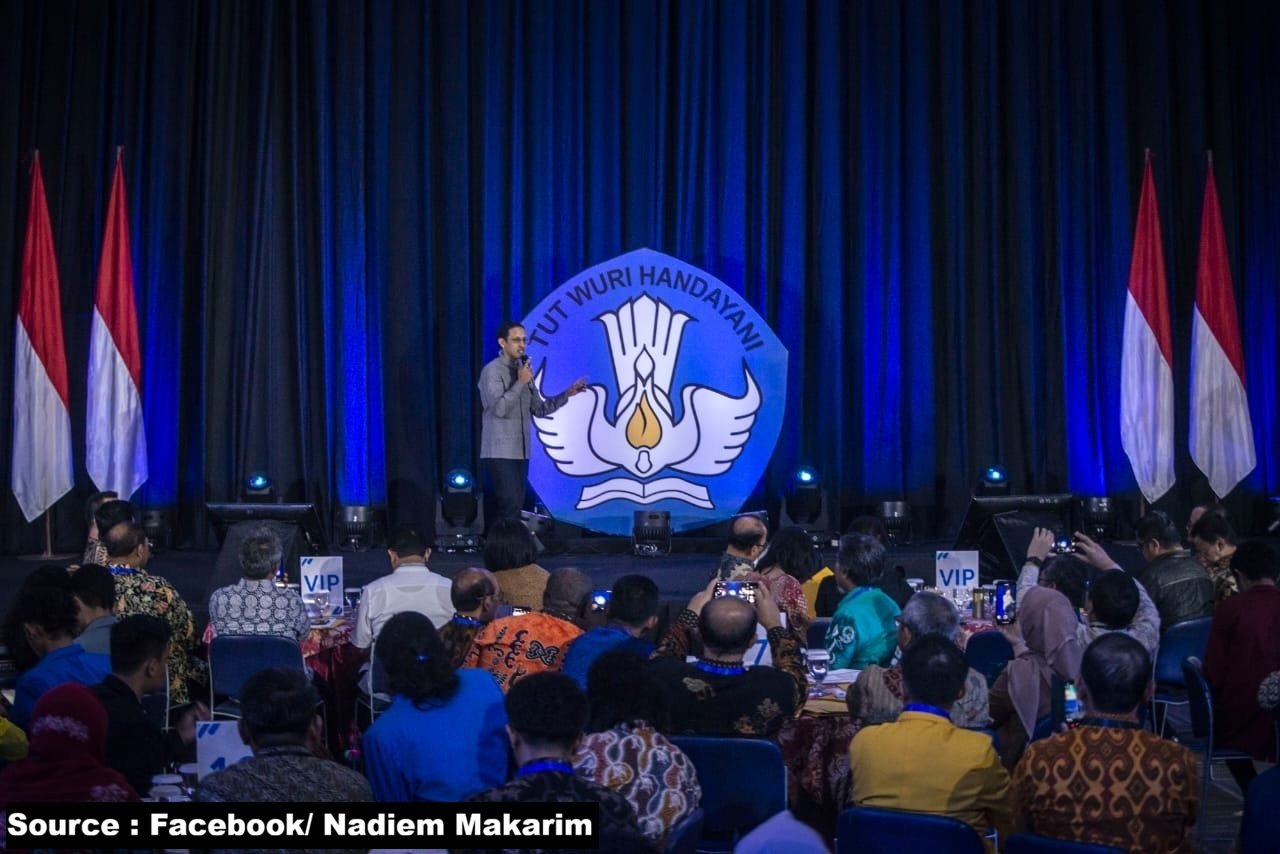
Nadiem Makarim, as CEO of GO-JEK in 2018. Source : Wikimedia Commons
Makarim is a Harvard graduate tech and Indonesia’s indigenous ride hailing app “Gojek” founder who left that position to join former president Widodo’s second cabinet. It is largely speculated that his image as a reformist technocrat that refused to corrupt and share the spoils of government is what eventually got him in trouble with the establishment. His case is merely one in a common pattern where the Indonesian technocrats are left vulnerable to political attacks and in facing the justice system.
Optimism and interest in technocratic ministers and government officials in Indonesia peaked during president Widodo’s first term where he delivered on his campaign promise of forming a “technocratic and professional” cabinet. As opposed to his predecessor, technocratic ministers were not only limited to financial and economic roles but maritime, agriculture, transportation and public housing ministerial roles were filled with seasoned professionals in their respective fields although there were a number of political appointees.
A relatively small political party coalition during the campaign can be credited for this. Without having to please a diverse coalition and share the spoils of government, Widodo was free to appoint roles based on merit. This argument seems more compelling given that the number of political appointees increased as did the number of political parties in his coalitions during his second term.
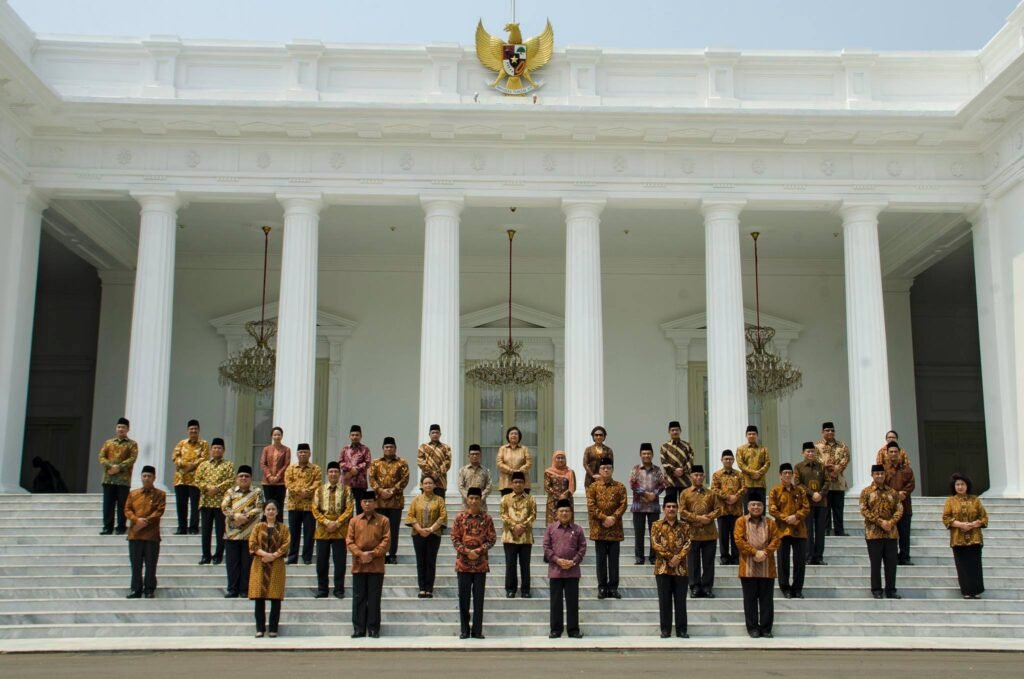
President Joko Widodo’s first cabinet in 2014. Source : Wikimedia Commons
Technocrats who disagreed with government projects that seemed redundant or ineffective in their view were removed from their posts. Those who got in the way of senior officials’ patrons shared the same fate. As an anonymous presidential staff put it, President Widodo started acting more like a “king” in his second term.
This worsened when Prabowo took office, technocrats were virtually nonexistent in his cabinet. Even the foreign ministry that prided itself in competency and professionalism was led by Prabowo’s long term confidant and party general secretary, Sugiono. Various ministerial posts were filled up by either coalition members, campaign staff and former or active military personnel. This slowly yet surely removed what little technocrats the previous administration left behind.
Again, a large party coalition that is inversely proportional to the number of technocrats is repeated in this case. Additionally, given that this was Prabowo’s 4th attempt in winning the presidency coupled with his hellbent determination to achieve his pet projects, it is clear that he places loyalists above technocrats who will simply not say no to the president.
With the cards stacked against competent and well-meaning individuals, it seemed as if the age of technocrats was shut down even before it could even fully take off. However, it does not have to be stuck in this state. The idea of professionals in their field running relevant ministries and other high ranking government posts is nothing new.
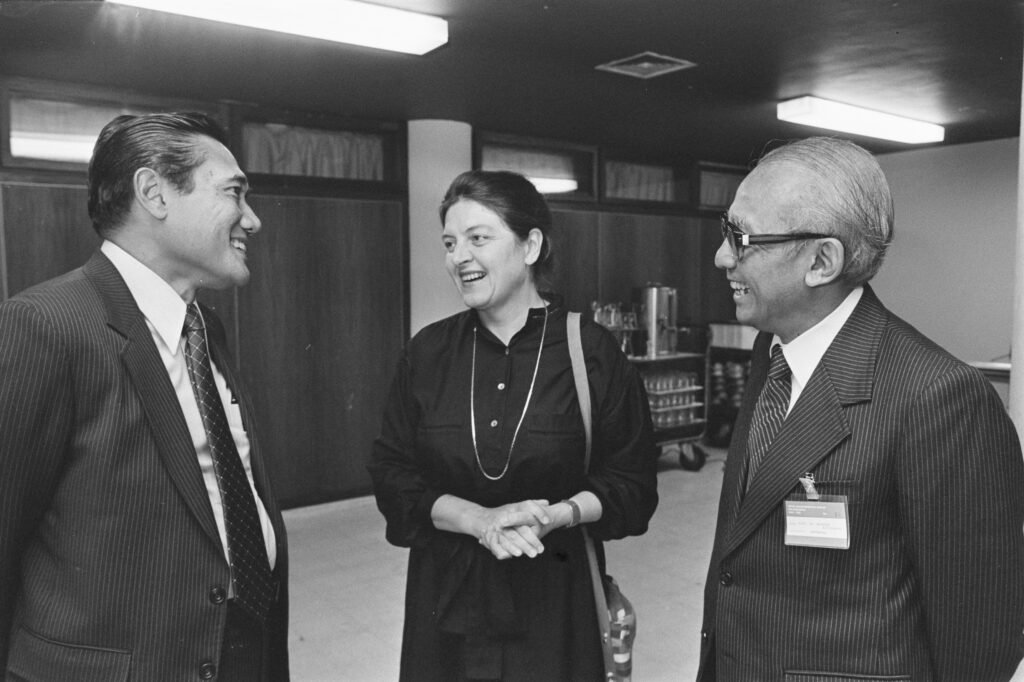
Members of the Berkeley mafia in the 80s with Ambassador Eegje Shoo. Souirce : Wikimedia Commons
Indonesia’s second president, Soeharto restructured the country’s economy in the 60s and 70s marked by a broken market and hyperinflated currency by leaving it to a group of economists and technocrats who are often referred to as the Berkeley Mafia for their educational background in the university. These technocrats were largely uninvolved in politics, had no party backing and solely focused on their craft. With Prabowo actively trying to emulate Soeharto, hiring technocrats, especially economists given the rupiah’s crashing value and a frozen job market, can be a step in the right direction.
Historically speaking, a campaign team without a large/ diverse party coalition frees up spaces for technocrats and as does presidential candidates who are not hyper-fixated on rather unrealistic government projects. While the ultimate decision on who becomes minister depends on the president, Indonesians must also realize that they can influence the cabinet make up to an extent. All that it takes recognizing patterns and the games politicians play to accommodate each other before walking up to the ballot box during election season.
The presidential palace has yet to comment on Makarim’s case, knowing that it is a topic too sensitive to be poked around with. The establishment must ask themselves what kind of future they want for Indonesia. One with willing and competent people in service of the public or one where leaders are surrounded by yes men who only stick around for the clout and bounty the government can offer. Every decision it makes brings it closer to one or the other.
Jasmine Pingol is a Archipelagic Southeast Asia columnist for Southeast Asia Analyst, based in Manila.