Despite multiple rounds of bilateral meetings between the prime ministers from Cambodia and Thailand and distrust run deep between the governments.
Editor – Southeast Asia Analyst
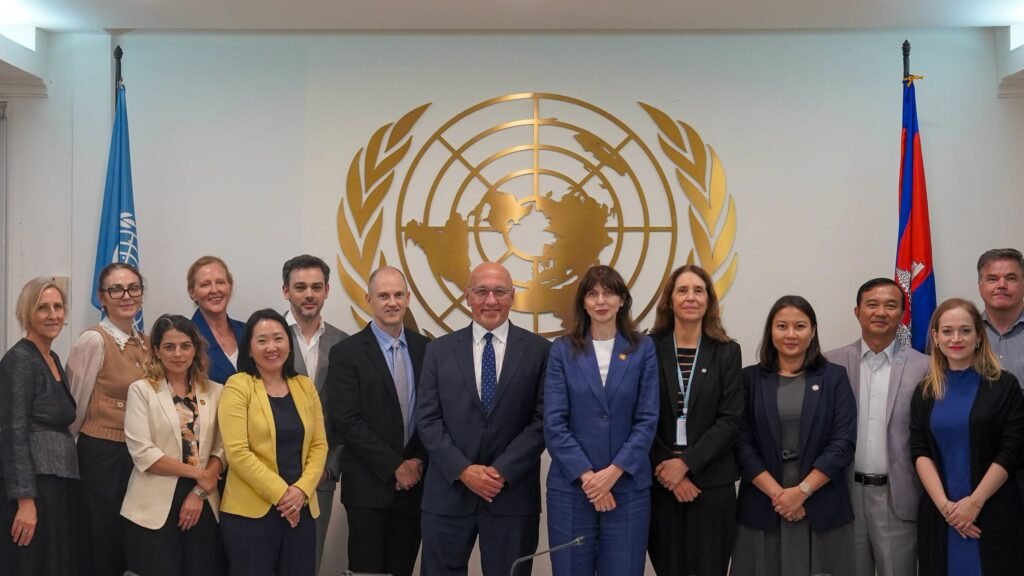
On July 28th, former Cambodian opposition leader Kem Sokha and United Nations special envoy on human rights Tom Andrews visited a temporary housing village located in Banteay Meanchey province propped up to house refugees from the Cambodia – Thailand border conflict that took place periodically since mid 2025. The politicians took the opportunities to shake hands, share thoughts and condolences and pose for the camera.
“AIthough I couldn’t come here personally [previously], I have known about the difficulties you suffer because of the war,” Sokha told displaced families at a temporary housing camp while handing out envelopes.
Tom Andrews and United Nations secretariat in Cambodia. Source : Facebook/ United Nations in Cambodia
“I was able to see extraordinary housing that had been constructed in a very short period of time for those who had been displaced from the conflict. And watching these kids, lining up for their breakfast and then meeting with the people who had been displaced was very powerful.” Said Andrew in a later interview with Camboja News.
Well over a year into the border conflict, there is still no confirmation on who fired the first shot, but a larger question looms on what the cost of war between 2 countries are and what exactly it leaves behind. The high profile visits from Sokha and Andrews does not bring meaningful change to the situation. Tension remain high as seen from the Thailand building a 1.3kilometer long fence along its border with Cambodia reinforced with steel, concrete and surveillance systems, trust between the neighbours is broken but more importantly civilians from both sides of the border disadvantaged.
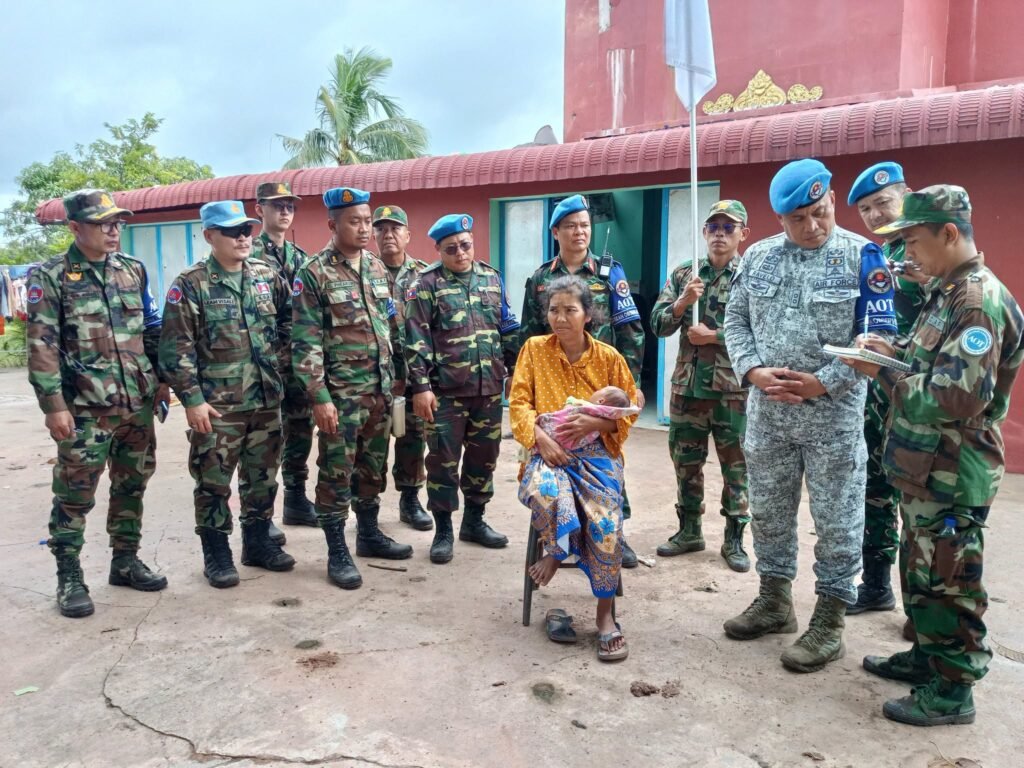
ASEAN Observer Team and Cambodian refugee. Source : Facebook/ Cambodian Ministry of Defense
Although most of the 400 000 displaced Thais returned to their original residence, according to the UN, approximately 650 000 Cambodians that depend on thinning aid supplies remain in waiting villages and soldiers along the border are on high alert, wary as to not join 150 soldiers and 34 civilians from both sides who lost their lives during the campaign.
Despite multiple rounds of bilateral meetings between the prime ministers from Cambodia and Thailand, distrust run deep between the governments. The Cambodian government states that Thai troops still occupy previous Cambodian territory, preventing refugees from returning home, a claim which Bangkok denied, saying its actions comply with a bilateral ceasefire agreement reached on 27th December 2025.
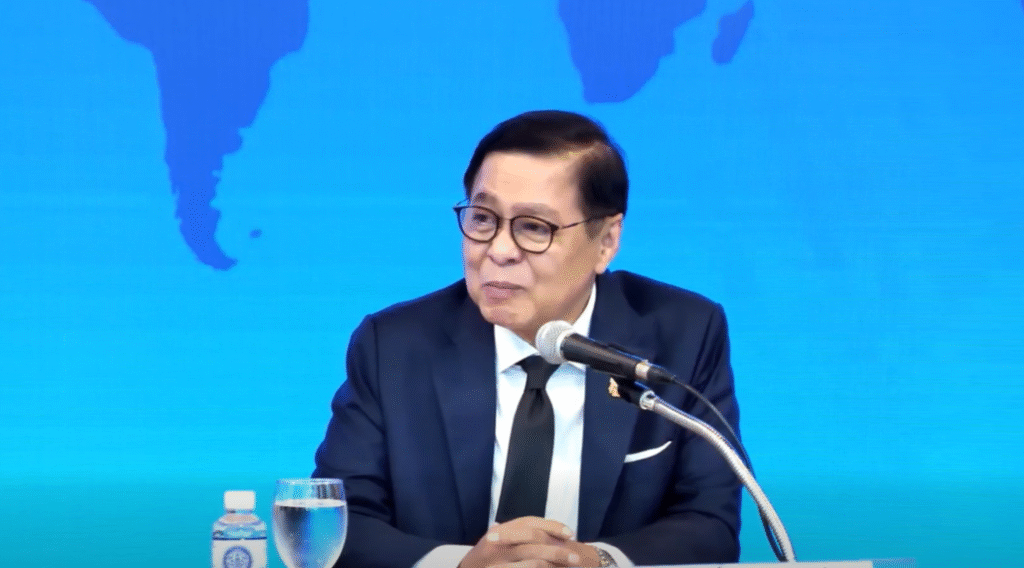
Thai Foreign Minister in a press conference. Source : Facebook/ Ministry of Foreign Affairs of the Kingdom of Thailand
Thailand continued to slam more claims from the Cambodian government backed by UN special envoy Tom Andrews concerning the number of displaced people and status of Cambodian migrant workers in Thailand. Thai foreign minister Sihasak argued that Andrews heavily relied on information provided by the Cambodian side, without adequately reflecting Thailand’s perspective or the broader impact of the conflict on Thai communities.
The animosity flowed through the public as well with wars often stoking nationalistic sentiments. Posts on Thai social media that were flooded with anti Cambodian content and hashtags during the peak of the war but later subsided. The same cannot be said of Cambodia, boycotts of Thai products are still persistent.
“I only use Cambodian products. I don’t buy Thai products anymore because I resent the invasion of our territory.” said a 73 year old Cambodian refugee who used to often cross into Thailand for seasonal work.
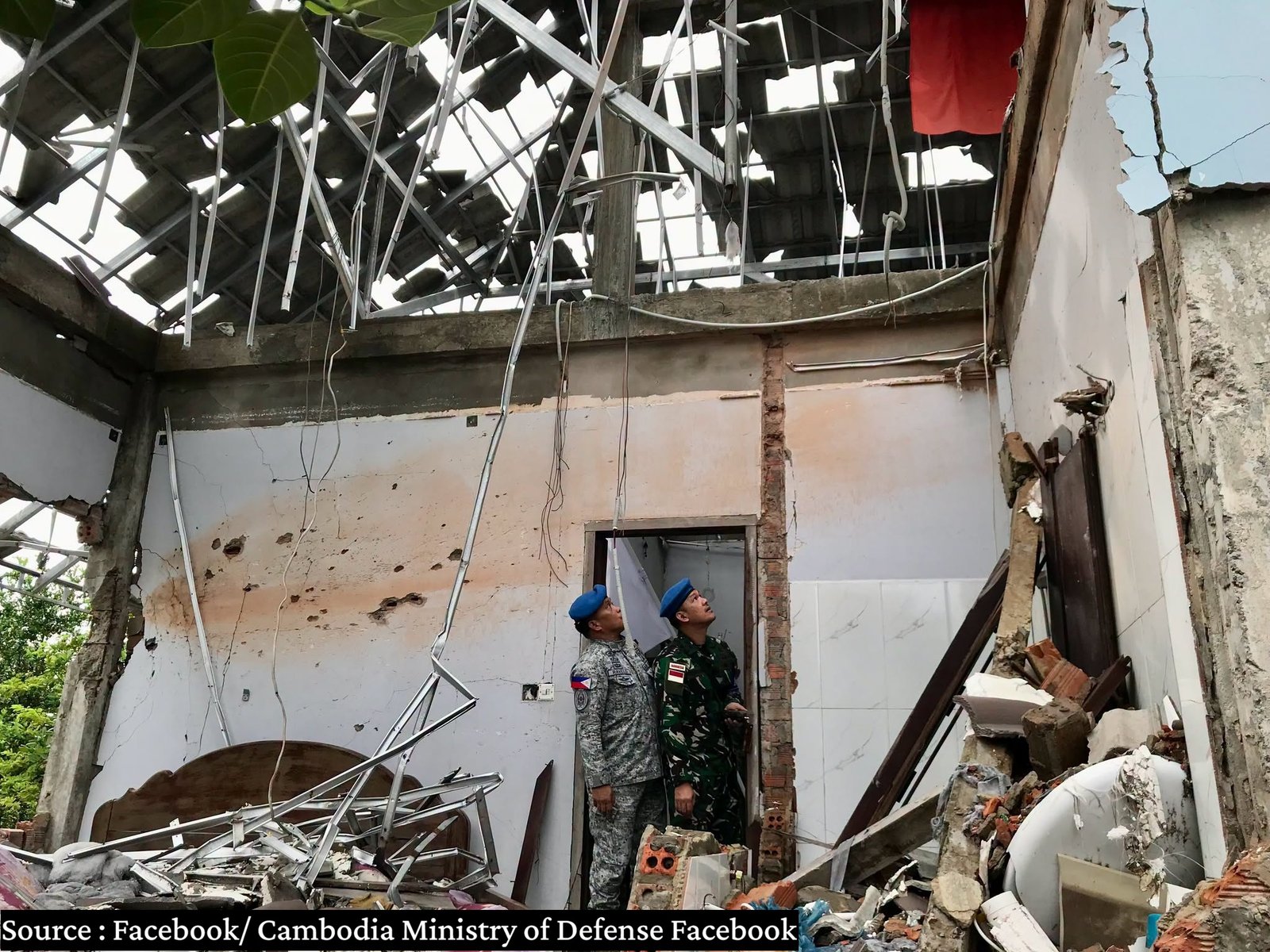
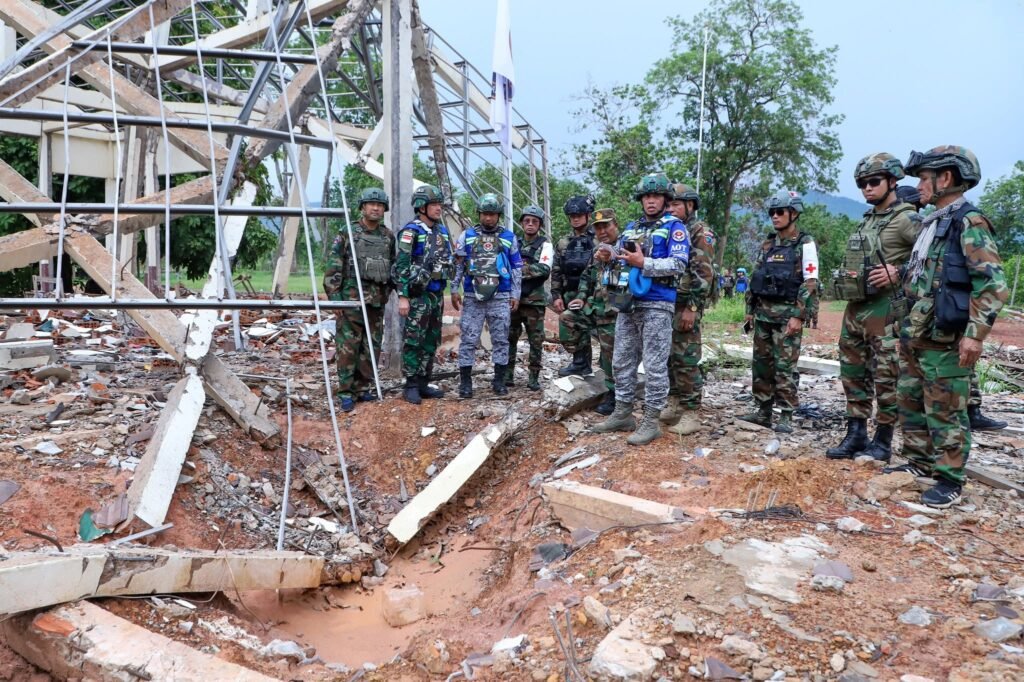
ASEAN Observer Team inspects aftermath of Thai strikes in Cambodia. Source : Facebook/ Cambodian Ministry of Defense
The only beneficiaries of the situation are the elites from both countries that took advantage of the nationalistic and sentiment curried up from the conflict. One such in Thai Prime Minister Anutin Charvinarul whose party Bhumjaithai ran on nationalistic rhetoric signaled a stricter approach to the border issue eventually winning a majority in the parliament.
Cambodia as well is guilty of this when its parliament used the conflict as momentum to pass a law that allows the government to strip its own people of citizenship for “colluding” with foreign actors. A law that will most likely be used against its own dissident. The biggest beneficiary however could be Prime Minister Hun Manet who promoted himself as the defender of Cambodia’s sovereignty and territory amidst the war, drastically raising his popularity among the public.
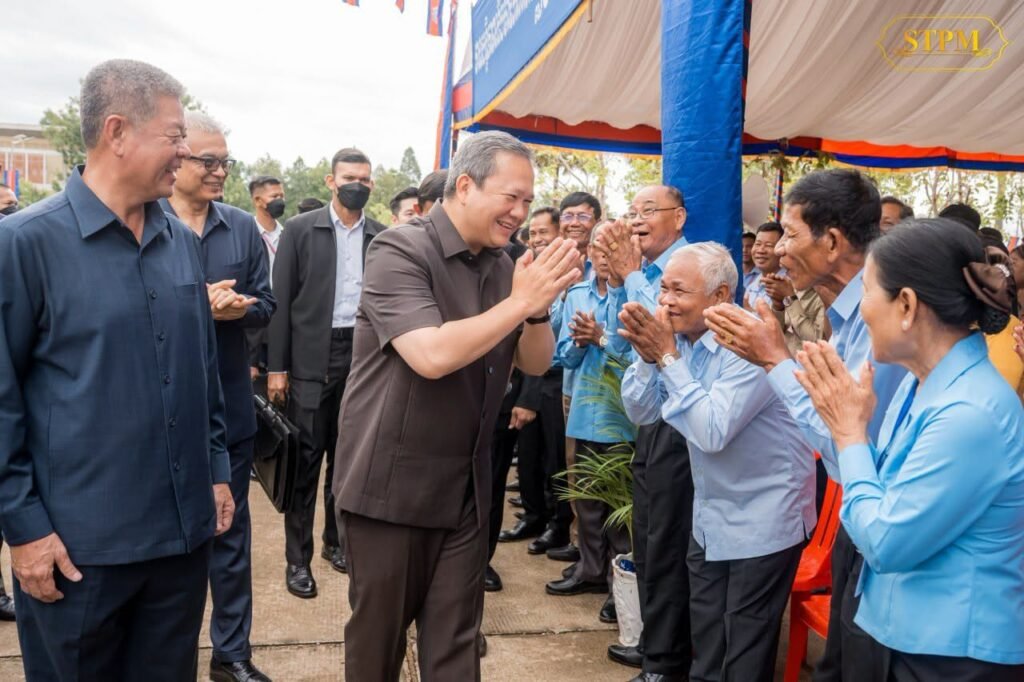
Prime Minister Hun Manet meets his supporters. Source : Facebook/ Samdech Thipadei Hun Manet, Prime Minister of Cambodia
“There were a lot of comparisons in 2023 that he is weak to take all the state affairs compared to his father (former Prime Minister Hun Sen). I don’t think there is any of those questions anymore” said Ms. D, Cambodian researcher in Peace and Conflict Studies from Australian National University who agreed to speak with Southeast Asia Analyst.
The commonly accepted narrative that attempts to explain the root of the conflict is the claim that Cambodia provoked Thailand to a skirmish and eventually open conflict as the government’s attempt to distract the public from Hun Manet’s poor performance and Prime Minister and to win the public’s trust in the government. There is substantial weight to this considering that similar cases took place where Phnom Penh “allowed” rioters to burn down the Thai embassy to stoke nationalistic sentiment ahead of election season.
If new non violent norms are not articulated between the two or if the current elites who are more than ready to sacrifice lives in the interest of their political goals are not replaced, the neighbours risk another conflict similar in nature. With Cambodia now less reliant on Thailand for aid it could be more emboldened to do so.
Han Kyeol Kim is an editor in Southeast Asia Analyst



One thought on “Cost of the Cambodia – Thailand Border Conflict”