Purbaya had flown too close to the sun. Sources point to tensions within the ministry itself and with other government institutions.
Editor – Southeast Asia Analyst
On the evening of September 14, Purbaya Yudhi Sadewa was replaced by his deputy, Suahasil Nazara, as Finance Minister. Suahasil is now Indonesia’s third Finance Minister in under two years, with none of his predecessors lasting more than a year in the role. The news shocked the Indonesian public and comments expressing disdain for the decision quickly filled social media platforms with some criticizing the government’s consistency and frequency in shuffling ministers. Many also question on what basis the widely popular minister was sacked.
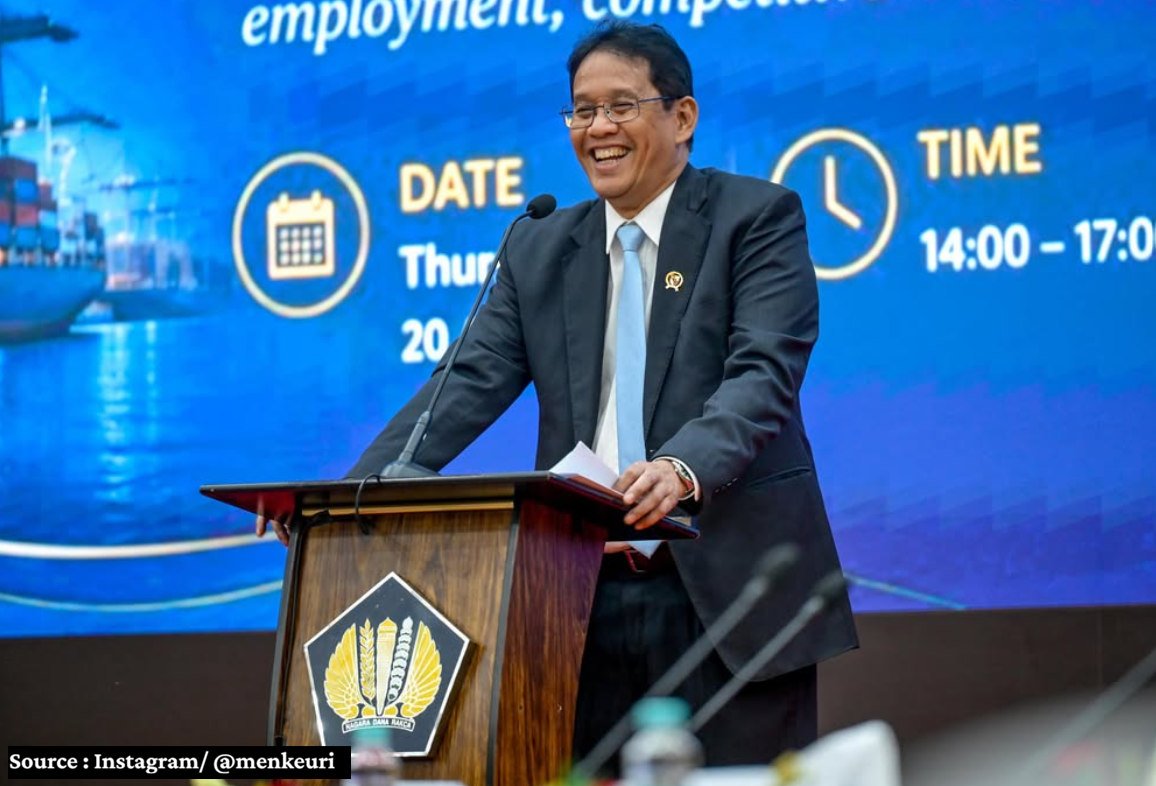
Throughout his tenure as minister, Purbaya was known to be an outspoken figure. His first days as Finance Minister saw him promise 8 percent annual growth; however, growth remained around 5 percent during his time in office. This attitude occasionally landed him in controversy, such as when he made a spontaneous comment about imposing a levy on vessels passing through the Malacca Strait, a comment he had to backtrack on due to the controversy it caused with neighboring states. This blunt and direct way in which he carried himself earned him the nickname “Cowboy Minister” among the public who viewed him as a breath of fresh air against the uptight ministers who made sure to never outshine President Prabowo Subianto.
Purbaya Yudhi Sadewa as finance minister. Source : instagram/ @menkeuri
Purbaya had flown too close to the sun. Sources point to tensions within the ministry itself and with other government institutions. When Purbaya reshuffled hundreds of ministry officials on September 10, Suahasil described the move as “unfortunate” and “abrupt” in an internal memo, stating that the finance ministry would “fall into disarray with this way of working.”
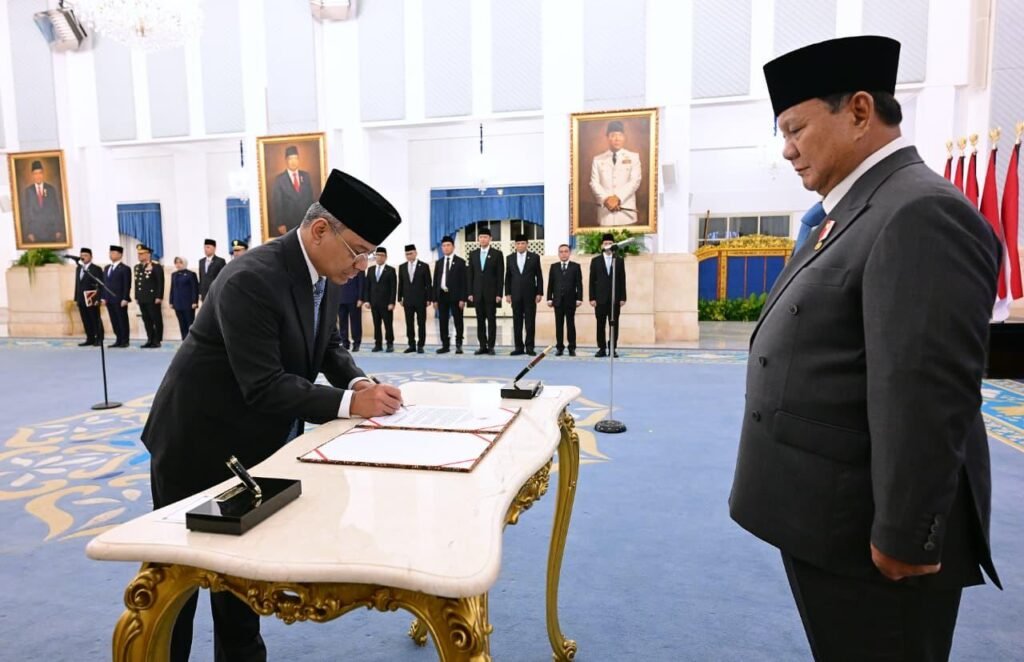
Months ago in August, Purbaya announced that Danantara would remit 120 trillion IDR from its profits to the state budget. Apparently, Danantara was unaware of this plan and objected to it. Fueling assumptions of tensions between Purbaya and Danantara, immediately after Suahasil’s appointment, its CEO, Rosan Roeslani, stated that the sovereign wealth fund would enter discussions regarding the remit with the new finance minister within the same week. Thus, Suahasil’s appointment is viewed positively by those feuding with Purbaya, from Rosan, Jakarta Governor Pramono Anung, to people within the ministry itself. Unlike Purbaya, Suahasil Nazara built his career within the Ministry of Finance. He began his career at the ministry as a member of the Finance Minister’s Assistance Team for Fiscal Decentralization in 2009. He was head of the ministry’s Fiscal Policy Agency in 2016, and eventually became vice minister in 2019.
Suahasil Nazara gets appointed by finance minister by President Prabowo. Source : Source : setneg.go.id
Market reactions to Suahasil’s appointment have been relatively positive. IDX Composite closed down 0.10 percent on the day of his appointment, an improvement from being down 2.5 percent earlier in the day. The LQ45 and IDX30 indices closed up 1.43 and 1.40 percent, respectively.
According to The Diplomat, while Purbaya’s appointment was intended to align the ministry to Prabowo’s policies, his removal seems to be aimed at external audiences. A Financial Times article views Suahasil as a technocrat with experience in fiscal policymaking, while CNBC considered the appointment as an attempt to win back investor confidence amid concerns regarding profligacy. Meanwhile, RSIS’s Richard Borsuk called the change a “good move.”
It is too early to tell what Suahasil’s fiscal policies will be, despite promises of continuity. Yet, since none of Prabowo’s finance ministers have lasted longer than a year (Purbaya lasted barely longer than a year, at one year and six days), one may wonder if the current administration’s policies run counter to fiscal responsibility. A combination of costly initiatives, such as the free meals program, and a decrease in state revenue caused by Danantara diverting SOE dividends may indicate that this is the case. Indonesia’s rocky financial situation needs to be considered as well. Only months ago, parliament started to strangle the central bank’s autonomy to support the government’s growth ambitions, a move that is thought to prompt central bank governors resignation. Rupiah remains weak against major currencies and the financial market is far from winning back foreign buyers.
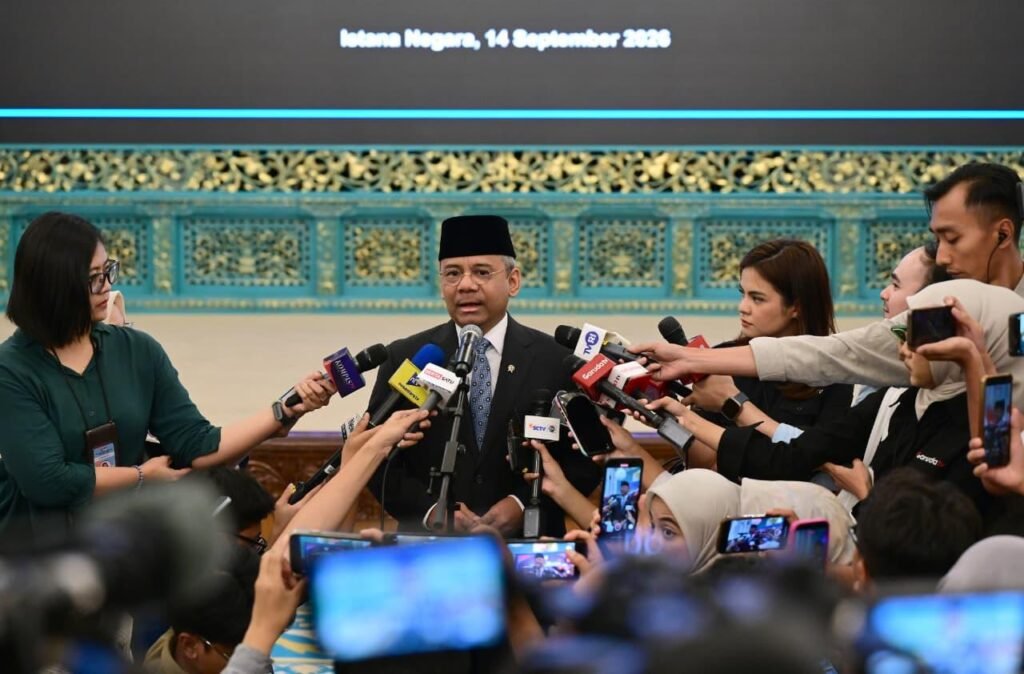
Newly appointed Finance Minister Suahasil answers to reporters. Source : setneg.go.id
It is natural to view this appointment with slight skepticism. Despite the veneer of fiscal prudence projected by Suahasil, a Sri Mulyani-era technocrat, concerns regarding “fiscal profligacy,” as CNBC put it, will remain as long as misdirected and populist policies are forced through by the administration.
Jasmine Pingol is an Archipelagic Southeast Asia columnist for Southeast Asia Analyst, based in Manila.