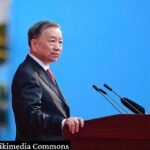
“This is not escalation. It is a facilitated negotiation between the two nations overseen by international expert conciliators.”
Editor – Southeast Asia Analyst
Cambodia and Thailand sat before a panel of international conciliators in Singapore this week, opening a new and untested chapter in a maritime dispute that outlasted several governments on both sides. From 14 to 16 September, a five-member Conciliation Commission held its first meeting with both countries under Article 298 and Annex V of UNCLOS, with opening statements delivered publicly on 15 September and webcast live in English, Khmer and Thai.
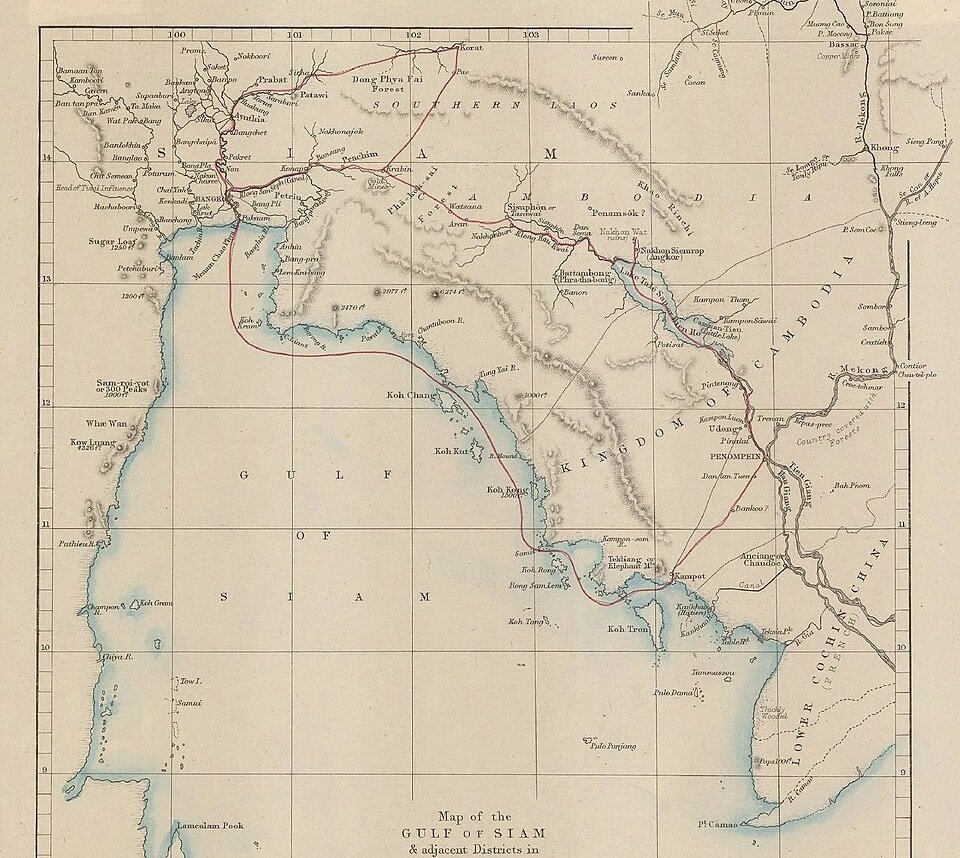
The dispute revolves around an area of about 26,000-27,000 square kilometers in the Gulf of Thailand known as the Overlapping Claims Area (OCA), where both countries made overlapping claims on their continental shelf in the early 1970s. For 25 years, the only framework managing it was a 2001 Memorandum of Understanding, which bound a future boundary and a joint resource-development deal together as “an indivisible package.” It is only the second time in the history of UNCLOS that the process of mandatory conciliation has been sought since the case of Timor-Leste versus Australia that led to a maritime boundary treaty in 2018.
Historical map of Gulf of Thailand. Source : Wikimedia Commons
That framework collapsed this year. Thailand’s Cabinet voted on 5 May to terminate the MOU. Prime Minister Anutin Charnvirakul, whose party had won a February election partly on nationalist grounds after 2025’s border clashes, called it “not related to any conflict” but a policy review of an agreement that had gone nowhere. Cambodia disagreed. On 2 June, Prime Minister Hun Manet told the country that Thailand’s withdrawal meant “the opportunity for bilateral negotiations… had been exhausted,” and that Cambodia had notified Thailand and the UN Secretary-General of its intent to begin compulsory conciliation—a legal, not military, response, he said: “not through force but through international law.”
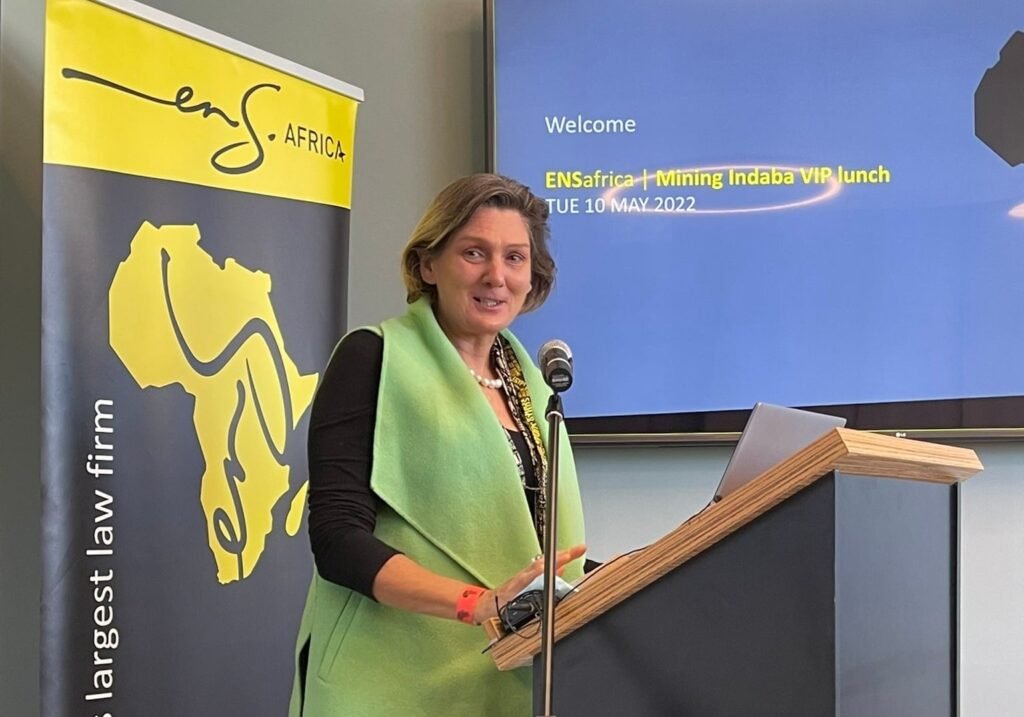
Thailand’s formal reply came on 19 June, naming Foreign Minister Sihasak Phuangketkeow as agent and appointing conciliators Albert J. Hoffmann and Rüdiger Wolfrum. Cambodia on the other hand appointed Foreign Minister Prak Sokhonn as agent, along with Peter Taksøe-Jensen and Jean-Marc Thouvenin as conciliators. All four decided to appoint Katrina Cooper of Australia to the position of Chair on 14 August. Both parties were pleased with the decision due to her involvement in the Timor-Leste dispute. The Permanent Court of Arbitration functions as the Registry.
Katrina Cooper in 2022. Source : Australian High Commission to South Africa
It is necessary to clarify the definition of conciliation because it is frequently mixed up with arbitration. Both parties have excluded disputes concerning their maritime boundary from being settled through binding decisions according to UNCLOS, but under Annex V they may force each other to undergo a non-binding process. Experts form a panel that considers arguments from both parties and provide recommendations for reaching an amicable agreement within a year. Neither side is bound to accept the recommendations of the Commission; however, both parties should negotiate in accordance with them.
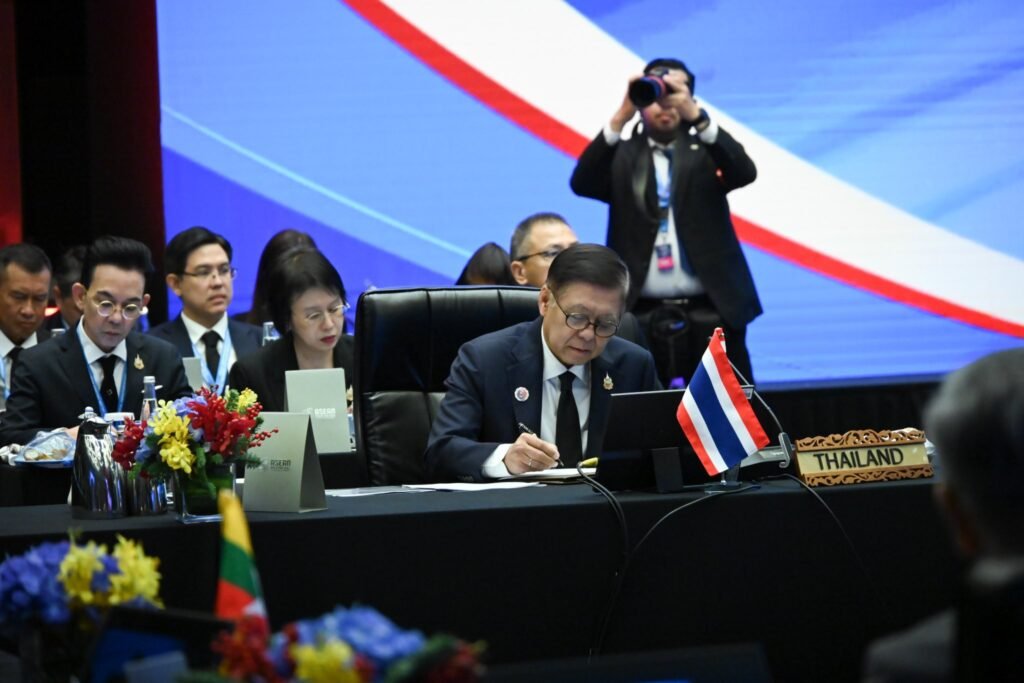
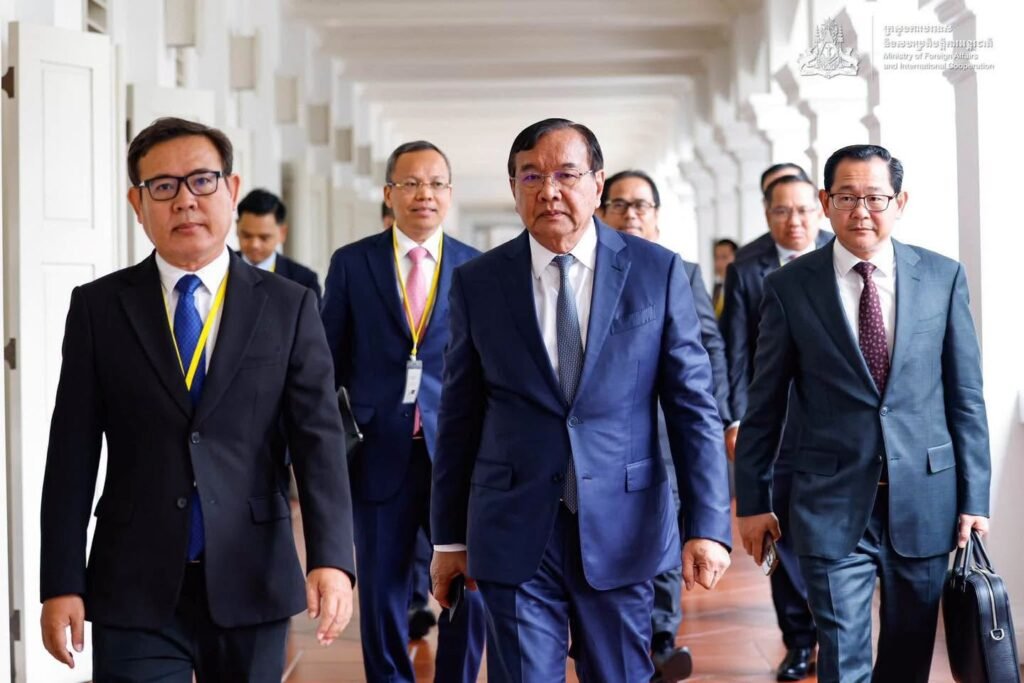
That distinction matters, because the two sides are still not describing the same goal. In Singapore, Prak Sokhonn told the Commission that Cambodia seeks either a single maritime boundary treaty or, failing that, joint development and equitable resource-sharing. Sihasak said the proceedings should be confined strictly to boundary delimitation and that Thailand had offered direct bilateral talks—with a proposed six-month window—before Cambodia moved to conciliation. Cambodia’s Ministry of Information pushed back the same evening, urging the public not to let “accusations distract us from the core issue.” Neither account has been independently adjudicated.
Thai Foreign Minister Sihasak in 2025 during ASEAN summit. Source : X.com/ @SihasakPH
Legal scholars have real hurdles ahead. Dr. Tara Davenport and Dr. Trung Nguyen of the NUS Centre for International Law note the Commission must first satisfy itself it has jurisdiction, given Cambodia only ratified UNCLOS in February 2026—the last ASEAN state to do so. Writing in The Diplomat, Dr. William J. Jones of Mahidol University called Cambodia’s move a form of “forum shopping” that lets both sides negotiate away from nationalist pressure at home, while cautioning conciliation “is no panacea” for relations this strained.
The stakes extend past the legal question. Estimates of what lies beneath the OCA vary widely—Nikkei Asia put potential resource value at roughly $300 billion—though none of it is proven or recoverable until a boundary exists. And on the ground, the diplomacy hasn’t fully caught up: residents of Thailand’s Ban Kruat district told the Bangkok Post they feared old tensions resurfacing even as the Singapore talks proceeded.
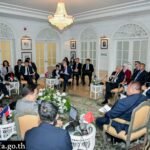
Cambodian Foreign Minister Prak Sokhonn and his entourage. Source : mfaic.gov.kh
What happens next is open to possibilities. A successful outcome, on the Timor-Leste model, could hand both governments a face-saving settlement neither could reach alone—and Cambodia, diplomatically weaker after 2025’s clashes, arguably has the most to gain from a process that doesn’t turn on relative power. But the Commission’s eventual report carries no legal force if either side ignores it. Whether Bangkok and Phnom Penh use the year ahead to actually negotiate or simply to wait each other out will say more about the state of the relationship than the Commission’s findings ever could.
SokhuonIn is a Cambodian PhD Scholar in International Relations and Politics at Mahatma Gandhi University, India, with a research focus on Southeast Asian politics, international relations, soft power, and peacebuilding.