Under General Secretary To Lam, Hanoi is attempting something few Southeast Asian states managed successfully, shifting from an export-driven manufacturing base toward a technology-oriented industrial power while navigating intensifying competition between the United States and China.
Editor – Southeast Asia Analyst.
Vietnam’s rise is no longer just about economic upgrading; it is increasingly driven by geopolitical competition. Under General Secretary To Lam, Hanoi is attempting something few Southeast Asian states managed successfully, shifting from an export-driven manufacturing base toward a technology-oriented industrial power while navigating intensifying competition between the United States and China.
The foundation for this transformation was laid during the 13-year leadership of former Communist Party General Secretary Nguyen Phu Trong. Under Trong, Vietnam became one of Asia’s fastest-growing economy through export-led industrialization, foreign investment, and deeper integration into global trade networks. Poverty reportedly fell from around 14% in 2010 to roughly 4% in 2022, while annual growth averaged close to 5.8% during his tenure. Hanoi also joined major trade frameworks such as the Comprehensive and Progressive Agreement for Trans-Pacific Partnership (CPTPP) and the Regional Comprehensive Economic Partnership (RCEP), giving Vietnam access to some of the world’s largest markets.
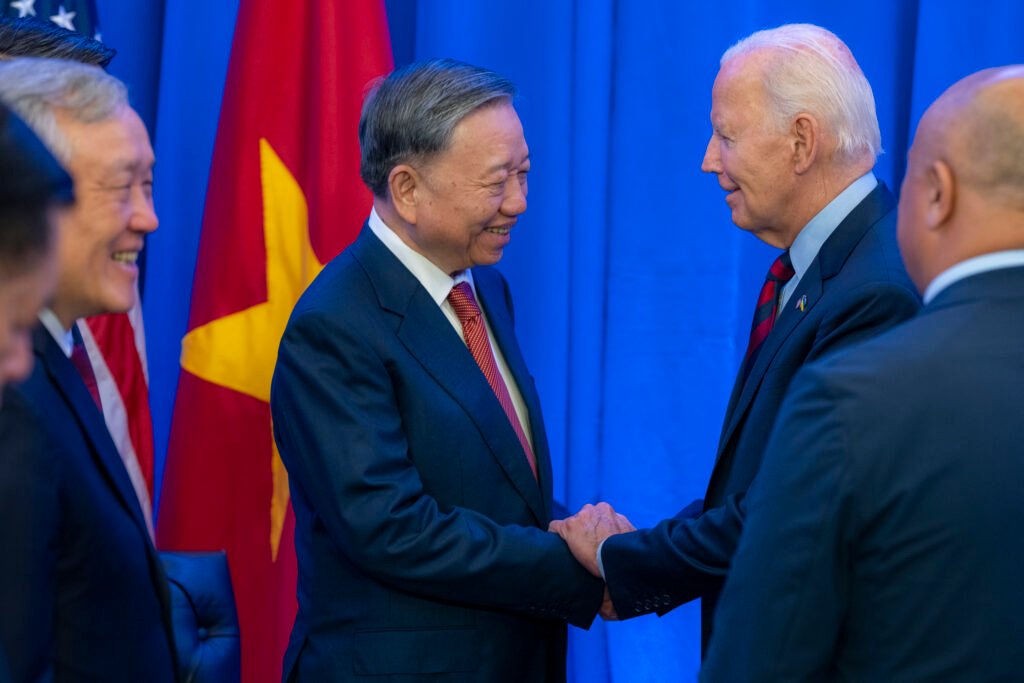
President Joe Biden hosts a bilateral meeting with Tô Lâm, President of Vietnam in New York. Source : Wikimedia Commons
Yet Trong’s most consequential legacy may have been diplomatic rather than economic. His doctrine, “bamboo diplomacy” allowed Vietnam to maintain stable ties with Beijing, Washington, and Moscow without formally aligning with any major power. Within less than a year, Hanoi hosted Xi Jinping, Joe Biden, and Vladimir Putin, highlighting Vietnam’s flexibility amid growing geopolitical fragmentation. That balancing strategy has since become central to Hanoi’s economic ambitions.
To Lam now appears determined to convert diplomatic flexibility into long-term industrial acceleration. Since taking office in August 2024 as General Secretary, he framed 2025–2030 as Vietnam’s decisive “sprint phase” toward higher-income status, underpinned by an 8% growth target for 2025 and an ambition to sustain double-digit expansion thereafter. These goals are anchored in Vietnam’s long-term roadmap under the 13th National Congress, which targets upper-middle-income status by 2030 and high-income status by 2045, with potential recalibration expected at the 14th National Congress in 2026.
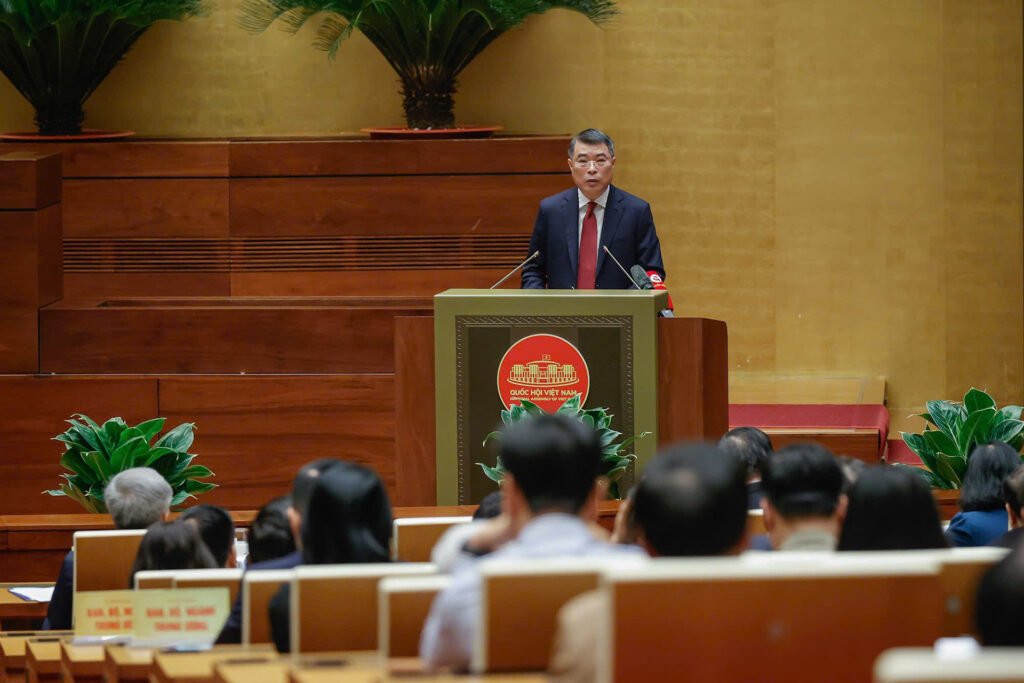
To support this accelerated growth agenda, General Secretary To Lam has initiated what has been described as an institutional overhaul, representing the most extensive bureaucratic restructuring since the Đổi Mới reforms of 1986. The reform includes reducing central government agencies from 22 to 17, removing overlapping administrative structures, and cutting approximately 100,000 public sector positions in an effort to improve efficiency and decision-making speed.
Politburo announces institutional overhaul to parliament. Source VGP
At the subnational level, Vietnam is also preparing a major administrative reorganization. The restructuring plan involves consolidating the country’s 63 provinces and municipalities into 34 units, abolishing the district tier of administration, and reducing the number of communes. The overall objective is to build a leaner and more responsive state apparatus capable of supporting faster implementation of economic and industrial policy.
The Asia Manufacturing Index 2026 by Dezan Shira & Associates ranked Vietnam among Asia’s three most promising manufacturing hubs due to its infrastructure expansion, broad free trade agreement network, improving business climate, and growing technological capacity. Vietnam’s export structure is also changing rapidly. In 2025, exports of computers, electronics, and components reportedly reached roughly US$107.7 billion, rising more than 48% year-on-year, while machinery exports exceeded US$59 billion. This marks a shift away from low-value assembly manufacturing.
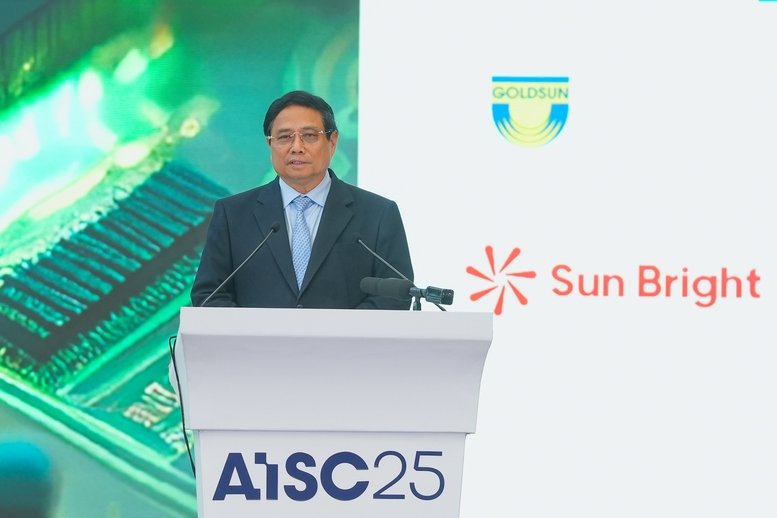
Prime Minister Pham emphasize technology as centerpiece of Vietnam’s development phase. Source : VGP
Technology has become the centerpiece of Vietnam’s next development phase. Rising wages, demographic pressure, and stronger regional competition mean the old labor-intensive model cannot sustain growth indefinitely. To Lam has repeatedly argued that technology and innovation must become Vietnam’s primary economic engines, while the Politburo approved a science and technology resolution allocating around 3% of the national budget toward innovation and digital transformation.
Semiconductors now sit at the core of Hanoi’s industrial strategy. Policymakers increasingly view chips not merely as commercial products but as strategic assets tied to industrial competitiveness, technological sovereignty, and supply-chain resilience. In September 2024, Hanoi approved its National Semiconductor Development Strategy built around the formula “C = SET + 1”, combining semiconductor production, electronics manufacturing, talent development, and Vietnam’s ambition to position itself as a reliable node within global chip supply chains.
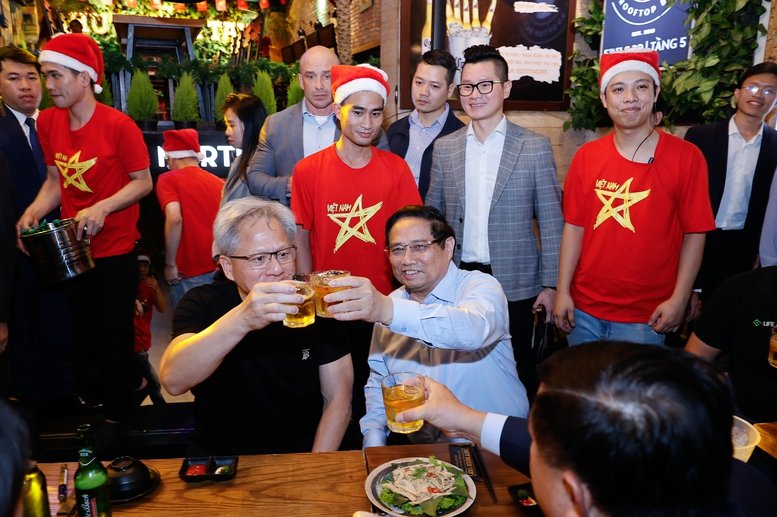
NVIDIA CEO and PM Pham share a drink. Source : Facebook/ Vietnam Government Portal
Foreign investors are responding quickly. Nvidia helped establish Vietnam’s first artificial intelligence research center, while Foxconn pledged approximately US$2.35 billion in additional investment. Reuters reported in May 2026 that Samsung plans to invest roughly US$1.5 billion in a semiconductor testing facility in Thai Nguyen province capable of processing DRAM and NAND memory chips used in smartphones, automobiles, and AI data centers. Intel, Amkor Technology, and Hana Micron have likewise expanded Vietnam’s role within the semiconductor back-end industry.
Vietnam is no longer merely benefiting from supply-chain diversification; it is actively positioning itself within the global economy driven by US–China rivalry. Washington increasingly views Vietnam as an alternative manufacturing hub capable of reducing dependence on China without severing Asian production networks. Beijing, meanwhile, still considers Vietnam economically indispensable because supply chains across southern China and northern Vietnam remain deeply interconnected. Hanoi is exploiting this overlap with considerable skill.
But geopolitical competition also exposes Vietnam to new vulnerabilities. The Trump administration’s decision to impose reciprocal tariffs of up to 46% reportedly caught Hanoi off guard despite attempts to ease tensions through diplomatic engagement and economic concessions. Because the United States remains Vietnam’s largest export market, prolonged tariff escalation could threaten its export-driven growth model and undermine broader industrial ambitions.
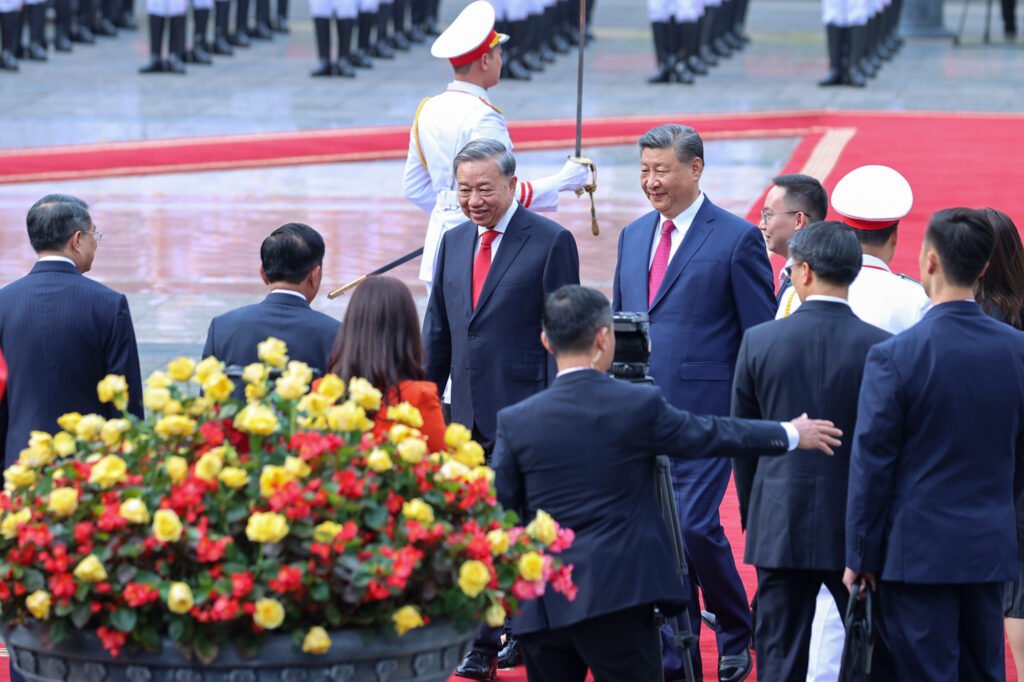
President Xi visits Vietnam in 2025. Source : Facebook/ Vietnam Government Portal
Xi Jinping’s April 2025 visit to Hanoi further illustrated the delicacy of Vietnam’s balancing act. Xi urged Vietnam to oppose what Beijing described as Washington’s “unilateral bullying” and protectionism. Trump, meanwhile, framed the meeting as an attempt to undermine US interests. Yet for Hanoi, maintaining strong economic ties with China remains unavoidable because industrial expansion and logistics modernization still depend heavily on cross-border supply chains and Chinese-linked investment.
Infrastructure expansion has therefore become inseparable from geopolitical strategy. Vietnam has revived the US$67 billion North-South high-speed railway project, a US$8 billion logistics corridors linked to China, two nuclear power plants estimated at US$16 billion, and new deep-water ports. In 2025, Hanoi reportedly launched hundreds of infrastructure projects worth millions of dollars, reflecting the belief that logistics and connectivity will shape long-term industrial competitiveness.
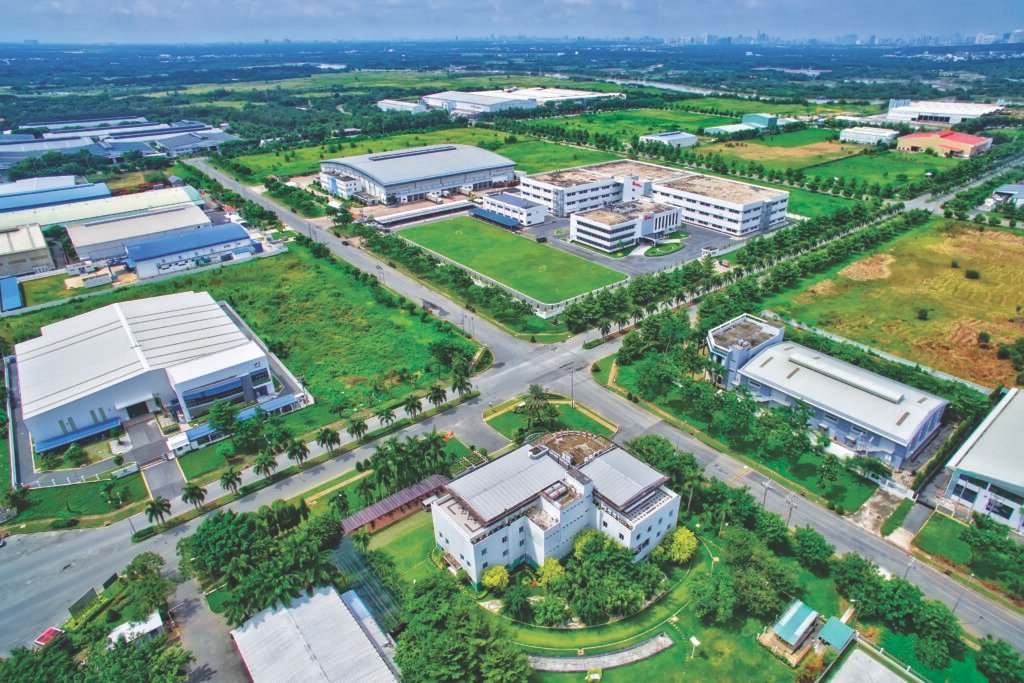
Industrial compound in south of Ho Chi Minh City. Source : Wikimedia commons
The deeper challenge is that Vietnam risks becoming trapped in the “assembly middle”, where foreign firms continue controlling technology, intellectual property, and high-end research while Vietnam captures lower-value manufacturing segments. Even within semiconductors, Vietnam remains concentrated in packaging and testing rather than advanced fabrication or chip design.
Avoiding that trap will require a second-generation industrial strategy focused not only on attracting investment but also on technological absorption. Vietnam’s commitment to training 50,000 semiconductor engineers by 2030 signals intent, but workforce expansion will not be enough. Universities must develop specialized semiconductor curricula while building partnerships with industry through internships, laboratory sponsorships, and applied research collaboration.
Hanoi could engage Vietnamese talent from Silicon Valley, South Korea, Japan, and Taiwan through rotational programmes linking diaspora expertise with domestic institutions, making knowledge transfer more important than capital inflows. However, structural limits remain, as many developing countries still struggle to move beyond low-cost industrialisation. Vietnam is not escaping the middle-income trap, but redefining what it means to operate within it in an era of technological competition.
Jason Fernando is an independent researcher in International Relations and serves as Community Outreach & Empowerment Officer at Indonesia Carbon Trade Association for Youth (IDCTA Youth).