“Keep them in our memory, as time passes the government is trying to erase history and this is the way we can keep them from erasing our past, besides that we need to keep fighting for our rights”
Editor – Southeast Asia Analyst
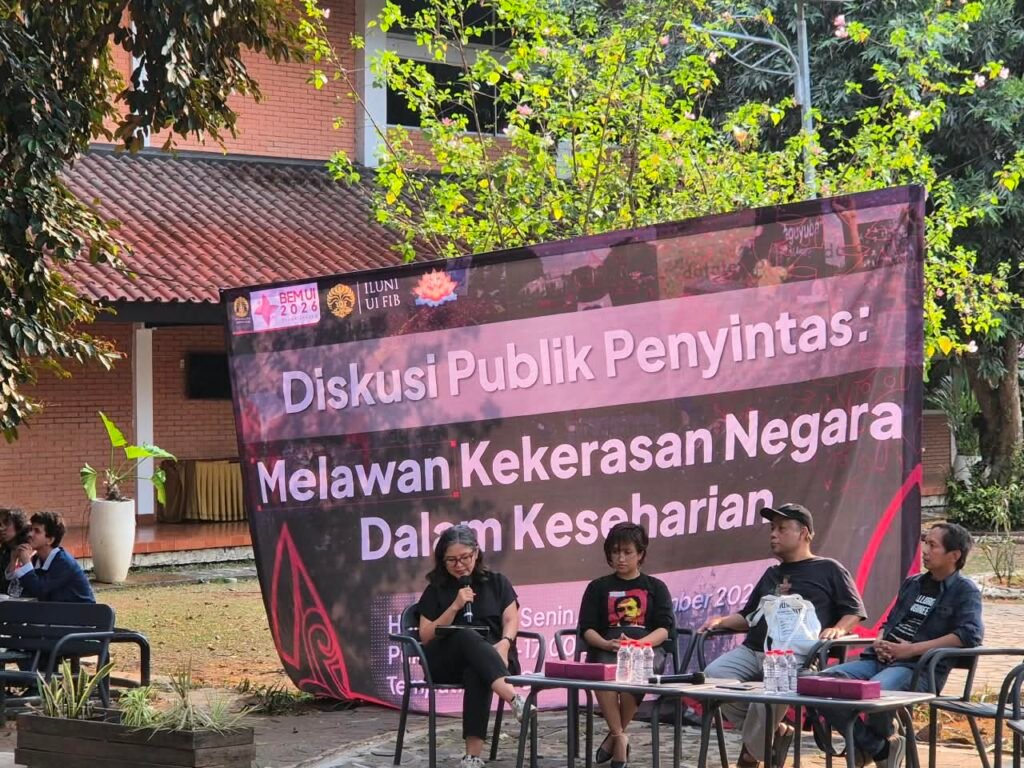
24th September 2026 marked farmer’s day in Indonesia. As such, Jakarta’s Sudirman road was colored blue by labor union members passing through on motorbike and truck convoys while sporting their uniforms and flags making their presence known to passer by and office workers looking from above in skyscrapers. The date also marked the final day of a nearly week-long memorialization of political violence victims in Indonesia that started on 21st September. The event was held by various student organizations in the University of Indonesia (UI) across several faculty compounds. Poem recitals, panel discussions and archive and art exhibitions filled the event.
“fight against state violence in day to day” panel discussion in UI. Source : Southeast Asia Analyst
The exhibitions were dedicated to major political uprisings and renowned activists that were killed, wounded or imprisoned during their struggles against the Indonesian government spanning to and from Soeharto’s administration to this day. Among them were victims of the Tanjung Priok incidents, Nationwide student protest in 1998 a mysteriously poisoned human rights activist Munir Said Thalib, and Andrei Yunus a lawyer and activist who suffered acid attack perpetrated by military personnel earlier this year.
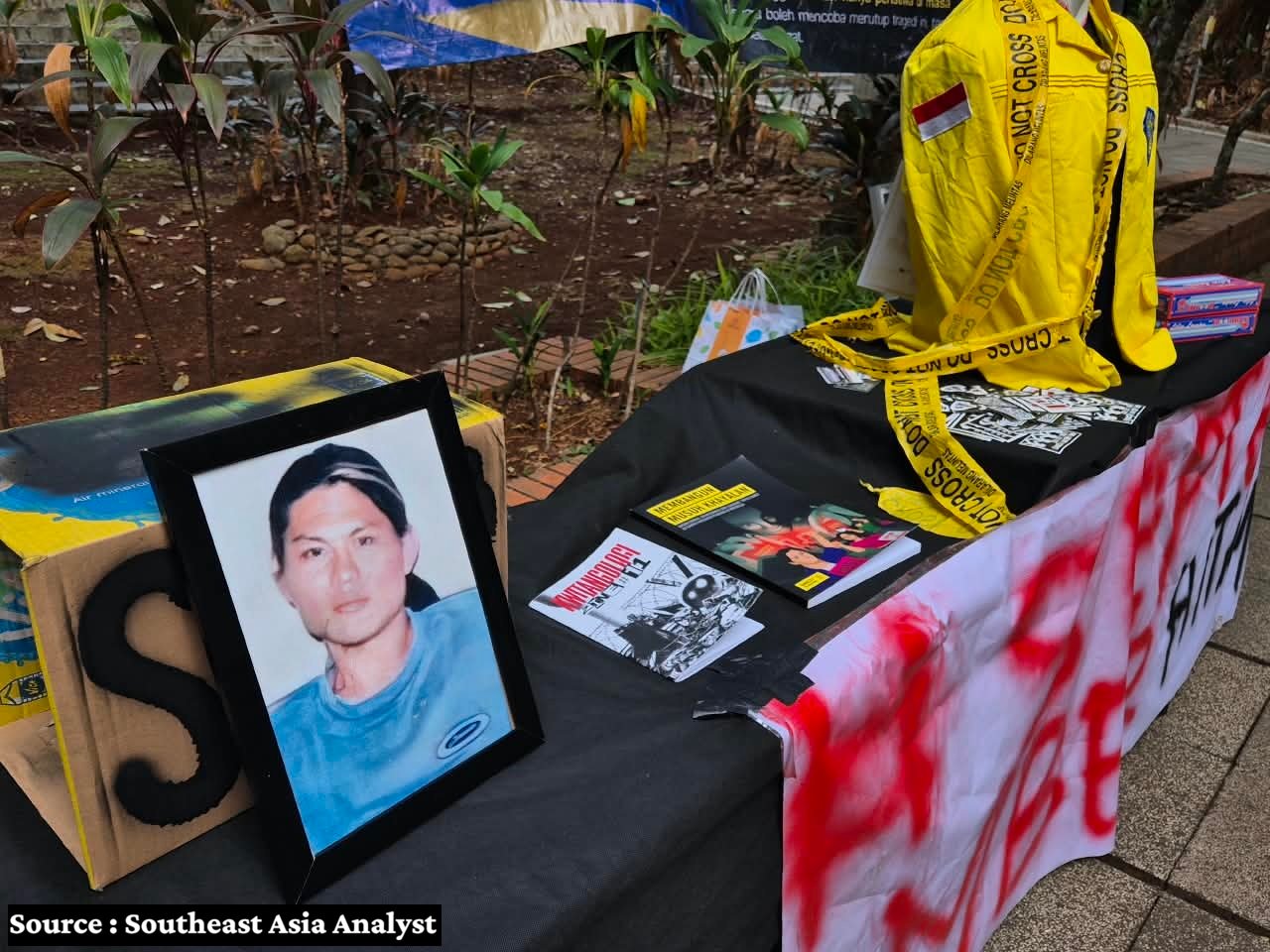
A major section from the exhibition was devoted to Yap Yun Hap, an engineering student who studied in UI and an activist who took part in a protest in Semanggi, South Jakarta on 24 September 1999 during which he was shot and killed by military personnel. His quote that read “I study in UI, it paid for by the people, so I must struggle for the people” took up a major part of the exhibitions. It is widely believed that despite his sacrifice, Yap’s story is largely silenced due to his Chinese heritage in an era that actively suppressed ethnic minorities.
Yap Yun Hap’s portrait hangs during a panel discussion. Source : Southeast Asia Analyst
“I feel like I lost a brother, a mentor and a friend within the struggle, it’s a mixed feeling but it’s dominated by sadness and a sense of loss.” Said an alumni of engineering in UI that spoke with Southeast Asia Analysts.
“It’s sad, so many of them are not taken care of or remembered, we can only pray and keep demanding a thorough investigation.” Said an audience member.
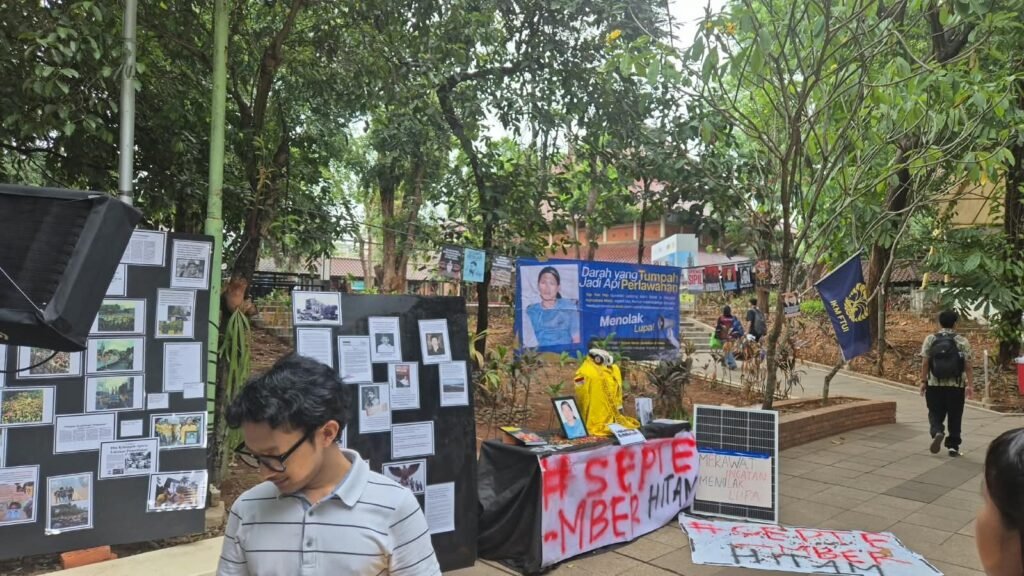
Exhibition taking place in faculty of engineering UI. Source : Southeast Asia Analyst
Although not well known to the public, unlawful and arbitrary kidnappings, detainments and silencing of dissidents and activists alike are still fairly common in Indonesia. Mid this year, South Papuan indigenous rights activist Yasinta Moiwend’s relatives reported their concerns that she’s pressured and silenced by authorities to condemn a documentary that depicted plights of native Papuans and their land rights. Perpetrators of these acts receive disproportionately light punishments. One such case is the aforementioned acid attack on Yunus. The 2 soldiers charged for the attack only received two years and two and half years suspension, a reduction from the original dishonourable discharged as decided from the military court.
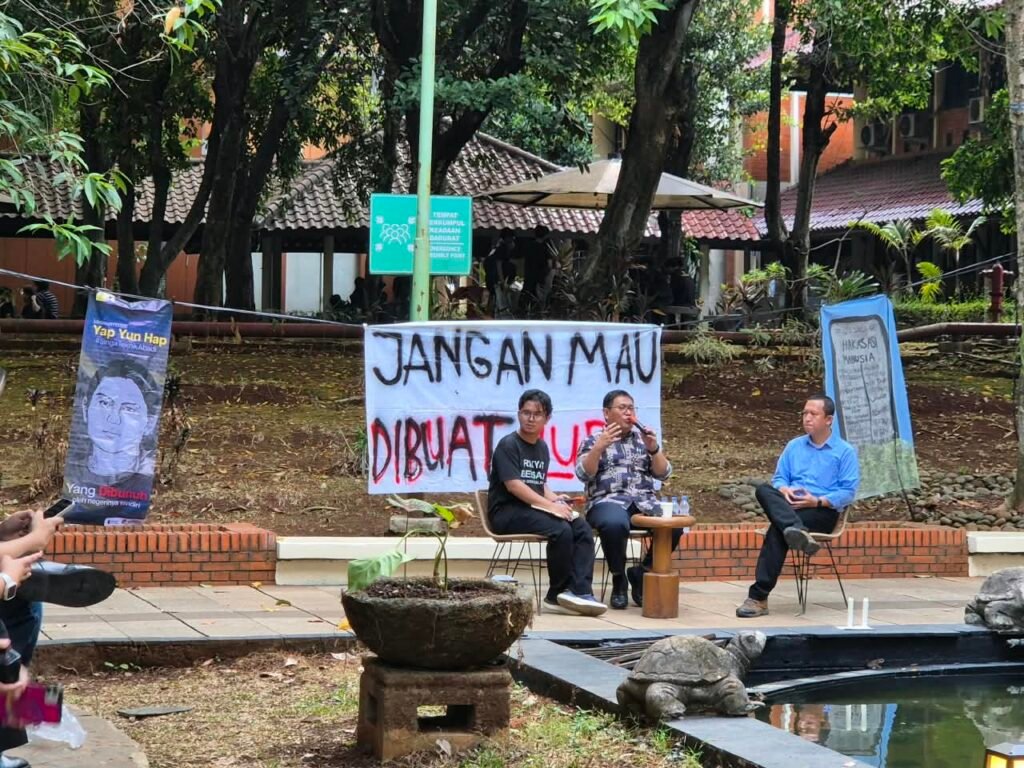
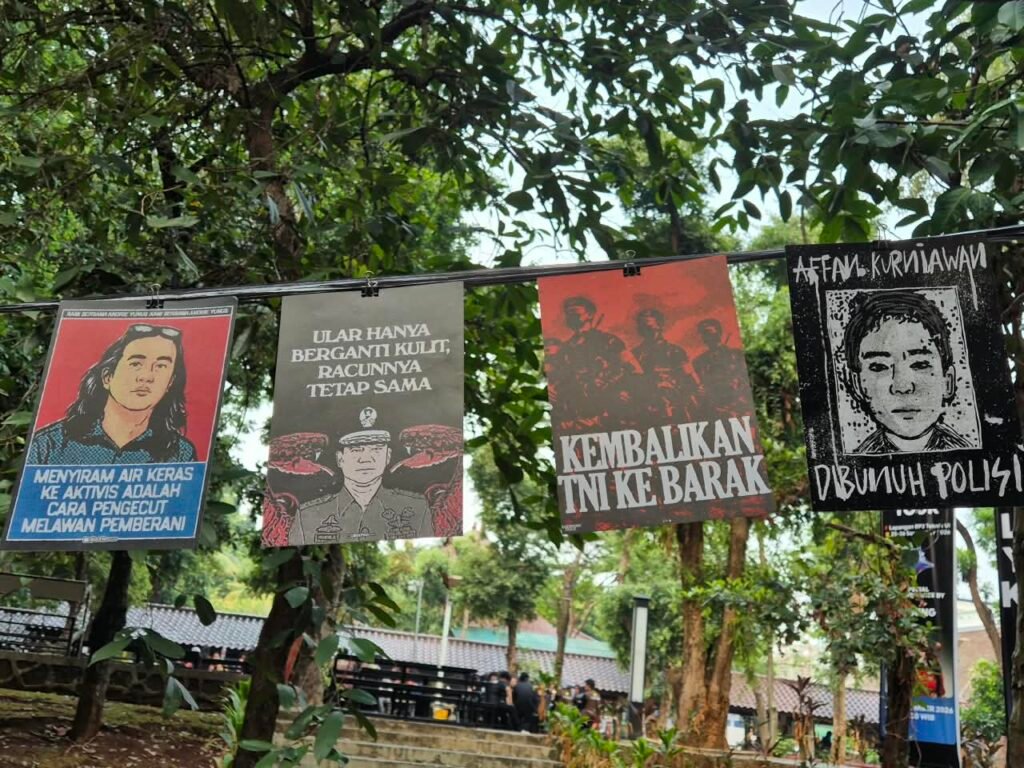
Anti Andrei Yunus poster (far left) hang in a exhibition. Source : Source : Southeast Asia Analyst
“With the military judging military personnel there’s definitely going to favoritism and nepotism, it’s clear, this is why human rights violators need to be dragged out of military court to civil court.” said the event organizer when interviewed by Southeast Asia Analyst.
Dissidents, especially journalists being silenced have also been on the rise. Under President Prabowo’s administration journalists received dead animals through mail on separate occasions, one of them being a severed pig’s head. When questioned about this, the chief of the presidential communication office only replied “just cook it.”
“Keep them in our memory, as time passes the government is trying to erase history and this is the way we can keep them from erasing our past, besides that we need to keep fighting for our rights” said the alumni.
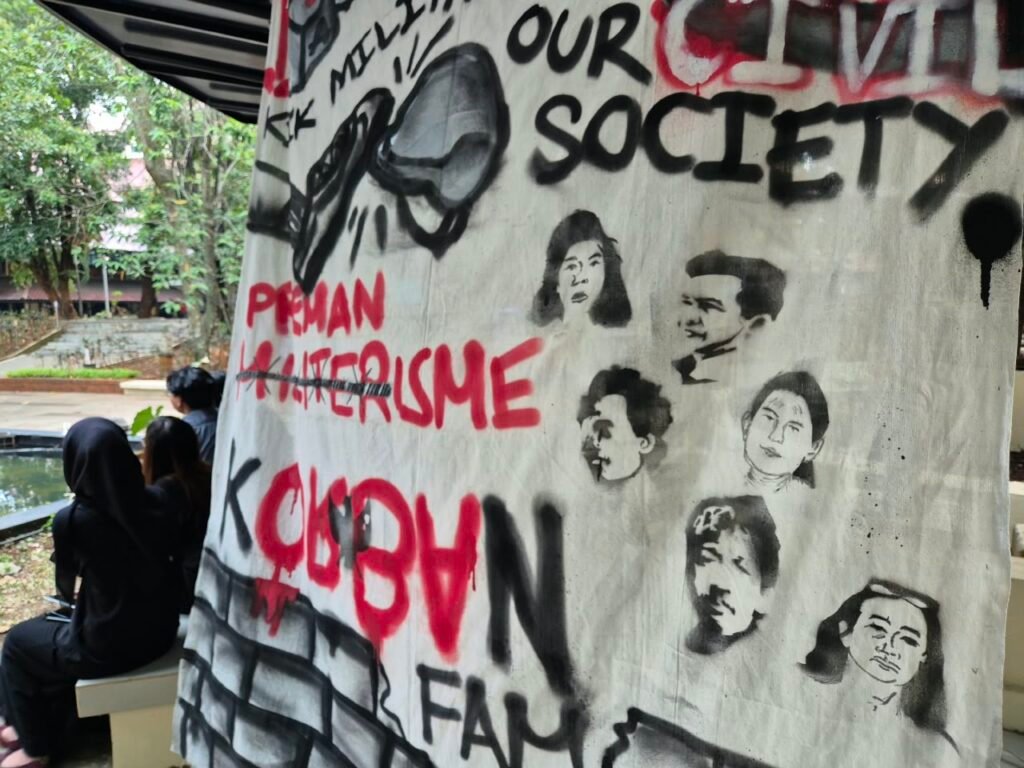
Banner depicting portraits of victims of political violence. Source : Southeast Asia Analyst
Silencing efforts from the government is becoming a genuine concern especially considering the ministry of culture’s plan to release a revised history book titled “Indonesian History : A Nation’s Dynamic Within the Global Flow.” Despite criticism culture minister Fadli Zon defended this plan claiming that it was compiled by experts with interest in narrating a positive tone.
Although no reliable poll on government satisfaction or presidential approval rating is available, disappointment towards the government is tangible with citizens online and offline criticizing new statements made by Prabowo every other week. Rumours of a large protest taking place led by labour unions are taking shape, it is yet to be seen if the government will double down on its tendencies for political violence.
Han Kyeol Kim is an Editor in Southeast Asia Analyst