Indonesians may be one of the most forgiving people in the world. How Many Political Controversies Does It Take Before We Finally Learn Our Lesson?
Editor – Southeast Asia Analyst
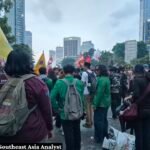
In 2020, thousands of people took to the streets to protest Jokowi’s Job Creation Act (UU Cipta Kerja) over concerns about its impact on workers’ rights and environment. The anger spread beyond the streets into social media. During the October protests, hashtags like #TolakOmnibusLaw became a reason for young Indonesians to voice out their opposition. Researchers describe this as part of a wider shift in Southeast Asia toward digitally mediated, participatory youth protest, which then became the trend of resistance at the time.
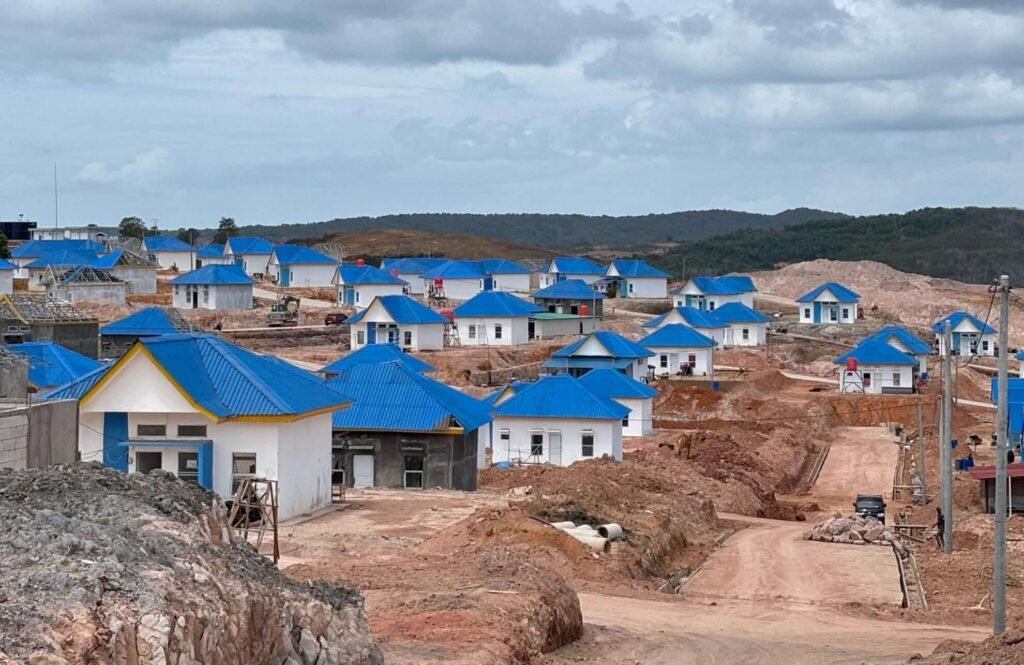
Three years later, the Rempang conflict set off another wave of public anger. Residents who feared losing their homes to a government development plan took to the streets, as Indonesians had done against the Job Creation Act. Others used social media to criticize the government’s response and express solidarity with the residents.
Remnants of Rempang Eco City. Source : bpbatam.go.id
Protests and online criticism proved that Indonesians can push back against controversial government decisions. But does that anger turn into the choices voters make at the ballot box? The 2024 presidential election provides a useful test of whether public anger influences voting decisions. Prabowo Subianto won the presidential election together with Gibran Rakabuming Raka, the son of President Joko Widodo, with 58.59 percent of the national valid vote.
Gibran’s candidacy sparked controversy after the Constitutional Court changed the age limit for presidential and vice-presidential candidates. Constitutional Court Chief Justice Anwar Usman, Gibran’s uncle, was later found guilty of committing a serious ethics violation. At the same time, Populi Center recorded that 80 percent of respondents were satisfied with Jokowi’s performance in a survey conducted from 27 January to 3 February 2024. In an Indikator survey in 13 key provinces in January 2024, the reasons for satisfaction most often cited by respondents were aid to ordinary people and infrastructure development.
The survey data does not show how each voter judged the controversy over Gibran’s candidacy. Jokowi himself was not on the ballot, but his son was, and Prabowo-Gibran was widely seen as the continuity ticket. His popularity may therefore have carried over to the pair, even while the controversy over Gibran’s candidacy was still fresh. The controversy did not prevent them from winning a majority of the votes. That raises questions of whether public anger over political controversies can influence voters’ choices when they finally cast their ballots.
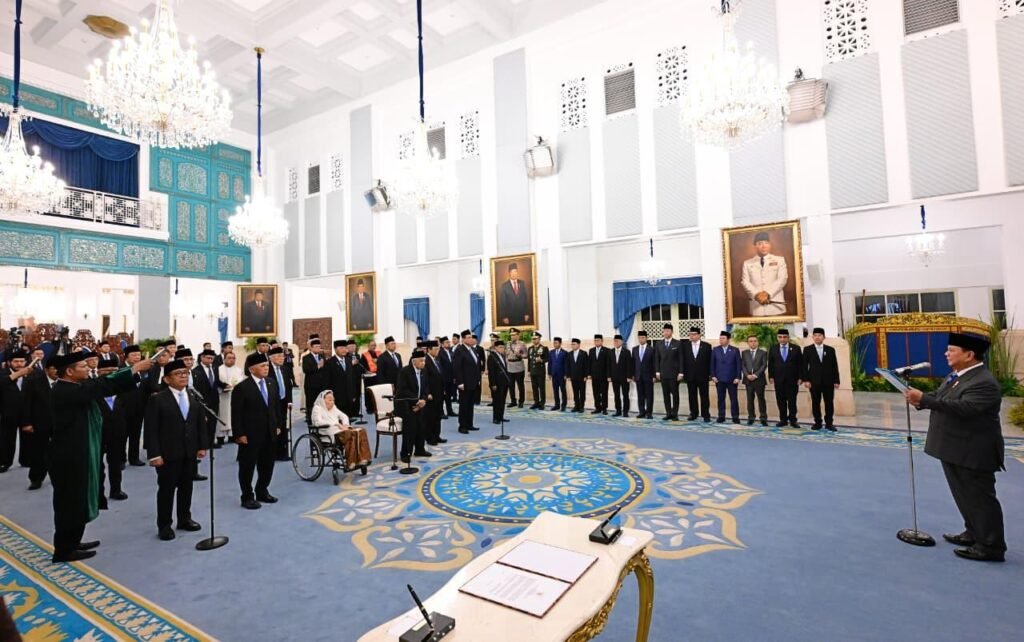
Prabowo inaugurates Anwar Usman and several other officials to his council of advisors. Source : setneg.go.id
Indonesians showed the ability to organize protests and spread criticism within a short time. The challenge is to sustain attention after an issue loses its place in public conversation. A controversy can dominate the public space for weeks, then sink when attention shifts to another issue. As a result, criticism of the government is not always followed by an evaluation of the leaders’ track records during election season.
Image played a part too. In 2024, Prabowo’s gemoy (cute and cuddly) personality spread across social media and made him look softer and easier to like. There’s nothing wrong with that on its own. But a likable image tells voters nothing about a candidate’s record. When it sticks in people’s minds better than the controversies do, voters end up going with who they like instead of examining their performance.
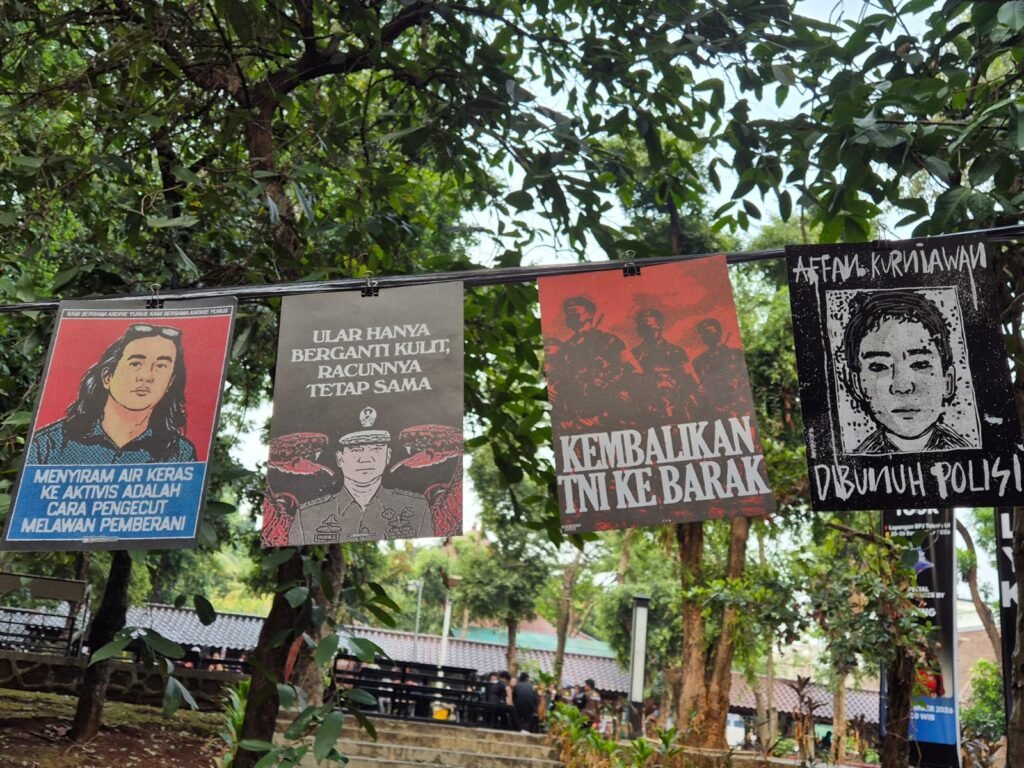
Anti government posters honouring victims of political violence including Affan Kurniawan. Source : Southeast Asia Analyst.
This pattern continued after the 2024 election. In August 2025, the death of Affan Kurniawan, a 21-year-old online motorcycle taxi driver who was run over by a police tactical vehicle during a demonstration in Jakarta, again triggered public anger. His name became a symbol of solidarity and of demands for accountability from the security forces.
Public attention needs to last longer than the news cycle. Beyond spreading Affan’s name and expressing solidarity, the public needs to follow the investigation, demand transparency, and ask whether those responsible are held accountable. Without sustained oversight, public anger risks fading before the demands for justice lead to meaningful action.
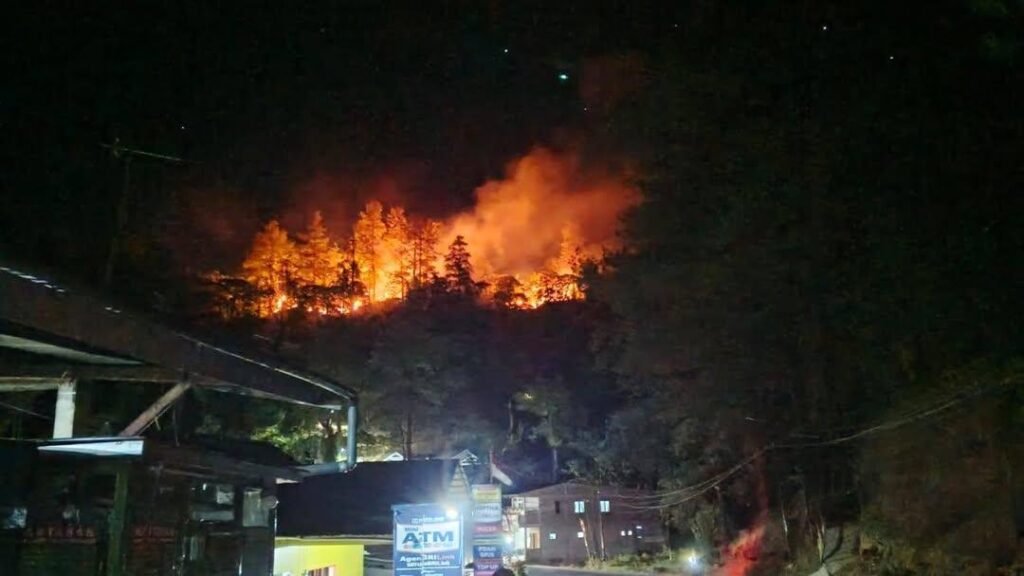
Forest fire causing haze. Source : X.com/ @serabutannn
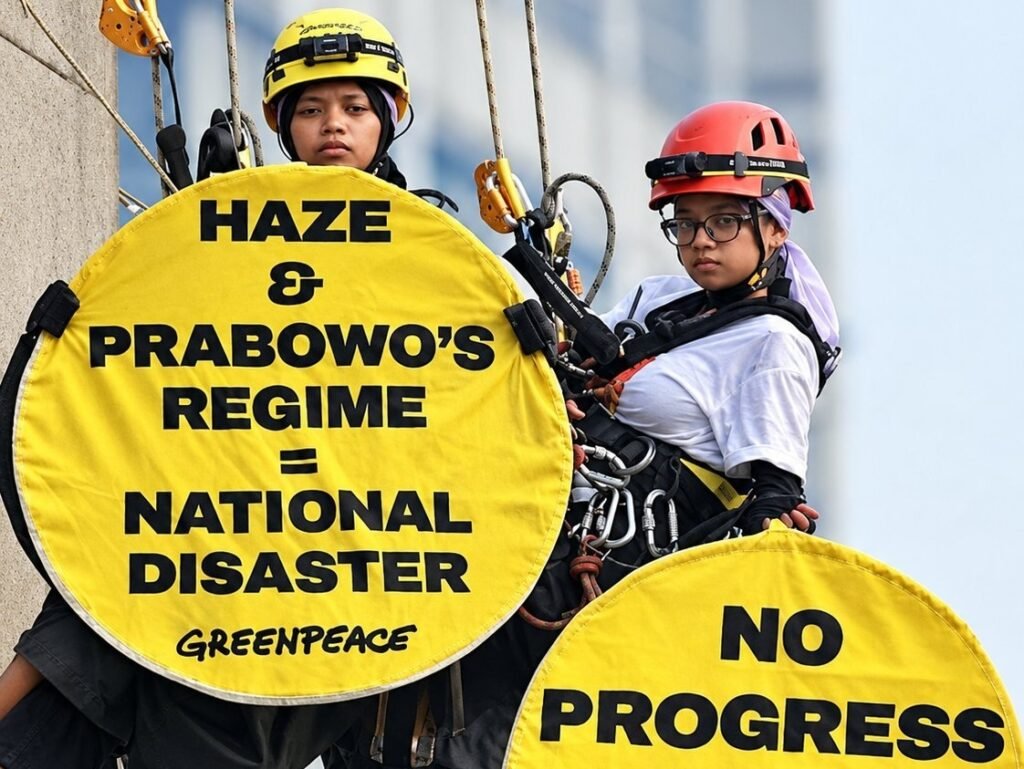
The cycle of public outrage continues under Prabowo. This year, forest and land fires (Karhutla) have become another source of criticism of the government. The numbers are hard to ignore. By the end of July 2026, SiPongi had recorded more than 200,000 hectares burned, and as of 12 October National Disaster Management Body was still putting out fires on about 639 hectares across six provinces. Gakkum KLHK counted 366 percent more fire incidents from January to June than in the same period of 2025. CELIOS puts the economic and health losses somewhere between Rp39.29 trillion and Rp123.1 trillion. Outrage from this debacle culminated into a months-long criticism, demand for action and protest. Yet the situation remained largely unchanged.
Presidents come and go but public anger rarely turns into lasting accountability. Criticism cannot stop at social media posts and angry comments. Change doesn’t happen on Instagram stories. It disappears after 24 hours, and if our attention does the same, so will the pressure on the government. Indonesians need to keep demanding accountability and keep these issues in mind when electing officials and parliamentarians.
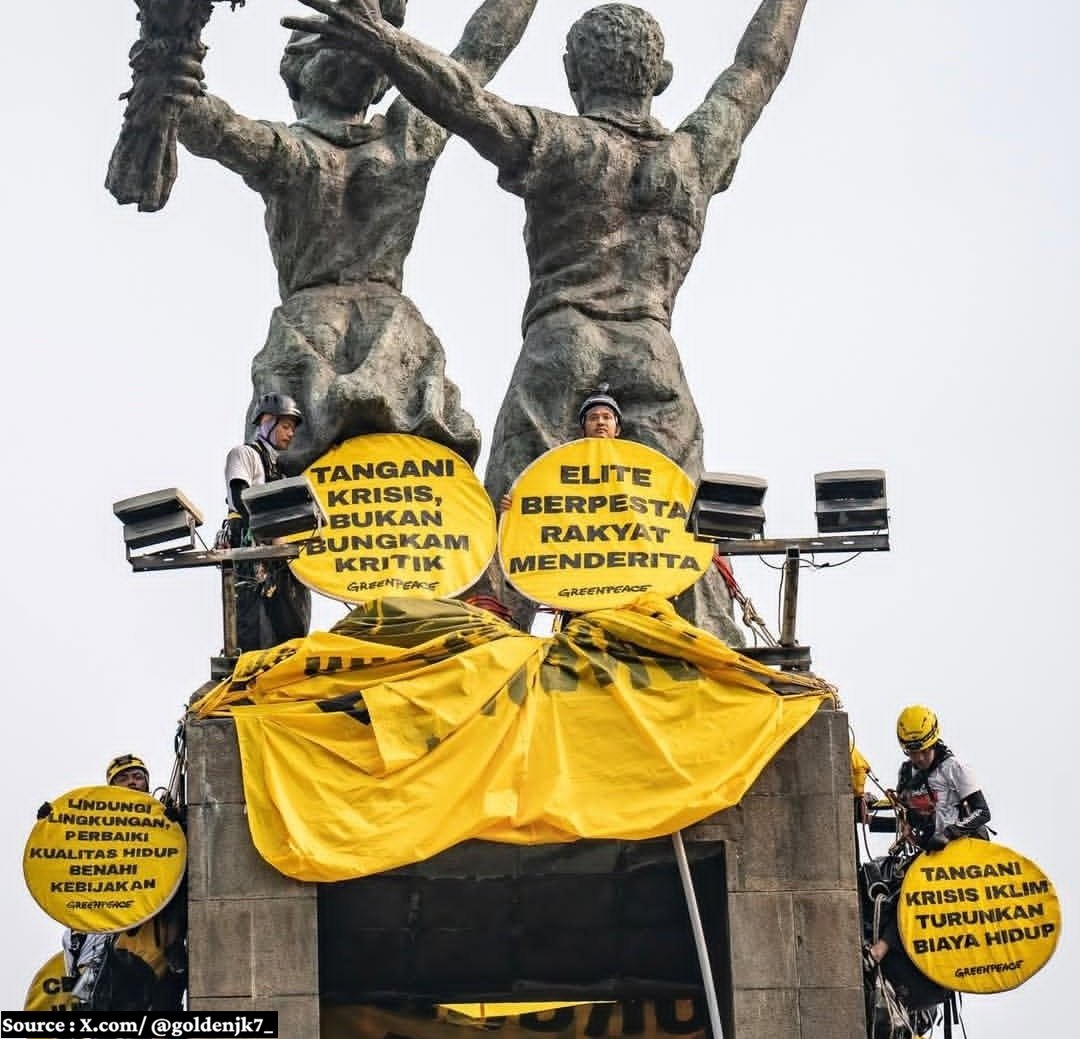
Activist carry signs while hanging from a statue in central Jakarta. Source : X.com/ @chaaaaww
Ahead of the 2029 election, Indonesians need to bring the lessons of these controversies into their political choices. Criticizing the government, spreading information on social media, and taking to the streets are important parts of democracy, but public concern must continue after an issue is no longer widely discussed. The media needs to follow unresolved cases, civil society organizations can document government decisions and their outcomes, and voters need to evaluate candidates based on their track records rather than popularity alone. Public anger matters beyond the moment only if it shapes how voters judge leaders at the next election.
Sultan Hikmatyar is an undergraduate student of politics and international relations from Albukhary International University