I think in terms of physical adaptation, you can you can get by that easily after you get a routine and figure it out, but emotionally and mentally, it’s probably the hardest part.
Editor – Southeast Asia Analyst.
Singapore is only one of few countries in Southeast Asia that consistently implements National Service (NS). Able bodied young Singaporean men are required to serve in the military for 2 years. Singaporean society views it as a rite of passage for young men. Veterans often openly talk about their unique experience in the military. One such is Vivek, a Singaporean NS veteran who served from 2020 to 2022 based in Jakarta and agreed to an interview with Southeast Asia Analyst.
How does life typically look like as a Singaporean National Serviceman
For the typical NS man, your first 4 months in the Army is your basic military training (BMT). So that’s when you live in Tekong, the island next to Singapore, that’s when you do your basic training, you learn how to shoot, you learn how to throw a grenade, you know, the basic Army stuff, survival stuff, and then, after that, 4 months, you get your posting your job, and unless you get into a school to further your rank, you typically get one job which you stick to for the next one year and one and a half years give or take. So it really depends, where you get your posting.
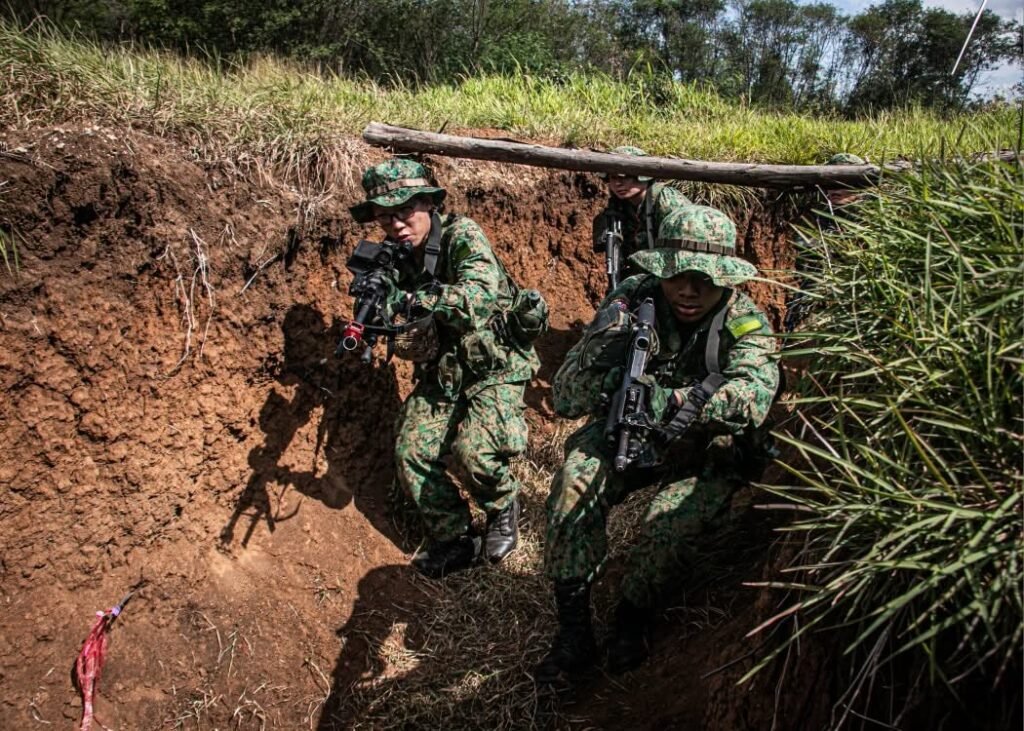
Singaporean soldiers training in trenches. Source : facebook/ The Singapore Army
So I had two different postings because of an injury I had, my initial posting was a desk job because I was not allowed to do anything physical, because I broke my foot right, so it was more of a going to the office to clock in and do what you need to do until 6 PM lows on clock out. Go home. Rinse and repeat every day.
When you say go home, do you mean go home to your civilian home or a barrack?
So at my desk job I was at stay out, so stay in means you live on the base and you go out on weekends, but stay out means you get to go home every day. So, I was lucky enough to get a stayout for the majority of my time in the Army, so I was able to go home most of the time.
When you are in the BMT, everyone is stay in and I would say once you once you’re in your posting, it’s about fifty-fifty, if you’re lucky, you get a stay out job, because a lot of the time is they get some sort of training, so if you train to become a security trooper, a driver, a medic, if you want to become a sergeant or an officer, there is a couple months of training period where you have to stay in, then, after that, it gets to stay out, so eventually everyone gets to stay out.
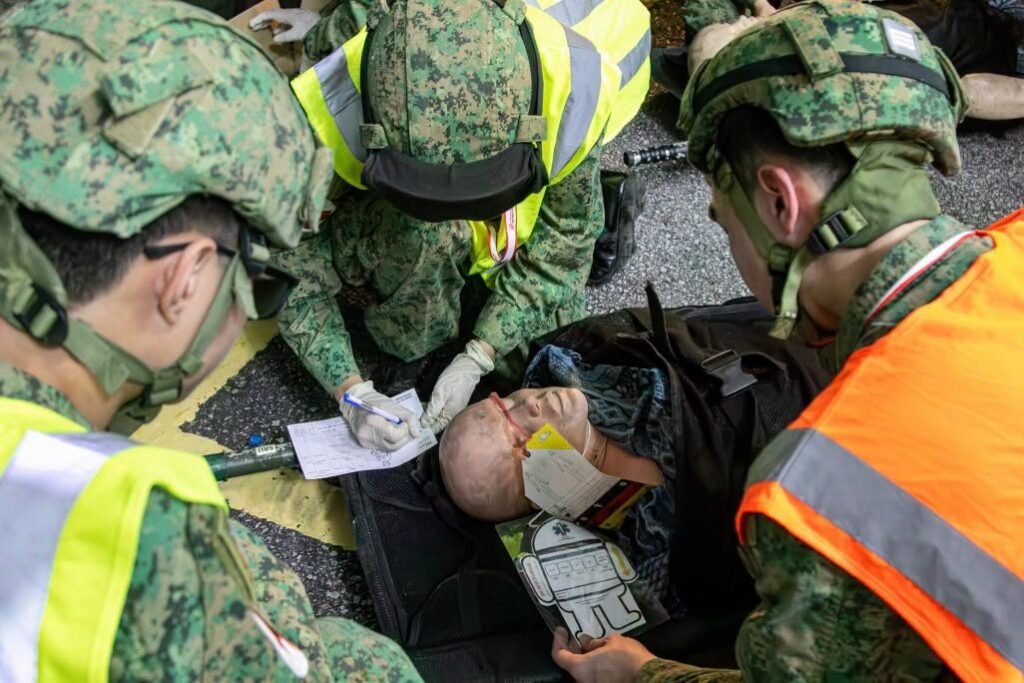
Singaporean soldiers training in chemical, biological, radioactive and special explosive situations. Source : facebook/ The Singapore Army
What would you say is the toughest part for you? Being a national serviceman in Singapore?
I think for me, it’s slightly different to, if you ask a local in Singapore, what that experience was because I think the hardest part for me was getting used to the people, the culture, the language you know, I was born in Singapore, but I lived in Jakarta for 18 years before I went to Singapore and that was my first time living there, in the Army.
I probably lived there, a total of two nights before I enlisted because of COVID, so I think just getting used to the people and getting used to everything was the hardest part for me, right? I think even after 2 years I was still struggling to adapt.
Would you say that the more difficult part of NS is the mental and the emotional part as opposed to the physical part?
100%, I think in terms of physical adaptation, you can you can get by that easily after you get a routine and figure it out, but emotionally and mentally, it’s probably the hardest part. I think I struggled with that during my BMT, because that’s when probably the living conditions are the worst for you. That’s when you wake up in the middle of the night, not realizing where you are, which you’re not used to yet. I woke up a couple times forgetting, I was in the Army, looking around like, “where the hell am I then realizing? Oh shit, I’m a million miles from home”, so I think that’s the hardest part for me.
The Singaporean government usually loves to promote NS as a social equalizer and a social mixer, would you say that’s accurate in your experience?
I think that’s more of what is advertised as but less of what it is in terms of the experience I had, or the people I’ve met, it’s really less of that. I would say it’s like this, it’s equal because everyone’s put in a situation where they don’t really want to be in. So we all just suffered together, right? Because I think that’s the way I bonded most people is we have to do this useless thing together, or this job today. Let’s just, you know, get along and do it together so might as well just, you know, befriend someone.
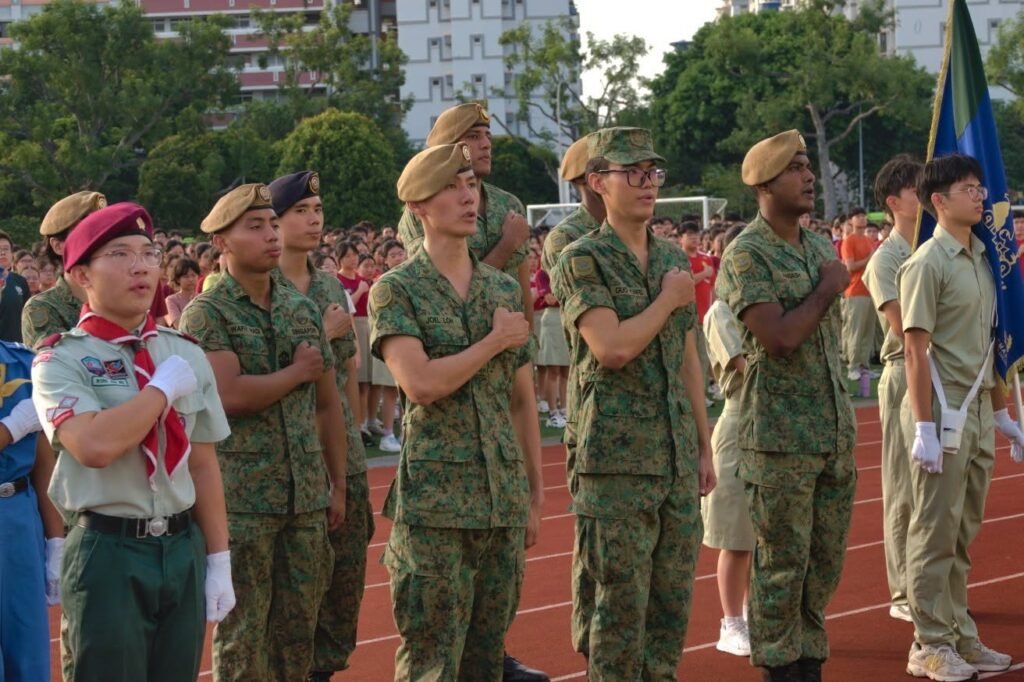
Singaporean soldiers of different ethnic backgrounds. Source : facebook/ The Singapore Army
What about the part about the social mixer? Would you say that the experience allows these people to become one people as Singaporeans and not as separate Chinese Malays or Indians.
That’s difficult because I think inherently, there is a lot of racism rooted in Singapore, especially growing up. I personally had a few experiences of my own, if you look online right now, a lot of the Singapore youth, there is a discourse going on about racism in Singapore and how it’s prevailing. Even though you want to believe that everyone has grown so much in the past couple of years, so in terms of meeting other cultures, yes, but I wouldn’t say it’s an equalizer in terms of like 0 racism, because that’s definitely still there.
For example, for me, one of my postings. I was in a majority Chinese camp. So I was probably one of the only a few Indians there I didn’t see much else of other Indians, but it was less of racism as in singling me out more of Accidentally leaving me out of things, because I can’t speak the same language as them, I can’t interact the same way as them.
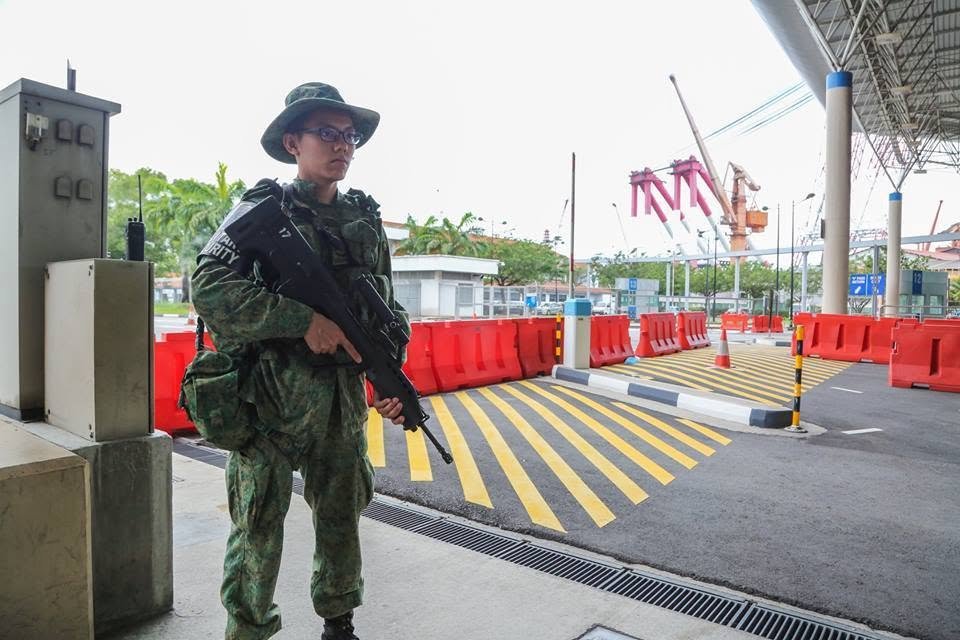
The only kind of singled out I kind of felt was when you enter camp and you exit camp, you can get pulled for random security checks, so it’s supposed to be random, in my 8 months in this camp. Countless times I got pulled for bag checks, extra security checks, got padded down, after a couple months I was in one of the storerooms with some of my friends, and I was like, “I just got a security check again today it’s like the fifth time”. They were like, “they do security checks?”
Singaporean solider standing guard duty at a check point. Source : facebook/ The Singapore Army
They had no clue, because none of them had ever gone through it. But me, being one of the only Indians in the camp, have gone through it. And I’m not surprised that, you know, it happened to me multiple times considering my skin.
How do you think the NS experience changed you to the men that you are today?
I think it hasn’t changed me in any special way, except for the people who I’ve met, whether good or bad, have rubbed off only in a specific way as things I’ve learned from dealing with a lot of people that I wouldn’t have dealt with, I think the main thing I realized from the Army is that you meet a lot of people you would not necessarily meet in real life. Otherwise, whether good, whether bad, whether the people who are impactful in my life or not, I think it was a 2 year experience that. I mean, there was obviously a unique experience like getting to shoot a gun. But I think in terms of the way I actually got changed, was meeting all these different kinds of people and learning about different cultures, I think that put more of an impact on me.
Could you tell us the most meaningful or impactful thing that you’ve done while you were there?
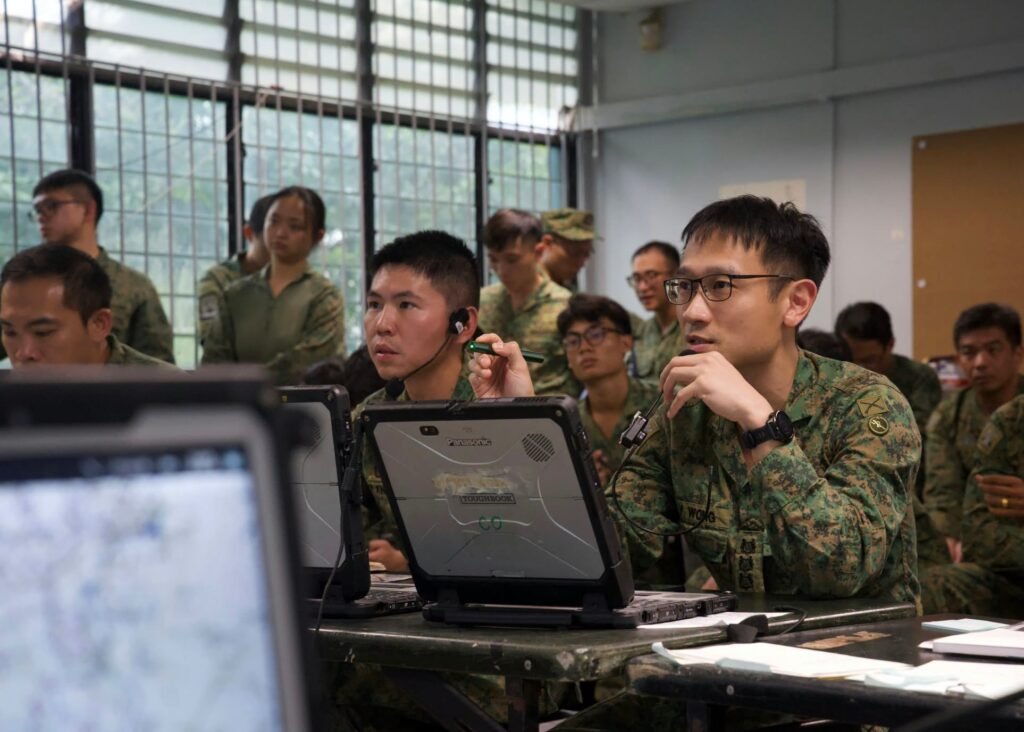
If I’m not mistaken the general of the Army, started his own side project in the Army, where our job was to monitor natural disasters in Southeast Asia. So there’s levels of alertness or danger with each one and when a country in Southeast Asia needs aid that’s what our unit did, we sent aid out to those countries. So I think that was probably the most impactful thing I’ve done was help with that. Obviously I wasn’t playing a major role in it, but I was just one of the wheels in the system.
Soldiers in a meeting. Source : facebook/ The Singapore Army
The project has been ongoing. We sent aid to Indonesia for COVID at some point I remember telling my superior officer to send me on the ship so I can go say hi to family.
So if you could go back in time and begin NS all over again, what would you do differently?
I think my turning point in the Army was when I got my injury, because I was supposed to go to sergeant school and learn a bit more, and that’s something I really wanted to do. So I think the only thing I would change is to make sure I don’t get the injury, because that was the only I guess, regret I had is not being able to see through that commitment I wanted to have.
Could you tell us one thing you like the best about the Singapore military and something you like the least about it?
I think the thing I love the most was the camaraderie I shared with people, especially because we’re all in the same situation where we don’t really want to be doing what we’re doing, and because of that, you just end up having to get alone no matter what. So I would go to lunch every day with the same 5, 6 people and we’d get to know each other. And it gets really nice like that. The bond you have with them, I still meet them every time I go back to Singapore.
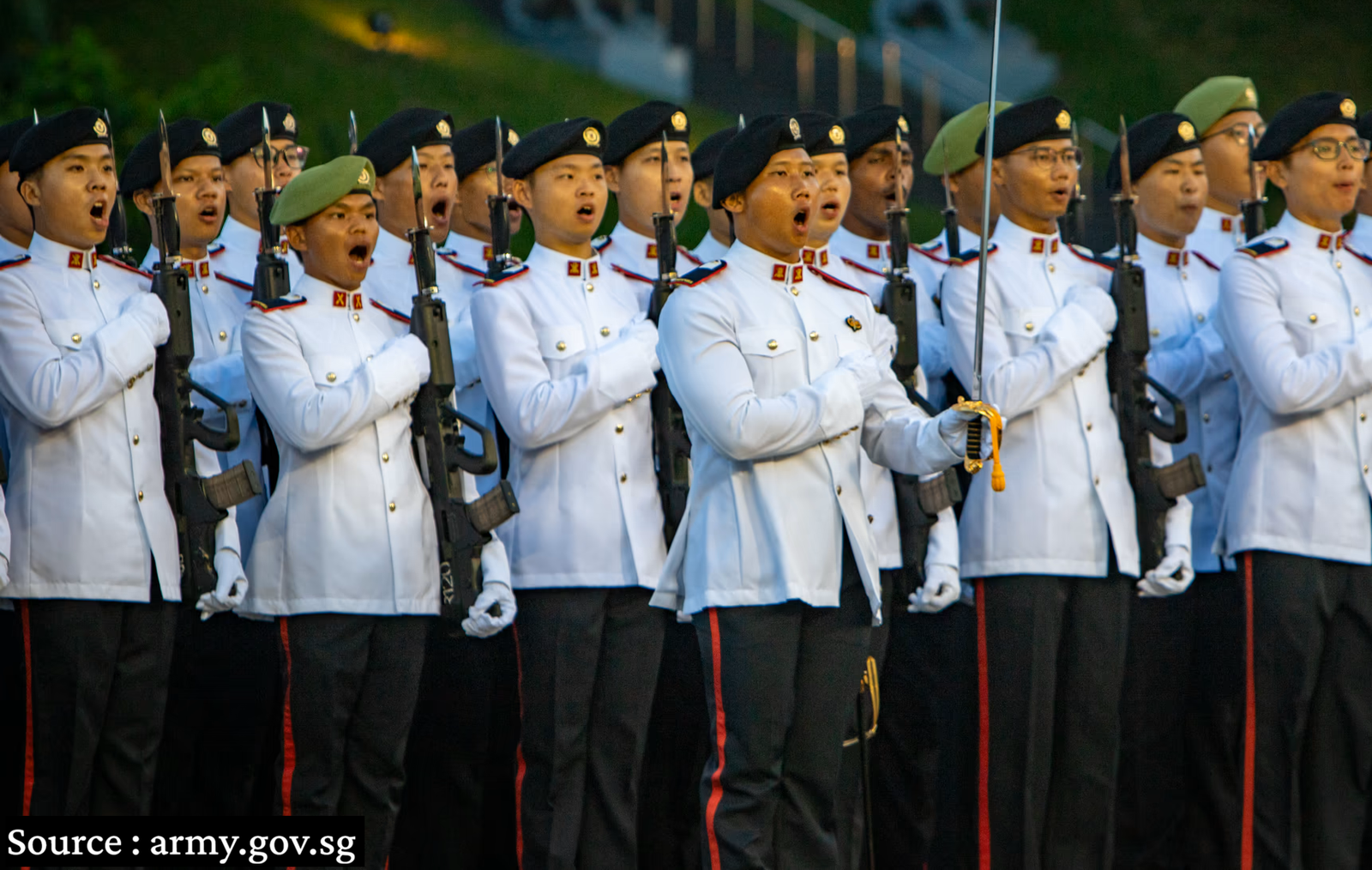
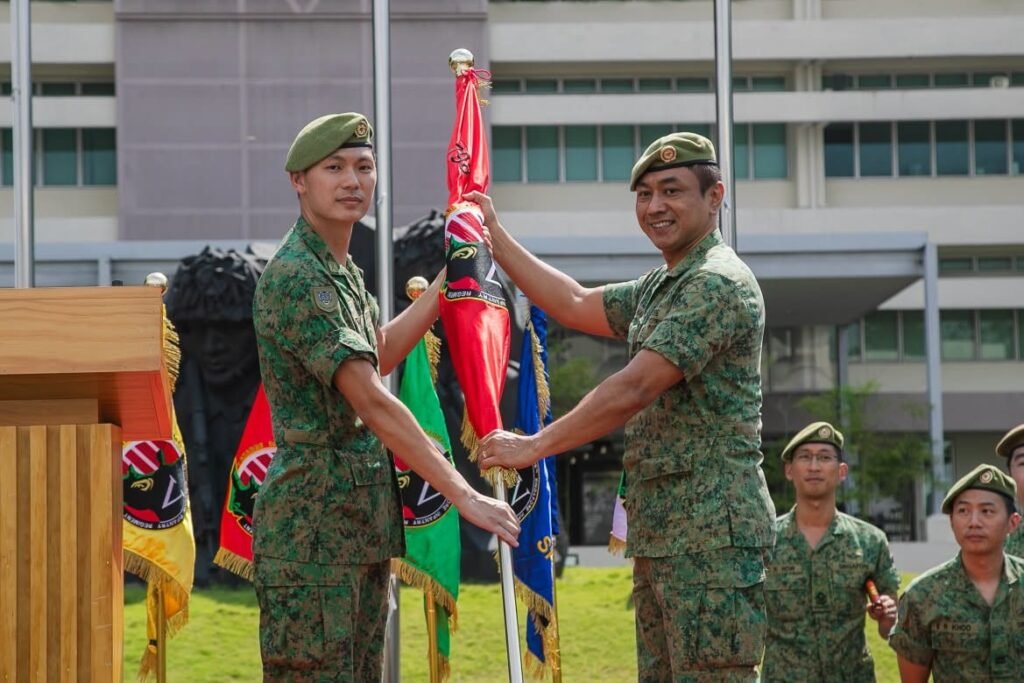
Soldiers in a flag transfer ceremony. Source : facebook/ The Singapore Army
I think the thing I like the least is the length of time. I understand why NS can be useful, especially the first 4 months were the most impactful for me. That was the basic training after that I understand you need to have jobs and you need people to do things, but I think that one and a half years after basic training is a bit too long, I think if you bring it down to 6 months, maybe maximum a year post, I think it’ll be great. But I think that my least favorite is the amount of time that I felt I kind of wasted because my job after that wasn’t so useful like to myself.
Well Vivek it was a great interview, thank you very much
Thank you very much for having me.
Han Kyeol Kim is an editor in Southeast Asia Analyst