Why is it easier for Indonesians to believe in superstitions than in global warming? And why is the easiest way to encourage Indonesians to protect the environment is to insert mystical narratives around it?
Editor – Southeast Asia Analyst.
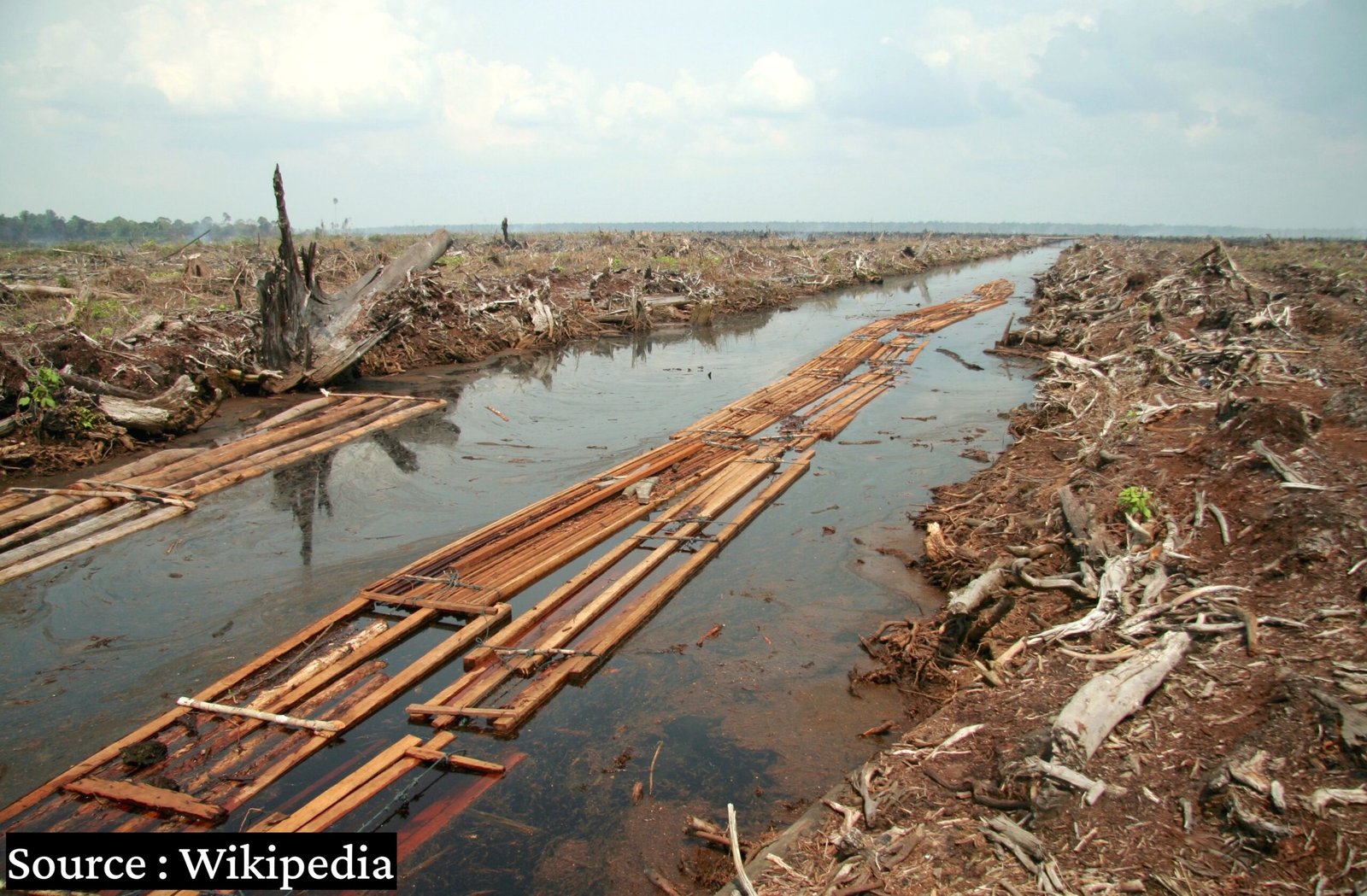
In 2026, Indonesia saw the release of two major films that addressed environmental issues. One such film is the fantasy drama by Wregas Bhanuteja titled Para Perasuk (Levitating). Bhanuteja, as writer and director, uses the water privatization issue as a plot device that drives the journey of Bayu (played by Angga Yunanda) to raise ransom money through possession parties. Another recent film addressing environmental issues is Joko Anwar’s Ghost in the Cells. Wrapped in horror-comedy, this film touches on domestic deforestation through the story of Dimas (played by Endy Arfian), a journalist who has just covered illegal logging in the Nehea Forest and must face ghosts from the sacred Dayak forest, which was cleared without state protection.
Both films, whether deliberately or not, became a reflection of the dominance of mystical thinking that is still deeply rooted in Indonesian society. Many Indonesians still find it easier to digest and believe in mystical things rather than thinking within an empirical and systematic cause-and-effect framework. Beside that, Para Perasuk and Ghost in the Cells have opened up space for audiences to reflect on how society’s way of thinking can shape how far environmental issues enter the public policy agenda.
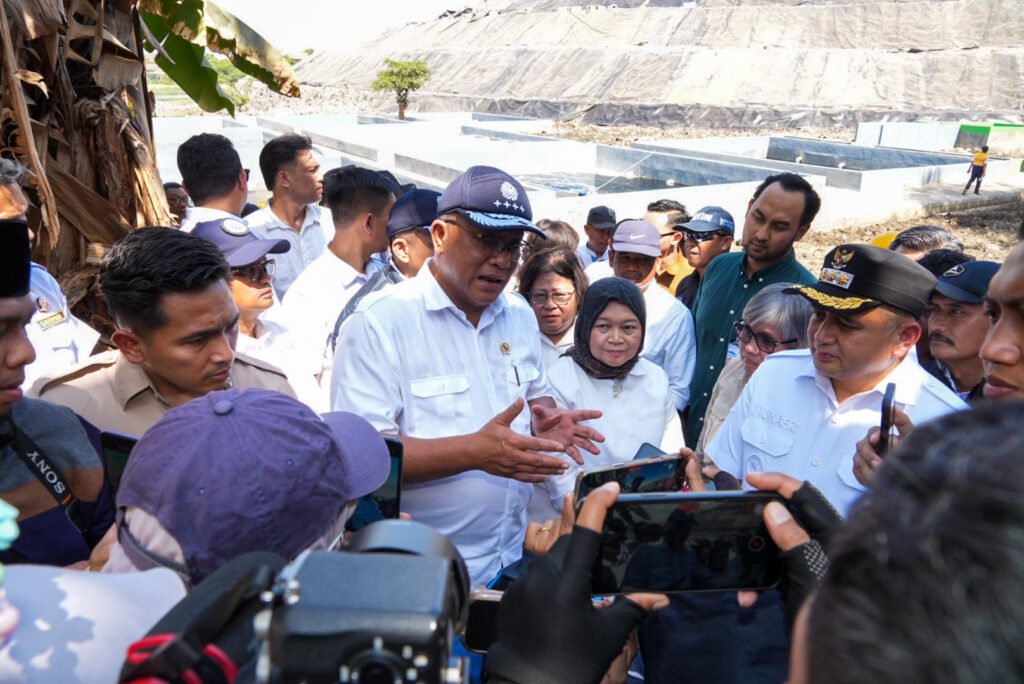
Minister of Environment and Forestry talks to reporters on august 2026. Source : kemenlh.go.id
Like ghosts, most implications of environmental issues are difficult to see explicitly. However, their existence can clearly be felt in many intersections of people’s lives. So, why is it easier for Indonesians to believe in superstitions than in global warming? And why is the easiest way to encourage Indonesians to protect the environment is to insert mystical narratives around it? InMadilog, Tan Malaka argued that this phenomenon is triggered by a way of thinking called “logika mistika”. Tan assumed that human thinking has three stages of evolution: mysticism, philosophy, and science. Mysticism or logika mistika, as the first stage, is defined as a way of thinking that emphasizes the workings of spirits or supernatural power over natural forces in analyzing cause and effect.
Tan Malaka considered logika mistika as the main obstacle to the nation’s progress as it is not grounded in empirical facts, scientific evidence, or rational reasoning. As a result, society easily believes in myths, resigns itself to fate, and does not try to seek the root of problems objectively. Unfortunately, this way of thinking is difficult to detach from Indonesian society due to its historical and structural factors. Mystical logic has been passed down through generations from feudal social structures and is now deeply imbued with Indonesian culture and customs. From the authority of kings legitimized by supernatural claims to the native animism-dynamism of the archipelago mixed with religion, all these phenomena have strengthened the layers of mystical belief in Indonesian society. This is the historical accumulation that, according to Tan Malaka, makes society hold fast to mystical logic as a default framework of thinking. With this way of thinking still rooted, it is no wonder that, in the end, mystical events become the most effective channel for communicating environmental issues to Indonesians.
Tan Malaka’s mugshot in Hong Kong. Source : Wikipedia
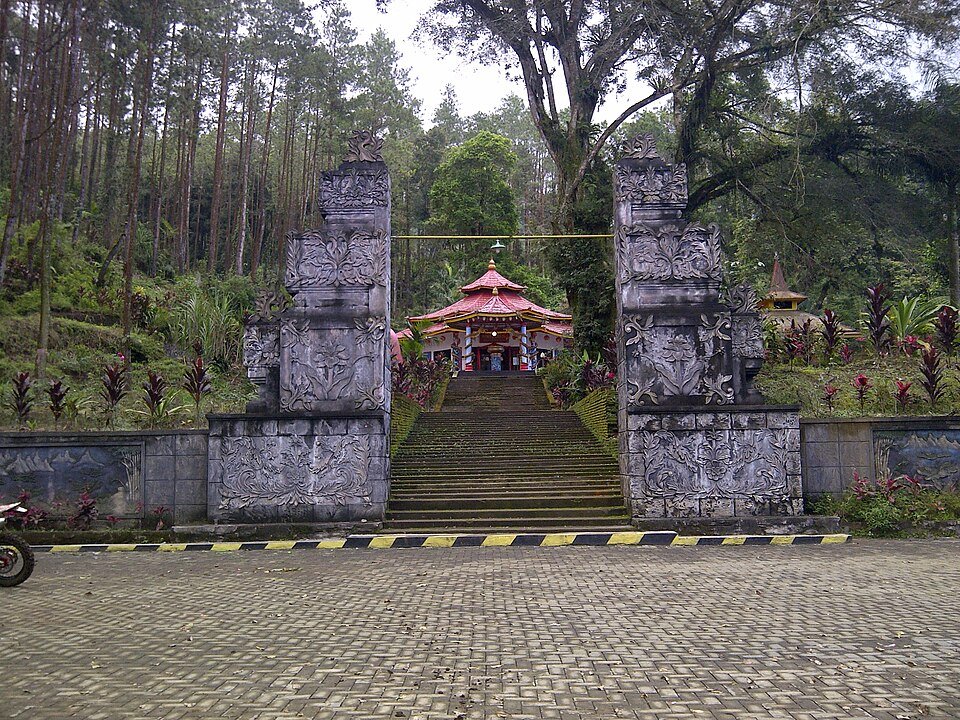
Then, does mystical logic need to be abolished from Indonesian society? As long as mystical logic continues to dominate, mediums that discuss issues by relying on mystical packaging will continue to exist. If this is left unchecked, mystical narratives could hijack public attention from the real issues. Mystical narratives can cause an erosion of substance and instead make the public fixate on supernatural things rather than data, research, and evidence-based advocacy that align with reality. The consequence is that various real problems, including environmental issues, have the potential to be used only as “decorations” that “sharpen” a narrative, rather than being truly brought to the surface as a crucial topic for discussion. A clear example can be seen in the viral case of alleged wealth ritual practices on Mount Kawi. In this case, public attention was almost entirely diverted to the realm of supernatural speculation, while the real ecological issues in the same area (tourism pressure, land conversion, environmental carrying capacity) were almost never a subject of discussion with the same magnitude.
On the other hand, however, mystical logic in local wisdom cannot be carelessly eliminated. This is because mystical narratives can indeed function as an effective environmental protection mechanism in certain contexts. This is especially true at the level of indigenous communities that do make nature a part of their belief system. As highlighted earlier, in a society dominated by mystical logic, mystical events are precisely the most effective channels for communicating environmental issues. Therefore, if there is an attempt to abolish this mystical logic from society, what alternative channels will be available for the public to understand and demand accountability for environmental damage?
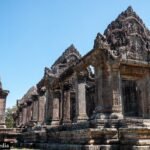
Entrance to a temple in Mount Kawi. Source : Wikimedia Commons
The way society thinks is ultimately not just an epistemological issue, but also concerns governance. Changes in society’s way of thinking must also be accompanied by strict environmental protection policies and a collective awareness based on an ethic of sustainable development. Indonesia itself has normatively recognized the importance of “local wisdom” in environmental management. Undang-Undang No. 32 of 2009 on Environmental Protection and Management (UU PPLH) includes the “principle of local wisdom” and recognizes the existence of “customary law communities” as legal subjects with strong ties to the environment.
However, this normative recognition is not automatically translated into equivalent implementation capacity. Revisions through the Job Creation Law (UU Cipta Kerja) have actually narrowed the space for public participation in the Environmental Impact Analysis (EIA) process. The EIA process, which originally involved affected communities and environmental advocacy groups broadly, has become limited to only “affected communities.” At this point, the gap becomes clearly visible, where the state recognizes local wisdom on paper but narrows the participation channels that are precisely needed so that local knowledge and residents’ concerns can enter the formal decision-making process.
2 Outer Baduy women, the Baduy people are wide regarded as guardians of their forest. Source : Wikipedia
When formal state channels narrow, informal channels like mystical narratives will easily fill that void. However, it is clear that mystical narratives in local wisdom cannot be relied upon as national policy instruments. Things that are mystical do not produce auditable data, do not build legal precedents, and do not create consistent institutional pressure. Therefore, Indonesia actually needs to restructure its policies so that mystical logic loses its function as a substitute for substance, but its protective function can also be adequately replaced by formal instruments.
To realize this, structural change is needed to encourage rational-empirical thinking as a more functional choice, both for the state and its society. A condition is needed where mystical logic becomes less functional as an explanatory tool, not because it is prohibited, but because society has more useful alternatives to explain and solve the problems around them. Therefore, the entry point needs to focus more on incentives within the structure, not merely ideological coercion.
To that end, there are at least three policy pillars that need to move together. First, education curriculum reform that not only increases the portion of science but also trains cause-and-effect thinking methods from an early age. Second, strengthening the transparency of environmental information governance in accordance with the spirit of UU No. 14 of 2008 on Public Information Openness, by opening access to raw data, research, and scientific studies in a format easily understood by laypeople, so that the space for mystical narratives to fill the information void becomes increasingly narrow. Third, the restoration and consistent enforcement of public participation space in the EIA process has been narrowed, so that local wisdom and indigenous community knowledge have formal channels to enter decision-making, not just being recognized on paper.
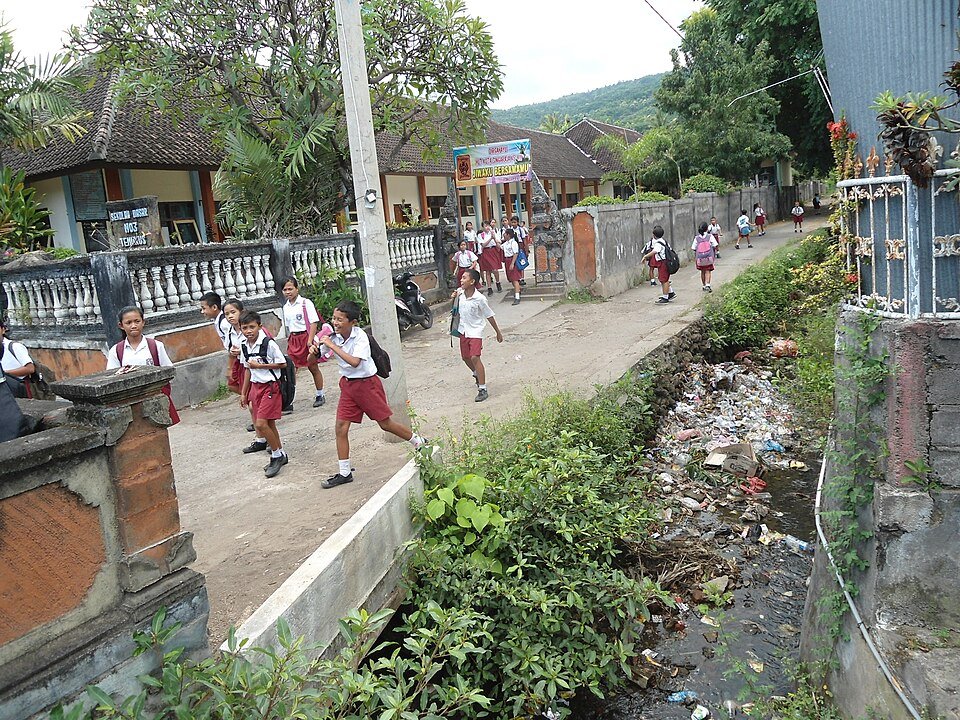
Polluted sewer in Bali. Source : Wikimedia Commons
These three pillars cannot stand and function alone. Education without information transparency only gives birth to a generation of skeptics without access to verify their suspicions. Transparency without consistent law enforcement only produces data that is available but easily ignored. Meanwhile, law enforcement without a sufficient educational basis risks becoming a tool of unilateral repression against people’s beliefs. All three must move together, gradually, so that the transition from mystical logic to a more rational and empirical way of thinking happens not as a forced severance from cultural roots, but as a natural evolution from improving material and institutional conditions.
The release of Para Perasuk and Ghost in the Cells ultimately reminds us that as long as there is no formal channel strong enough to absorb public concern over environmental damage, ghosts will always be easier to believe. Not because society does not care about the environment, but because that is the most easily available language for them to speak about the environment.
Patrick Rafael Wijaya is an International Relations graduate who aspires to become an academic and educator in public policy, with a focus on development and labour policy. He currently serves as Editor-in-Chief of Diskurasi, a youth-run media platform that gives young people a space to share ideas and perspectives on social and political issues.