Despite affirming the 5 point consensus and claims from foreign ministers to involve all stake holders, there was no indication that the opposing National Unity Government (NUG) and rebel armed groups were invited to the meeting in Bangkok.
Editor – Southeast Asia Analyst.
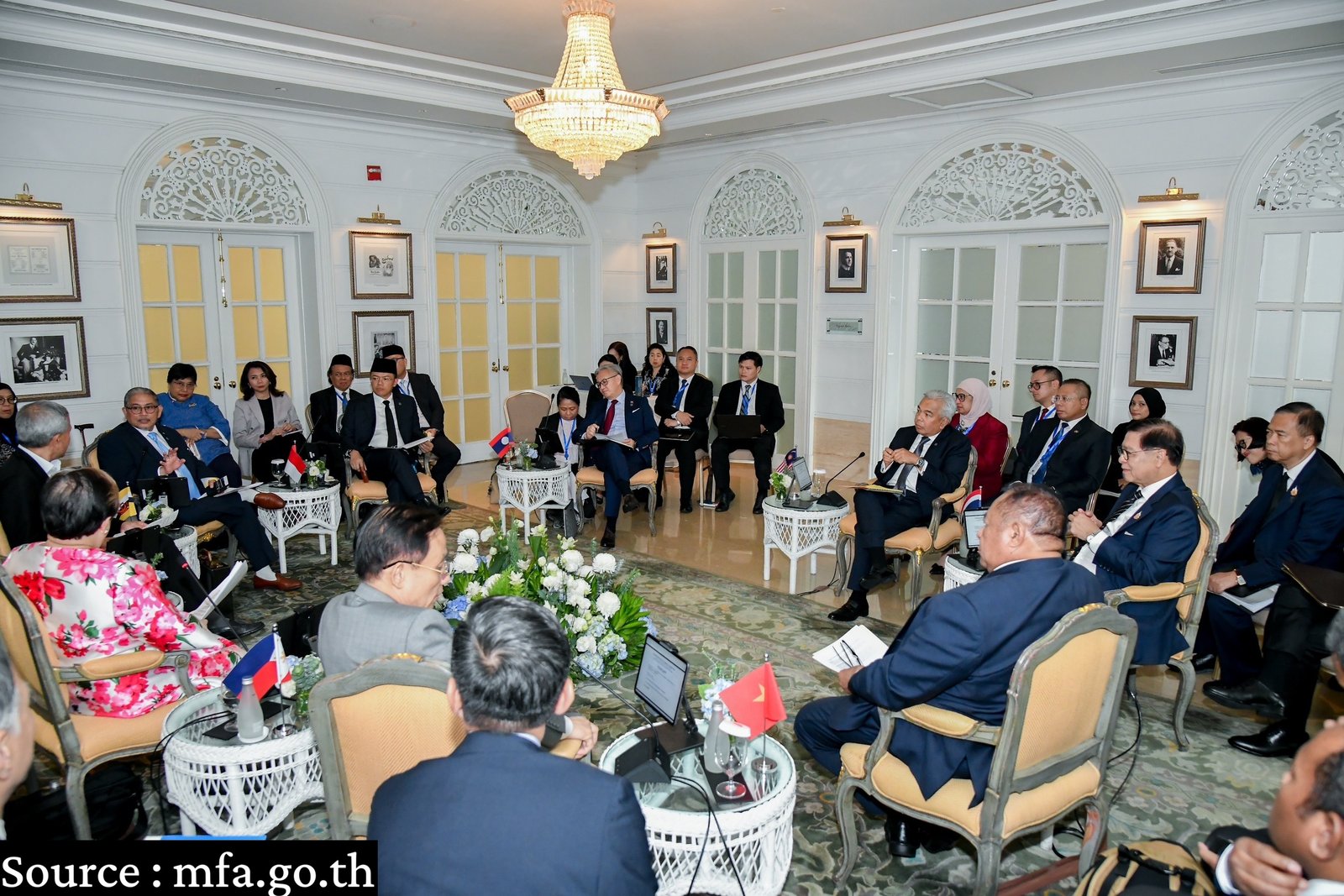
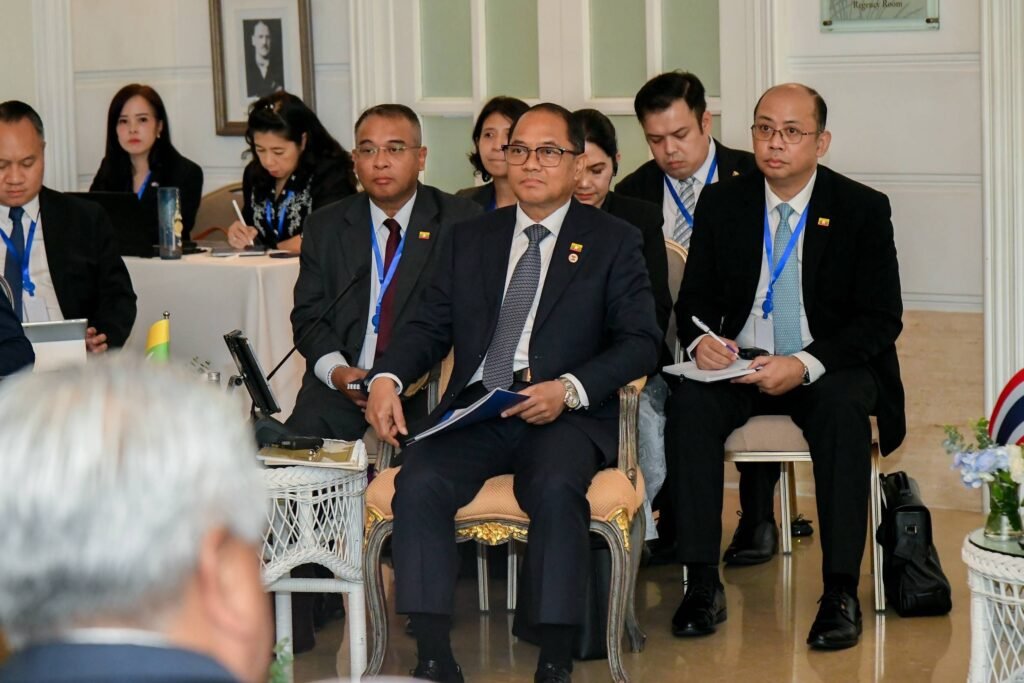
ASEAN foreign ministers held a meeting on 12 July 2026 in Bangkok, Thailand with Myanmar’s military backed foreign minister U Tin Maung Swe. The ministers reaffirmed their commitments to the ASEAN formulated 5 point consensus despite setbacks and the ongoing civil war in the country. Foreign minister U Tin Maung Swe added the importance of thoroughly understanding Myanmar’s complex political realities and taking a constructive approach which is consistent with the realities on the ground. He affirmed that Myanmar looks forward to restoring its full and equal participation in ASEAN and will continue to cooperate with ASEAN to the possible extent.
Besides exchanging views on the situation in the country, Minister Tin Maung Swe briefed his counterparts on the government’s efforts to combat online scams, drug trafficking and other transnational crimes.
Myanmar Foreign Minister U Tin Maung Swe and his entourage. Source : mfa.go.th
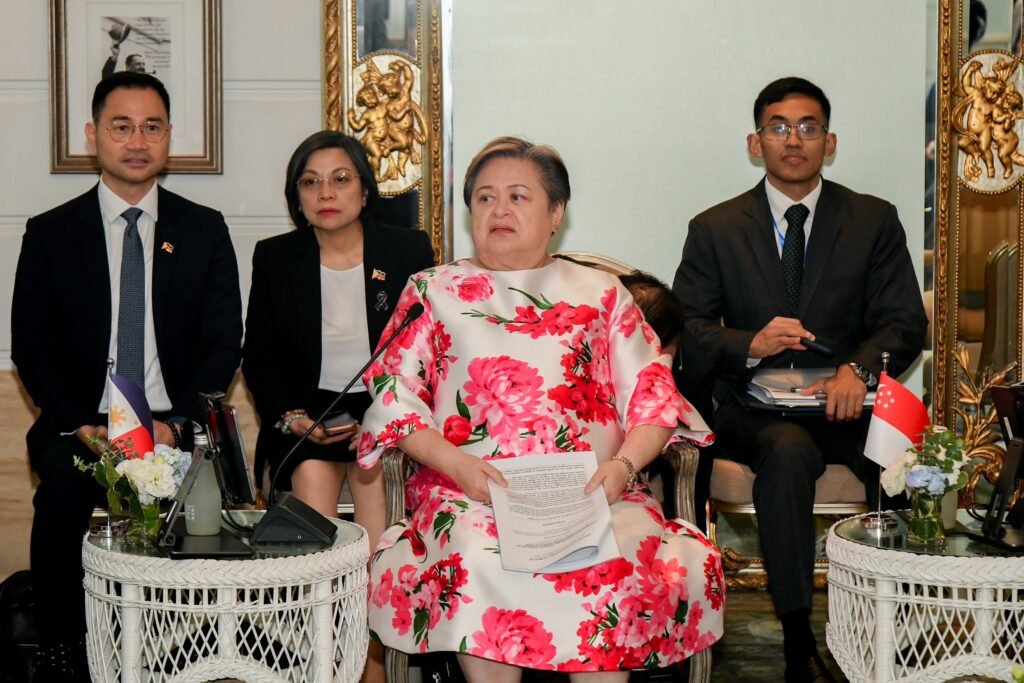
During the meeting, Indonesia’s Foreign Minister Sugiono claimed that “An inclusive national dialogue, one that involves all parties, is key in achieving a lasting peace and national reconciliation.”
“As a special envoy of the chair to Myanmar, it has always been a basic document, as well as discussion, is the 5 point consensus. And the stakeholders, as well as that of the Myanmar government, we’ve always used that. Said Philippine Foreign Secretary Lazaro, current ASEAN chair.
Despite affirming the 5 point consensus and claims from foreign ministers to involve all stake holders, there was no indication that the opposing National Unity Government (NUG) and rebel armed groups were invited to the meeting in Bangkok. In response to this, the NUG released a statement on facebook recognizing Thailand’s concerns on border security issues but also calling out the military government’s failure to implement the 5 point consensus along with ASEAN’s shortcoming in engaging with other stakeholders in Myanmar with equal political weight. There were no reported statements released from rebel groups.
“We are trying to engage with all stakeholders, the military authorities in Nay Pyi Taw, the ethnic armed organizations, and the People’s Defense Force,” Singaporean Foreign Minister Balakrishnan said, but did not follow up with any action.
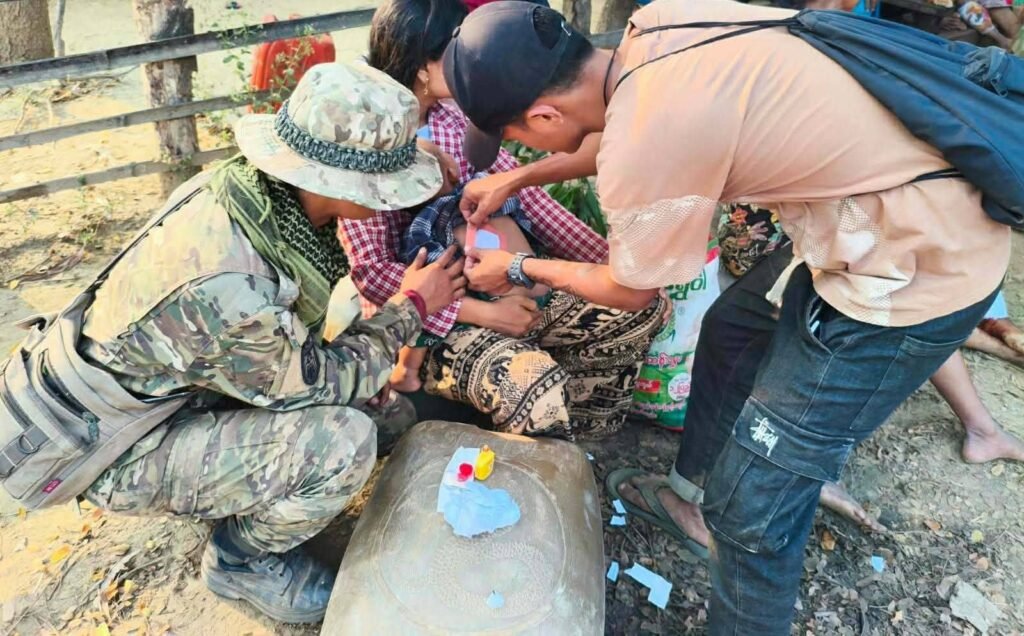
Soldiers of PDF tend to injured civilian. Source : Facebook/ Ministry of Defence – National Unity Government of Myanmar
The Myanmar civil war has entered its 5th year as of 2026, authorities on territories are constantly changing, with attacks and counterattacks by drone strikes being the favoured method both by the military and the opposing armed groups. Civilian deaths perpetrated by both sides are reaching 10 000. Ethnic minorities especially the Rohingya remain particularly vulnerable in such times.
Economies remain stagnant with a third of the population living under poverty, with such conditions, the working age groups are fleeing the country or forced into illicit activities such as drug trade and scam operations.
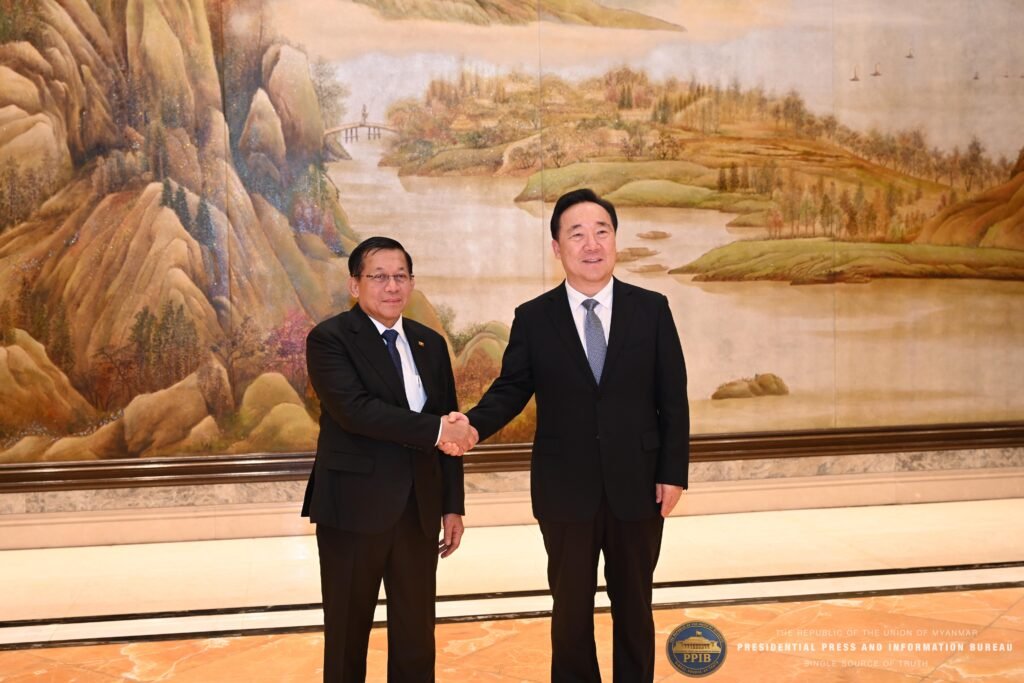
President Aung Min Hlaing meets with Wang Hao, Secretary of the Zhejiang Provincial Party Committee. Source : ppib.gov.mm
Since the civil war broke out, the military government heavily relied on financial and arm support from China. In an attempt to gain legitimacy, it held an election from late 2025 to early 2026 where the military barred certain political parties from participating and dissidents were imprisoned for sharing material online that boycotted the election. It resulted in a junta backed party victory, a result that was globally condemned as a sham.
Despite the condemnation, its immediate mainland Southeast Asian neighbours were quick to send observers and well wishes during and after the election, effectively legitimizing the newly formed regime. Indonesia, often considered the first among equals in ASEAN, suggested sending observers from the regional organization’s secretariat but did not do any of their own. There are only a few countries such as Singapore and Timor Leste that insist on adhering to rules of law and democratic values when facing the Myanmar problem.
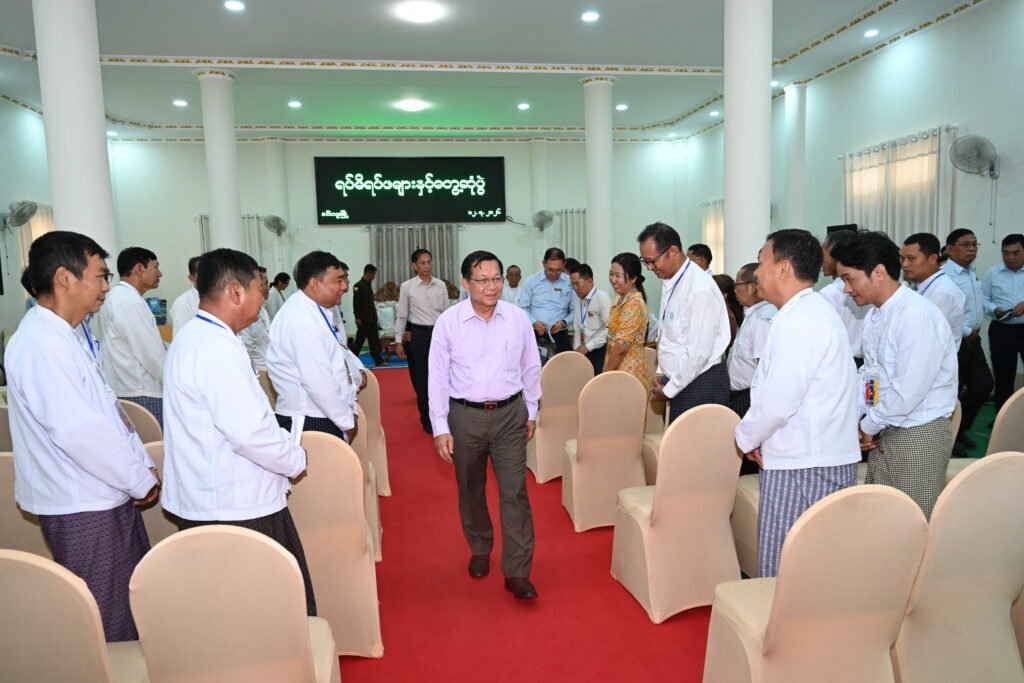
President Aung Min Hlaing meets with district village elders. Source : ppib.gov.mm
The attitude among most Southeast Asians governments towards the ongoing civil war in Myanmar are largely based on pragmatism where they are willing to legitimize the military government born out of sham elections in the interest of creating stability in the country which reduces risk in regional stability and frightening potential investors.
Amidst all this, violence and skirmishes continues to tear the country apart with both the military government and its oppositions resorting to conscription to fill up their ranks. Much of the territory in Myanmar remains heavily contested with port cities and bordering towns being a common target. Currently the armed opposition faces an ultimatum from the military where they are invited to a peace talk or face “necessary and appropriate actions.” With the opposition unconvinced by the military government’s offer, it remains reluctant to lay down armed, keeping the conflict at a deadlock.
Soldier from NUG’s People’s Defense Force gives well wishes to Aung Sang San Kyi. Source : Facebook/ Ministry of Defence – National Unity Government of Myanmar
Although many celebrate the meeting and the first of its kind which is also 5 years in the making, journalists and observers remain skeptical to the claims made in the event. It views ASEAN to be toothless in making sure that the military government will implement the 5 point consensus. The military government did not implement the consensus in the past 5 years and currently does not bear any other reason to do so, especially not when its regime is legitimized by its closest allies and neighbours.
Manh Chien Nguyen is a Mainland Southeast Asia columnist for Southeast Asia Analyst, based in Hanoi.