Hlaing added that the government would base its actions on existing realities while safeguarding Myanmar’s national interests and sovereignty
Editor – Southeast Asia Analyst.
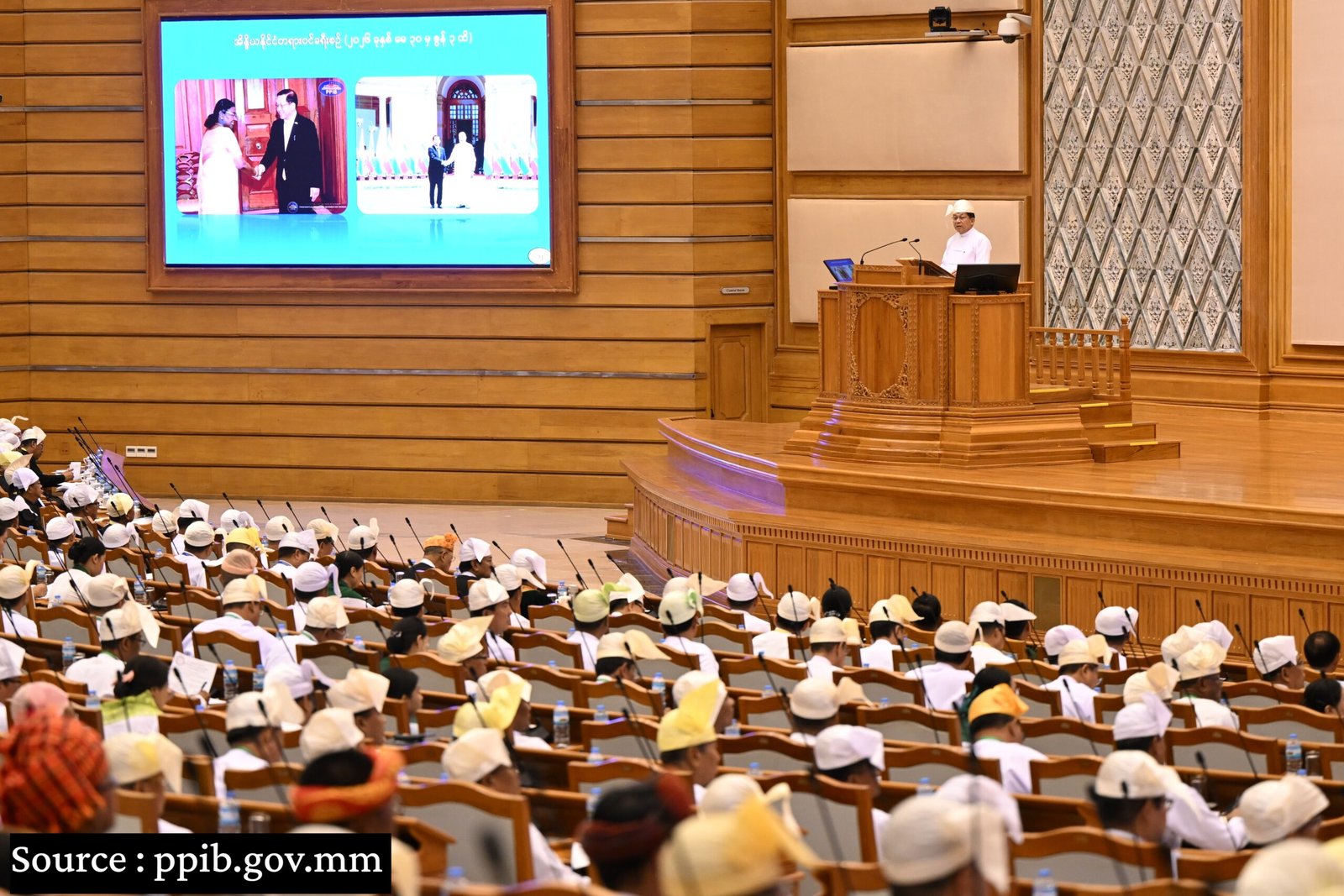
Myanmar’s military government chief Min Aung Hlaing delivered a speech on his administration’s 100 day mark on 31 July to the union parliament. During the address, Hlaing rejected the ASEAN’s 5 point consensus and claimed that the regional organization discriminated against Myanmar despite the union having exercised patience and continued to cooperate in accordance with its responsibilities as an ASEAN member state. Hlaing added that the government would base its actions on existing realities while safeguarding Myanmar’s national interests and sovereignty, and would work to enhance relations with ASEAN through a Myanmar-led, Myanmar-owned approach.
The Junta chief turned president added that special elections will take place to accommodate regions that failed to partake in the elections late 2025 to early 2026 due to the then and ongoing armed conflict raging across the country. To fight the opposing pro democracy and ethnic armed groups Hlaing said that the government will continue implementing the military’s conscription law.
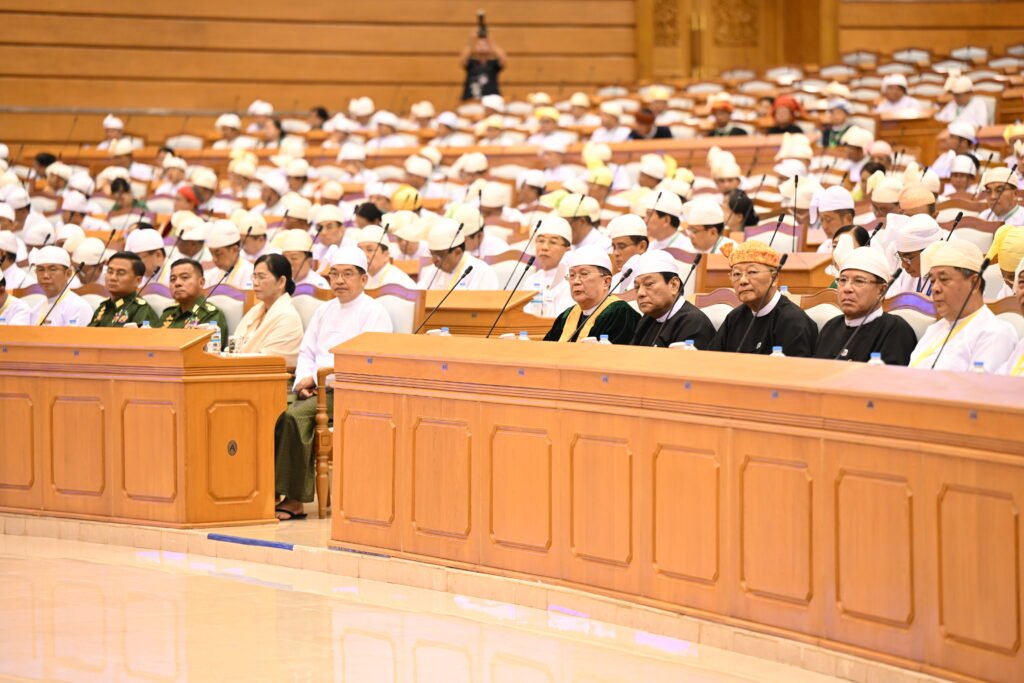
Myanmar parliamentarians voted in through the recent election. Source : ppib.gov.mm
Besides these, Hlaing said the government will “spend the first two years laying the groundwork and building momentum for the new nation, followed by three years dedicated to accelerating its nation-building efforts.”
International media generally focused on Hlaing rejecting ASEAN’s 5 point consensus, an agreement adopted by the regional organization in 2021 to resolve the “political crisis” in Myanmar. It is also often called the ASEAN peace plan. The rejection comes after the years of the Myanmar Junta promising to uphold the 5 point consensus but failing/ refusing to implement them in reality much to ASEAN’s dismay.
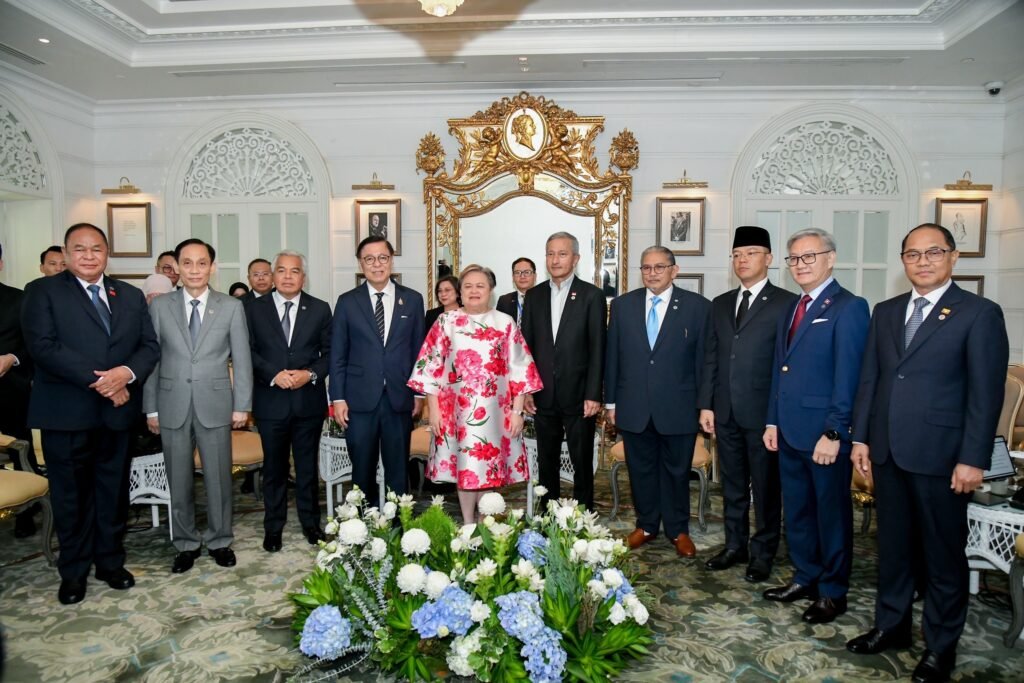
ASEAN forerign minister meeting in Bangkok. Source : mfa.gov.th
The motion to reject the ASEAN peace plan first appeared in Myanmar on 26th June 2026 by a military backed parliamentarian. The proposal gained traction with more from the military faction arguing that the plan was inconsistent with the country’s “political reality.” Despite this Myanmar foreign minister U Tin Maung Swe, pledged to upload the peace plan on 12th July, in an ASEAN foreign minister meeting held in Thailand
Many academics are losing faith in the ASEAN peace plan as well, one such is Chulalongkorn University’s Economics Professor, Dr. Piti Srisangnam. “If you use something (ASEAN five point consensus) for 5, 6 years and it does not work, don’t force using that thing, or you have to think about a new model.” Said Dr. Srisangnam in a public online seminar.
The opposing National Unity Government (NUG, the government that was the victim of the military coup in 2021) have yet to give a statement regarding the rejection. While Min Aung Hlaing and his government remains the public’s villain, the support for NUG has been faltering as well. Many commentators online claim they need to “reform hard if they are serious.”
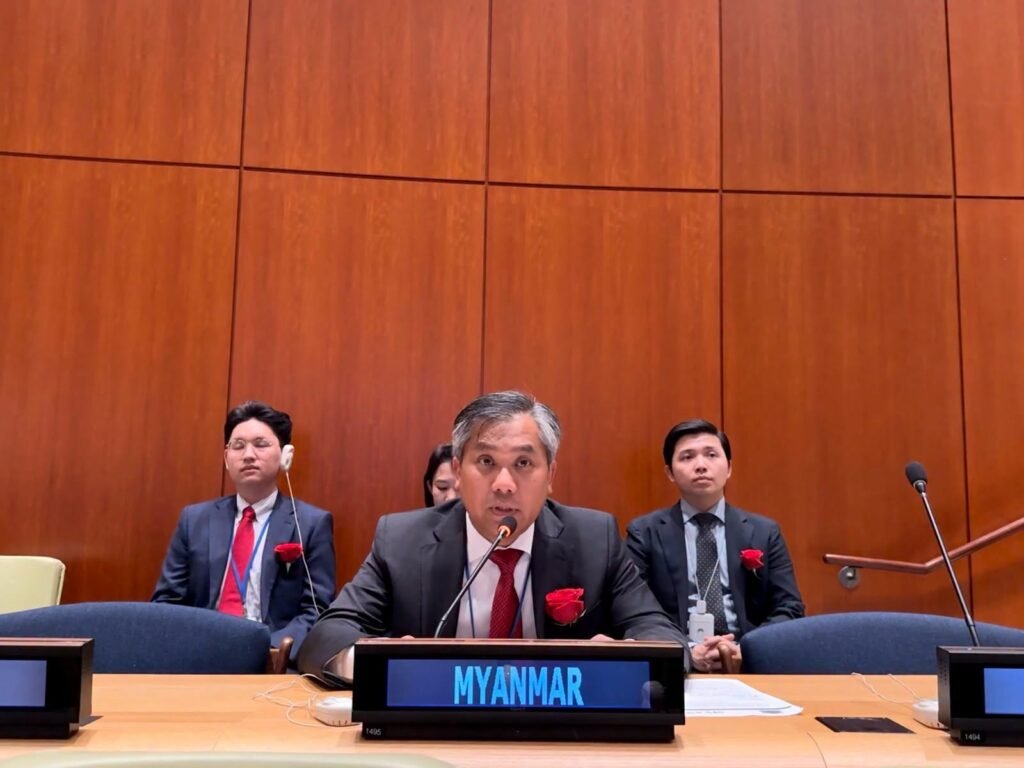
Myanmar’s Permanent Representative to the United Nations is Kyaw Moe Tun representing pro democracy movement following the 2021 military coup. Source : Facebook/ National Unity Government
This year marks the 5th year in the Myanmar civil war between the military forces under Min Aung Hlaing and the diverse rebellion armed forces groups with their interests who are loosely united by their opposition towards the military government. These armed groups although scattered they not only control but also govern huge swaths of lands.
“If you are the leader of the resistant group when you receive the weapons what to do with these weapons? Half of them they’ll keep fighting the Tatmadaw but half of them will resell them in the black market because they also need money to feed their people as well.” explained Dr. Srisangnam.
Faced with these considerable opposition, Hlaing’s government’s agenda in establishing stability and national development will prove difficult especially taking into account that the brain drain that the country is facing and up to the remaining 20% of the working population resorting to illicit activities such as drug trade and scam centers to make ends meet.
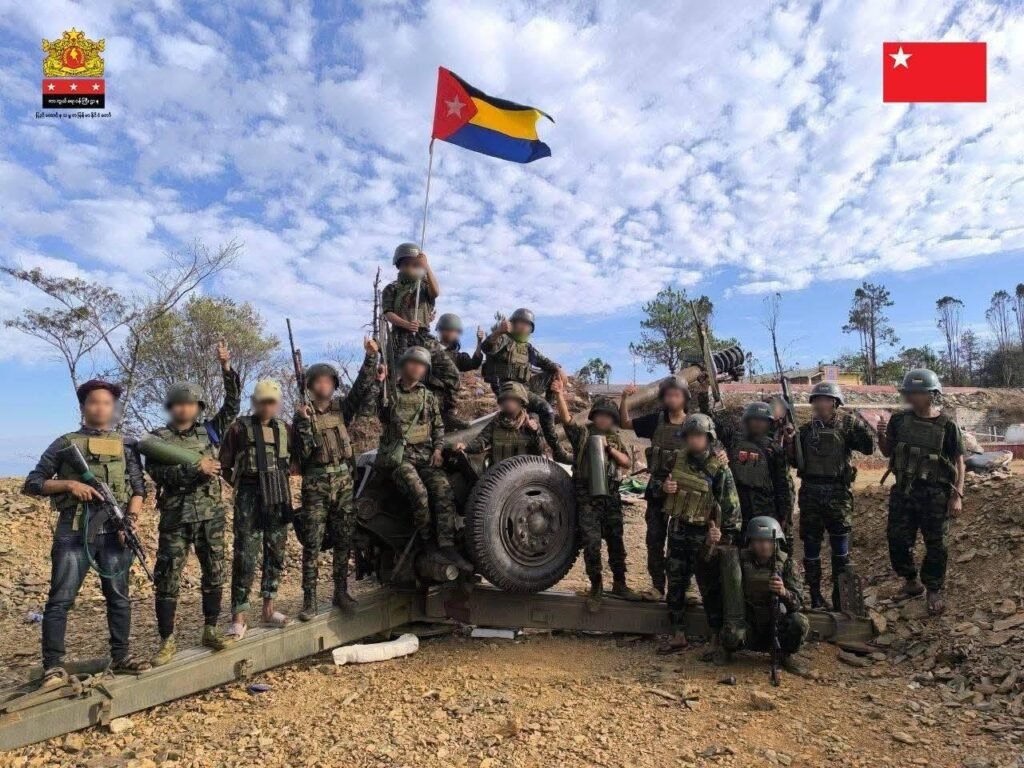
Armed forces operating under National Unity Government. Source : Facebook/ National Unity Government
Amidst this development, no ASEAN member states have recognized Hlaing’s new government despite sending envoys as observers to the elections. Media, civil society organizations and intergovernmental organizations are demanding former Myanmar leader Aung San Suu Kyi’s proof of life. Additionally the military government failed to convince major rebellion forces to agree to amnesty and peace talks. While pressure is mounting on Hlaing’s government, it essentially destroyed whatever little chance it had to be accepted by the international community by dismissing the ASEAN peace plan.
While it could be tempting to draw the conclusion that Myanmar will now pursue an isolationist foreign policy, it will still remain heavily dependent on China and India for aid, damaging ASEAN’s credibility.
Manh Chien Nguyen is a Mainland Southeast Asia columnist for Southeast Asia Analyst, based in Hanoi.