“If an official at the Director-General level can amass such significant illicit gains, what about high-ranking leaders?”
Editor – Southeast Asia Analyst
Cambodia’s Anti Corruption Unit (ACU) investigations revealed on 29th August that three officials from the foreign ministry were arrested for running online visa scams where visa stickers and application forms were sold to foreigners intending to work in scam centers in the country. The trio were identified as Tho Samnang director general for legal and border affairs turned advisor, Nob Ratha, former deputy chief of the Bureau of Khmer Citizens’ Support and contract official Yos Rane. Investigations from the ACU revealed that 12 000 visa blanks were sold to scam cartels for nearly 3 million USD. To funnel in profits from their operation. Samnang held 375 different bank accounts, Ratha, five and Rane 11 across various banks.
Specific visas peddled by the trio were Type C (Courtesy) visas and the CEX extension blanks that are typically reserved for Non Governmental Organizations volunteers and individuals. These visas are obtained solely by accreditation by the government and cannot be paid for.
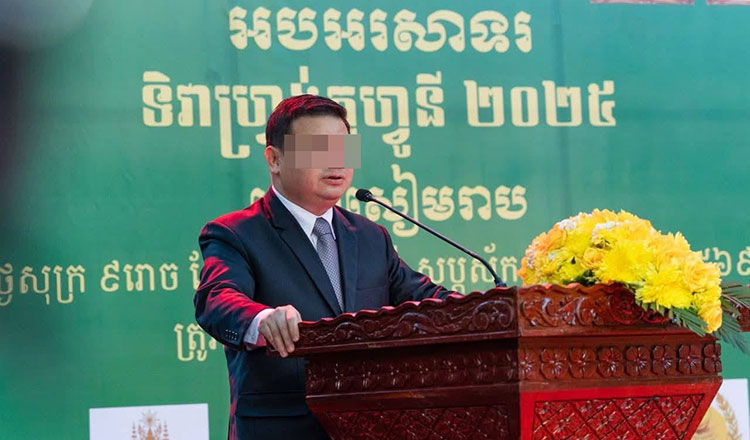
Former foreign ministry advisor Tho Samnang. Source : AKP
Suspicions on these operations came to light during a year-end audit in late 2025, when the department noticed shortage of Type C and CEX visas in its inventory. A disciplinary hearing conducted internally by the foreign ministry resulted in Samnang being sacked from his position but later reinstated as an advisor to the ministry on 28th April 2026. During an ACU integration Samnang admitted to receiving between 40 USD and 50 USD per sticker. The investigation suggests the profit margins were much higher, alleging the group sold individual stickers to online cartels for as much as 6000 USD each. A thorough ACU investigation on the issue began on 20th August. As the questions increased so did the amount of discovered embezzled funds.
These investigations are the latest addition to earlier ACU operations this year that busted corruption and bribe rings involving high ranking police personnel and immigration officers. Indicted officials were accused of receiving bribes revealing up to 1 million USD. The trio now faces intentional destruction and embezzlement, money laundering and financing of terrorism. Cambodia’s foreign ministry and its spokesperson have yet to comment on the issue.
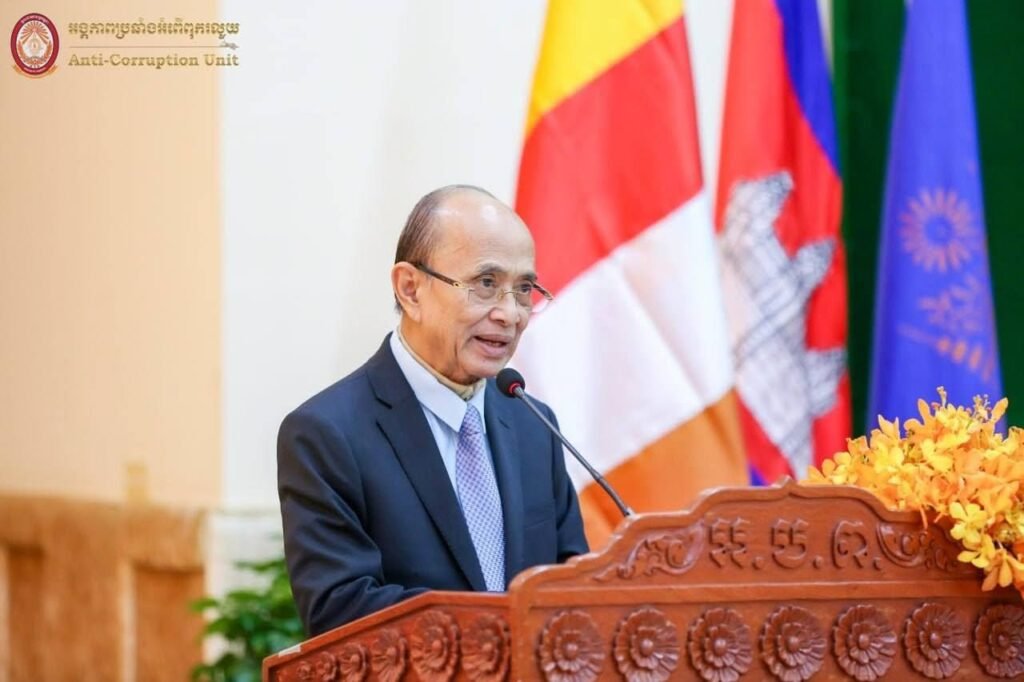
ACU president Om Yentieng. Source : facebook/ Anti Corruption Unit
Findings from these investigations sparked outrage and questions regarding governance within Cambodia. “Our public is very angry. They put our country’s image down again. They are now under investigation, and we want them to face serious punishment.” Said S, Cambodian PhD Candidate who requested to be anonymous.
Independent geopolitical analyst Seng Vanly posted on his facebook page “If an official at the Director-General level can amass such significant illicit gains, what about high-ranking leaders?”
“Failure to investigate Mr. Tho Samnang’s superiors raises major questions regarding conflicts of interest and family ties—particularly given that the ACU Chairman’s own daughter serves as a Secretary of State at the Ministry of Foreign Affairs” he continued
Independent Geopolitcal Analyst Seng Vanly. Source : facebook/ Seng Vanly
Ironically, these investigations and their revelations come amidst claims from authorities that large scale claim scam centers are now mostly eliminated. More importantly, they also raise questions on true motivations behind these charges and arrests. As Vanly stated, higher ranking officials remain untouched, leaving to the question if the indicted were simply the fall guys for the masterminds behind the scam and corruption rings.
Furthermore, with frenzy and distraction from the border conflict against Thailand running out steam, Prime Minister Hun Sen’s administration needs another act to win popularity among the public to prove that he is well capable of filling in his predecessor’s shoes. A sure fire way of doing so could be conducting large scale arrests of power abusing public officials.
Prime Minister Hun Sen in a meeting. Source : facebook/ Samdech Thipadei Hun Manet, Prime Minister of Cambodia
“These actions may also be a way to show people that the government is taking action. But Cambodians also want the government to go after some bigger and more powerful people who are suspected of being involved and have close connections with the government. So, I think people will be watching to see whether the government also takes action against those powerful people, not only the smaller ones.” Concluded S.
Manh Chien Nguyen is a Mainland Southeast Asia columnist for Southeast Asia Analyst, based in Hanoi.