“President Marcos, we haven’t received any cash assistance. We have no money for expenses here. We haven’t been able to work because of the flood—it’s been over a week now.” said another victim.
Editor – Southeast Asia Analyst
The yearly Southwest Monsoon rain active from June to October in the Philippines hit especially hard in early August 2026 especially in Luzon Island as they were charged by cyclones Luis and Maymay. The annual rain caused heavy flooding bringing life in cities and municipalities in the archipelago to a screeching halt with work and classes in both private and public institutions being cancelled.
According to the National Disaster Risk Reduction and Management Council (NDRRMC) at least 2.27 million people were affected by rainfall. The NDRRMC also recorded at least 94,997 persons taking shelter inside 919 evacuation centers across the affected regions. Although most residents were evacuated to temporary shelters by rescue workers, the disaster damaged up to 684 houses, and claimed 19 lives through landslides, car wrecks, drowning, falling trees and strong currents. Up to 4 people are missing.
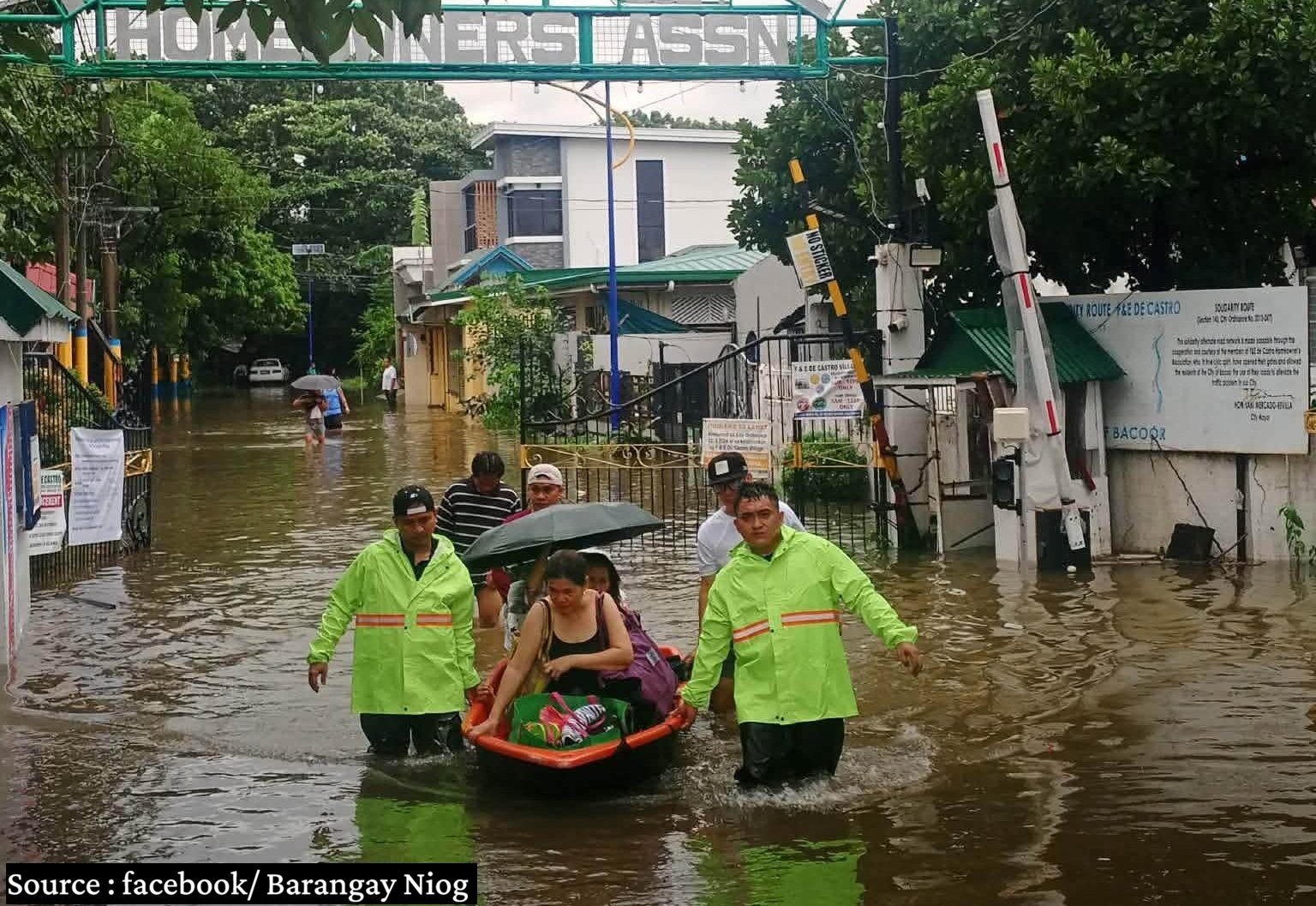
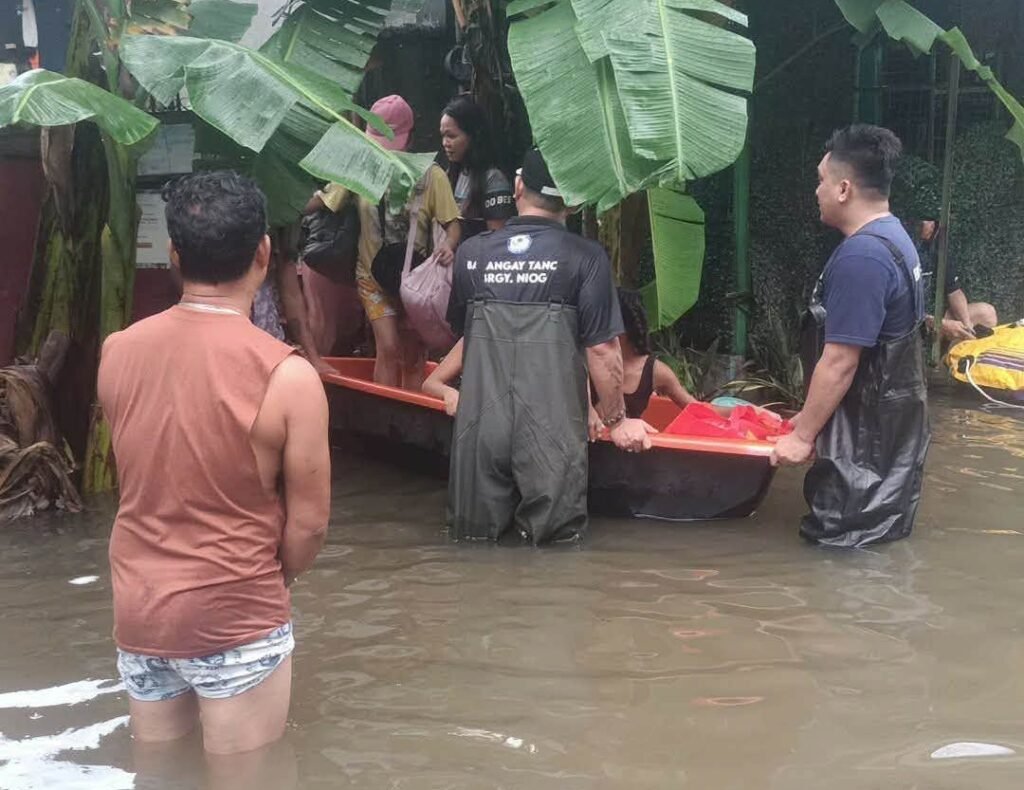
Rescue workers evacuating flood victims with a dinghy. Source : facebook/ Barongay Niog
Despite efforts from the government to clean up years of neglected trash that blocked drainages, its infrastructure could not keep up with the rainfall. With even dams overflowing with rainwater, residents are advised to stay away from rivers and other water bodies to avoid flash foods.
“It is really the volume and years of neglect of our waterways. Even if we use the pumps, the water will just come back because the creeks have overflowed,” admitted Romando Artes, Chairperson of the Metropolitan Manila Development Authority while speaking on a radio station.
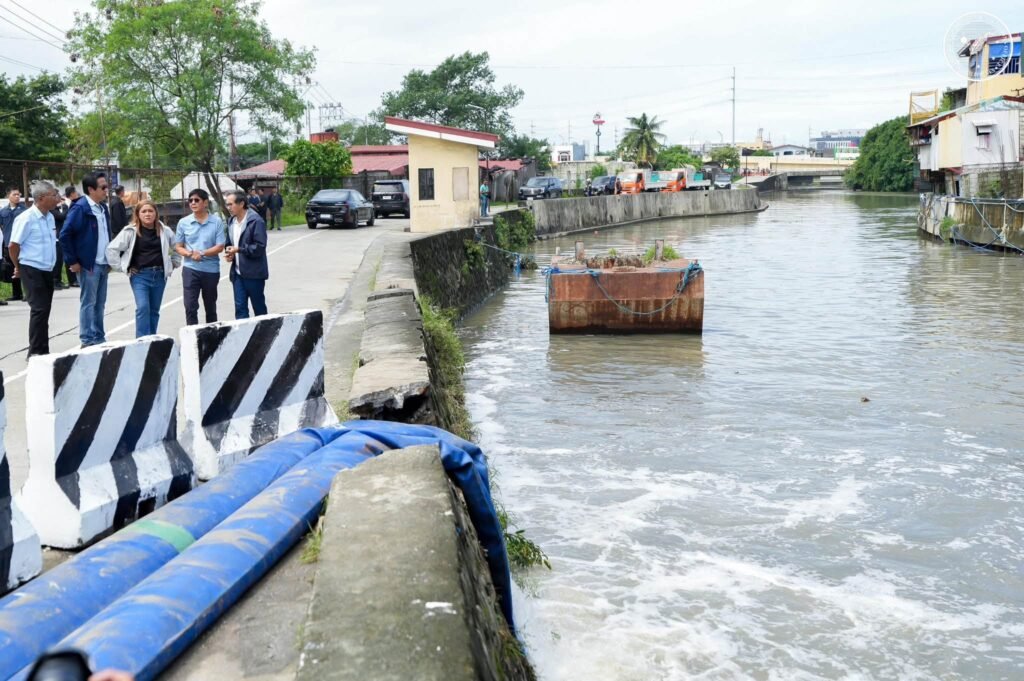
Waters pump removing water from affected areas. Source : Facebook/ Presidential Communications Office
The NDRRMC added that at least P73.52 million worth of humanitarian and financial assistance has been provided by government agencies so far including the presidential office mobilizing aid and family food packages to the affected communities. President Marcos Jr made a visit to victims residing in Las Pinas, a city in the outskirts of Metro Manila. Although many of the victims expressed gratitude towards Marcos Jr, some asked for more, one such is 18 year old Eslaban, who pleaded for more food for herself and her 9 month old baby.
“President Marcos, we haven’t received any cash assistance. We have no money for expenses here. We haven’t been able to work because of the flood—it’s been over a week now.” said another victim, 65 year old Reynaldo Caminero.
Some even took Marcos Jr’s X account were they replied to his post with photos from their neighbourhood that showed water levels reaching up to the fences.
President Marcos Jr meets with flood victims in Las Pinas city. Source : pco.gov.ph
Marcos Jr later told reporters that while the government’s efforts were effective so far, more work needs to be done. He took the opportunity to promote his trash to energy program which processes garbage to produce electricity. He added that his administration will go after those behind “ghost” and substandard flood control projects.
Filipinos online pointed much of the blame to the Revilla family, a political dynasty based in Cavite city who are accused of embezzling funds meant for flood control projects in the city thus creating a disproportionate amount of damage to residents.
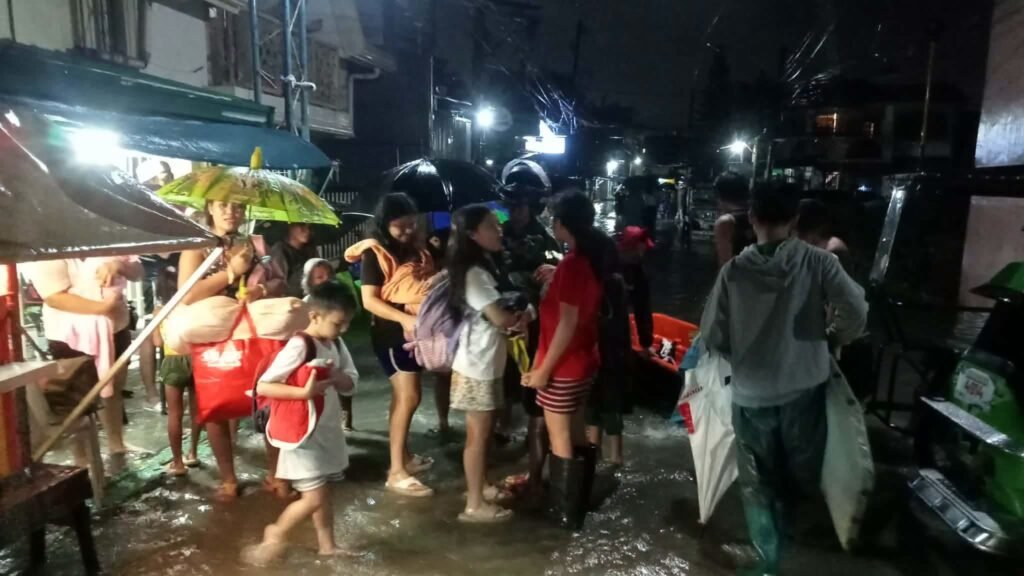
Residents being evacuated from flood affected areas. Source : facebook/ Barongay Niog
Some users even called out Revillas’ supporters and voters naiveness. “They just vote them again because they got aid for the flood that might not have happened if the flood control projects hadn’t been embezzled.” said an user on X.
Floods are a frequent occurrence in the Philippines as are cyclone charged monsoon rains, however they are worsening over the years. With trash build up neglected in the country, government underspending in flood control projects creating sub par infrastructure and land use change. Flash floods and landslides are becoming more common. Although preventing such disasters requires efforts from both the government and the people, very often the biggest brunt of the disaster is borne by people who often must resort to evacuation centers.
Jasmine Pingol is an Archipelagic Southeast Asia columnist for Southeast Asia Analyst, based in Manila.