The responsibility for waste generated by making everyday consumption affordable should be a shared obligation divided among corporations, governments, and consumers.
Editor – Southeast Asia Analyst
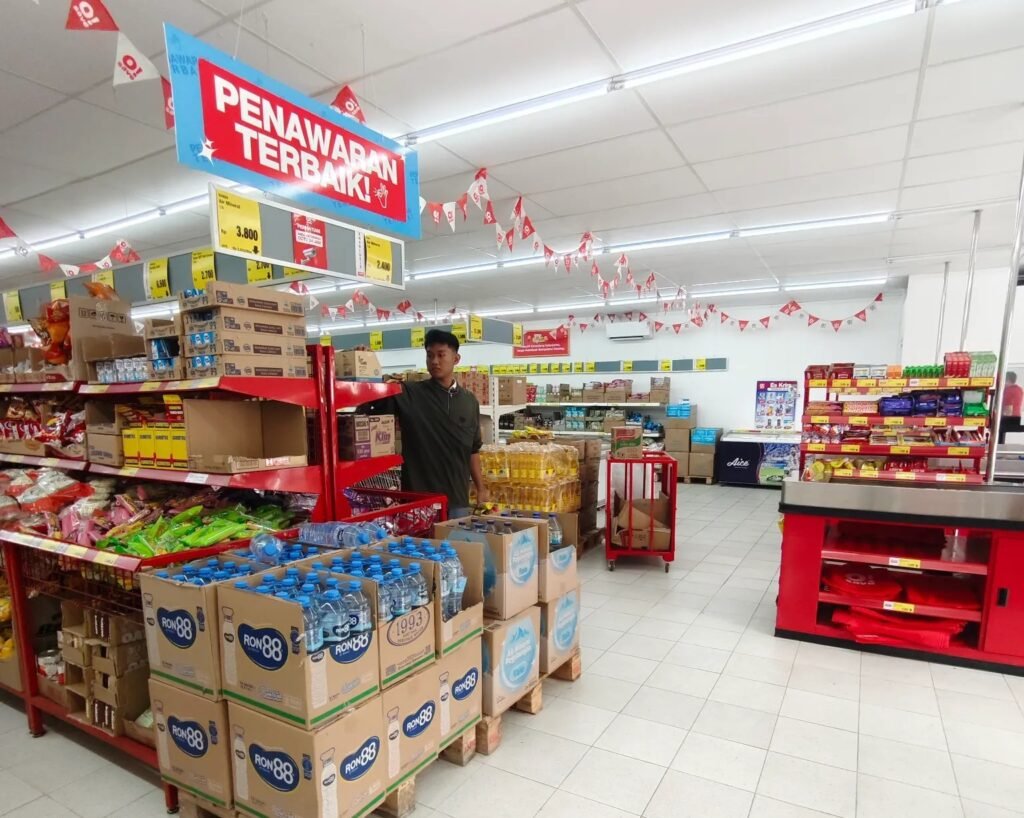
Through the emergence of stores adopting the hard-discount model, Indonesia’s retail landscape is changing rapidly. Unlike conventional supermarkets and minimarkets, hard-discount stores focus heavily on keeping prices low and offering consumers everyday necessities at affordable prices. In Indonesia, this model recently gained visibility through chains such as O!Save, a retail chain from the Philippines that has expanded into Indonesian neighbourhoods.
The appeal of these stores is straightforward. They bring everyday necessities closer to consumers while allowing them to purchase products at prices and quantities that fit their immediate budgets. For households with limited disposable income, this can make a meaningful difference. A person who cannot afford a large bottle of shampoo or a full litre of cooking oil may still be able to buy a much smaller quantity.
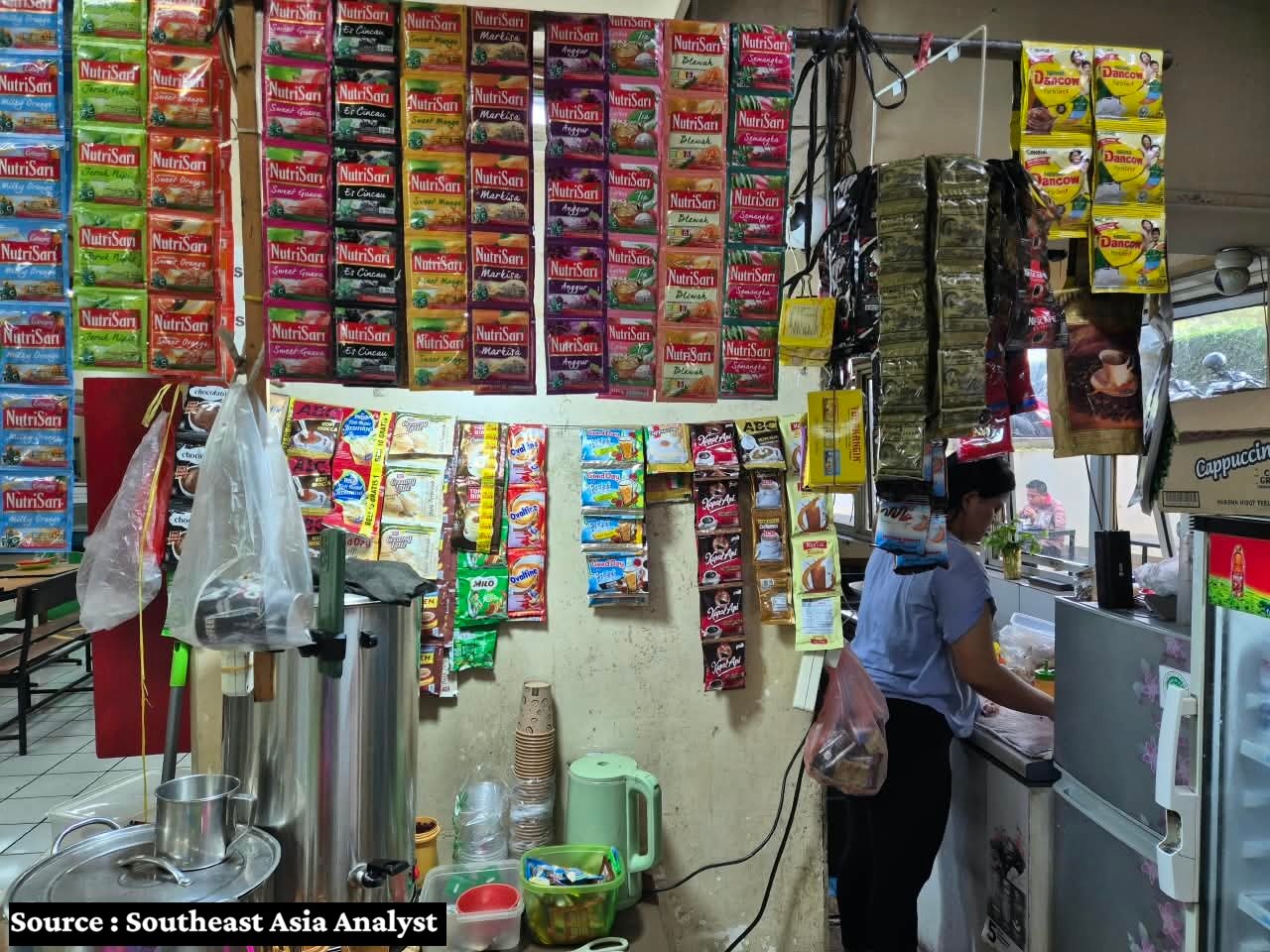
This is where the hard-discount store connects with something much bigger than retail: the sachet economy. For many low-income households, the issue is not necessarily whether a product is affordable in the long run, but whether it can be paid for today. A large bottle of shampoo may offer better value per millilitre, but it requires more money upfront. A sachet, by contrast, reduces the amount of cash needed at the moment of purchase. With a few thousand rupiah, a household can buy what it needs for the day.
O!Save shop in Jakarta. Source : X.com/ @Smash1014314
The sachet, therefore, is more than a form of packaging. It is part of how people navigate everyday economic uncertainty. It allows consumers with limited cash to participate in a modern consumer economy, where branded products and everyday conveniences remain within reach even when purchasing power is constrained. A child can still enjoy a branded snack. A mother can still buy shampoo. A household can still buy coffee, seasoning, detergent, or cooking oil. They may not be able to afford the largest package, but they can afford a small one.
The significance of this is that poverty no longer necessarily means being excluded from consumer culture. Instead, consumption is often reorganised around what people can afford at a particular moment. The market has adapted to this reality by dividing products into smaller and smaller units. But this convenience comes with a contradiction.
The sachet makes consumption more accessible, but it also creates another problem. The smaller the quantity, the more packaging is required to deliver the same amount of product. What makes a product affordable at the point of purchase can therefore contribute to a growing volume of single-use plastic waste. There is also an economic paradox. Consumers may pay less each time they shop, but they can end up paying more per unit when purchasing products in small quantities. In other words, the immediate affordability of a sachet does not necessarily mean that it is the cheapest option in the longer term.
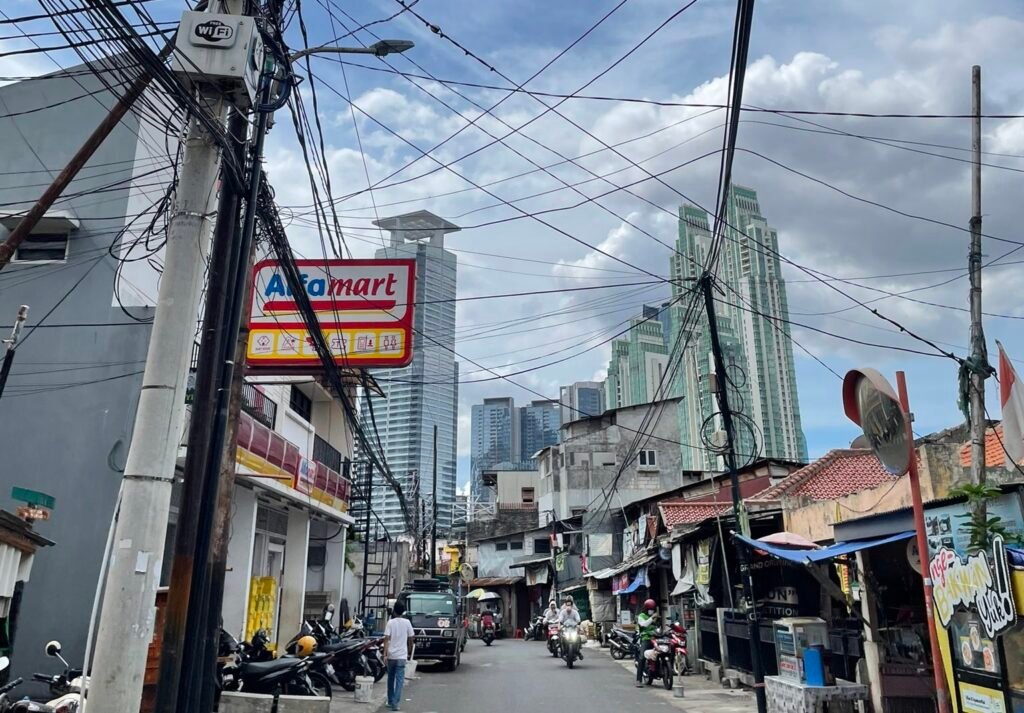
This reveals something important about contemporary urban poverty. People may have only small amounts of money in their pockets, but they are not standing outside the consumer economy. They are part of it—buying what they need, one small package at a time.
Alley way in Jakarta located behind skyscrappers. Source : X.com/ @adriansyahyasin
The market understands this. Producers and retailers have learned how to reach consumers not only through lower prices, but also through smaller quantities. The result is a retail system that can accommodate the realities of limited and irregular household cash flow.
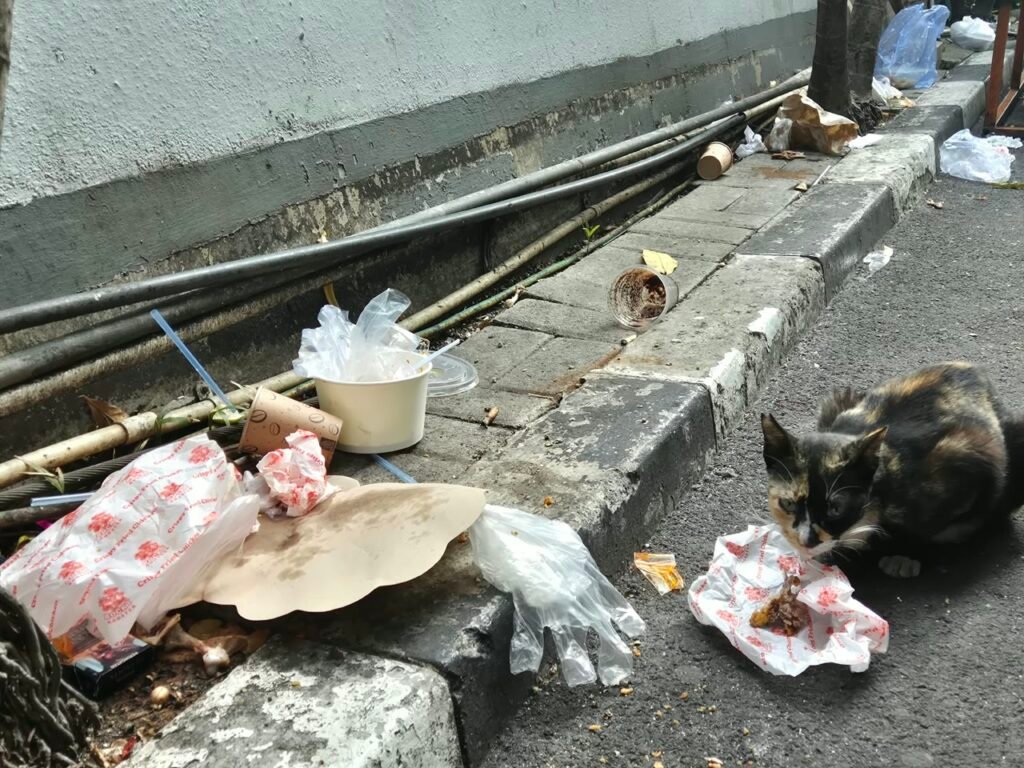
Yet while consumers count their rupiah at the cashier, who counts the plastic left behind? The sachet may provide an answer to what people can afford today. But the environmental consequences of that affordability extend far beyond the moment of purchase.
This is the contradiction at the heart of the sachet economy: the smaller the package, the easier it may be to afford, but the greater the challenge of what happens to the package once the product is gone.
If affordability is increasingly built around tiny packages, then environmental responsibility cannot only be placed on consumers. The question must also be directed toward producers, retailers, and the broader retail system: who should bear the responsibility for the waste generated by making everyday consumption affordable?
The responsibility for waste generated by making everyday consumption affordable should be a shared obligation divided among corporations, governments, and consumers. This concept, often structured as Extended Producer Responsibility (EPR) and circular economy frameworks, argues that no single group can solve the systemic issue of affordable waste alone. The producers, in this situation are the corporations and manufacturers, bear the major responsibility for the design and supply of products. They must invest in research to design the packaging that is truly compostable, reusable, or easily recyclable without drastically driving up shelf prices. Besides, companies are legally and financially responsible for the post-consumer stage of their product life cycles, subsidizing the collection and recycling of their packaging.
Stray cat finds food among plastic and paper waste pile in Jakarta. Source : Southeast Asia Analyst
Governments or policymakers as the regulators, are responsible for creating the infrastructure and legal frameworks that make waste management viable and fair. They must build, maintain, and modernize recycling and waste processing infrastructure so that sustainable materials actually get recycled. At the same time, governments can subsidize eco-friendly manufacturing to lower the cost of sustainable alternatives, while taxing or penalizing excessive, non-recyclable packaging.
As the final users, consumers, especially those trapped in lower-income demographics and rely on affordable goods to meet daily needs, also hold responsibility for sorting, disposal, as per civic demand. They need to participate in local waste management systems such as sorting recyclables from trash. Moreover, when their financial condition starts to be viable, consumer choices will drive market trends. They could choose to purchase refills or buy in bulk signals demand for less packaging.
Lengga Pradipta is a PhD researcher in Institute of Asian Studies, Universiti Brunei Darussalam