Preah Vihear is not simply an ancient temple damaged by conflict. It is a warning that modern warfare increasingly destroys the living relationships between culture, nature and memory.
Editor – Southeast Asia Analyst
Cambodia’s Preah Vihear Temple stood for over a millennium on the edges of the Dângrêk Mountains in an environment where nature and history exist inseparably. Many describe the temple as an archaeological jewel, UNESCO as a World Heritage Site with Outstanding Universal Value, and for the people surrounding it, it is a holy site. Thus, in order to grasp the damage that the temple suffered in the recent Cambodia–Thailand border conflict, one needs to look beyond its shattered stones.
War does not destroy monuments alone. It disrupts ecosystems and communities, displaces wildlife, and transforms sacred landscapes into war zones. The destruction in Preah Vihear, therefore, goes far beyond a damaged monument – it reveals how modern warfare undermines a region’s ecosystems and culture.
The global perspective often reductively focuses on the monuments themselves, however Preah Vihear holds much more. The temple resides within a mountain landscape that continues to form into a holy space for many years surrounded by forests, cliffs, wildlife and water systems. Pilgrims going up to the temple encounter not only the structures but also nature. The culture of this place cannot be separated from the landscape carrying it. Heritage and biodiversity conservationists today agree that both cannot be considered separately, since a cultural landscape preserves not only the ecological processes but also the human memory. Striking artillery here does not threaten the archaeology but also the ecological interrelations developed during many years.
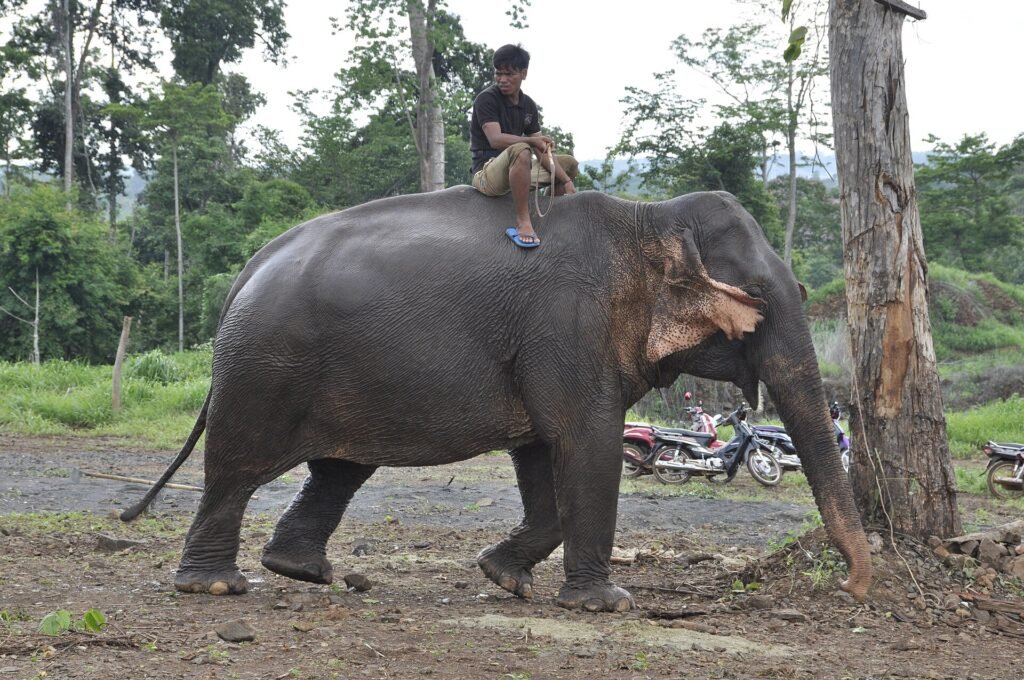
On 23 December, rangers discovered carcasses of a mother Asian elephant and her calf in Preah Roka Wildlife Sanctuary, located Preah Vihear province. Shrapnel from Thai struck explosives were to blame. The Cambodia environment minister, Eang Sophalleth, called this murder an environmental crime as it breaks international laws and affects biodiversity no less than the lives of people. With only 600 Asian elephants left in Cambodia it is categorized as an endangered species that uses migration corridors, such as Preah Roka, among others along the border.
Asian elephant in Cambodia. Source : Wikimedia Commons
Public focus generally lies on human deaths, at least 100 individuals had been killed and almost 500,000 civilians displaced from the firefight in July and December 2025 until second ceasefire agreement on 27 December. The impact on schools was especially severe, since by mid-December over 1,000 schools had been shut down in Cambodia alone, with over 242,000 pupils affected, while hundreds more schools had closed in Thailand. However, armed conflicts produce victims that never come up on ceasefires or strategies discussions. Forests are burnt down and habitats are divided and rivers are contaminated. Holy sites are no longer accessible, along with the livelihoods of the local population. Unlike people, nature cannot negotiate its own peace.
Fighting at Preah Vihear occurred in an environment that was already stressed by activities such as deforestation, agriculture, and previous warfare. The military operations and mass evacuation make it increasingly difficult to conduct conservation efforts, especially in times when they are most needed – rangers that would normally be tracking animals are busy evacuating people, and protected areas that need patrols become off-limits.
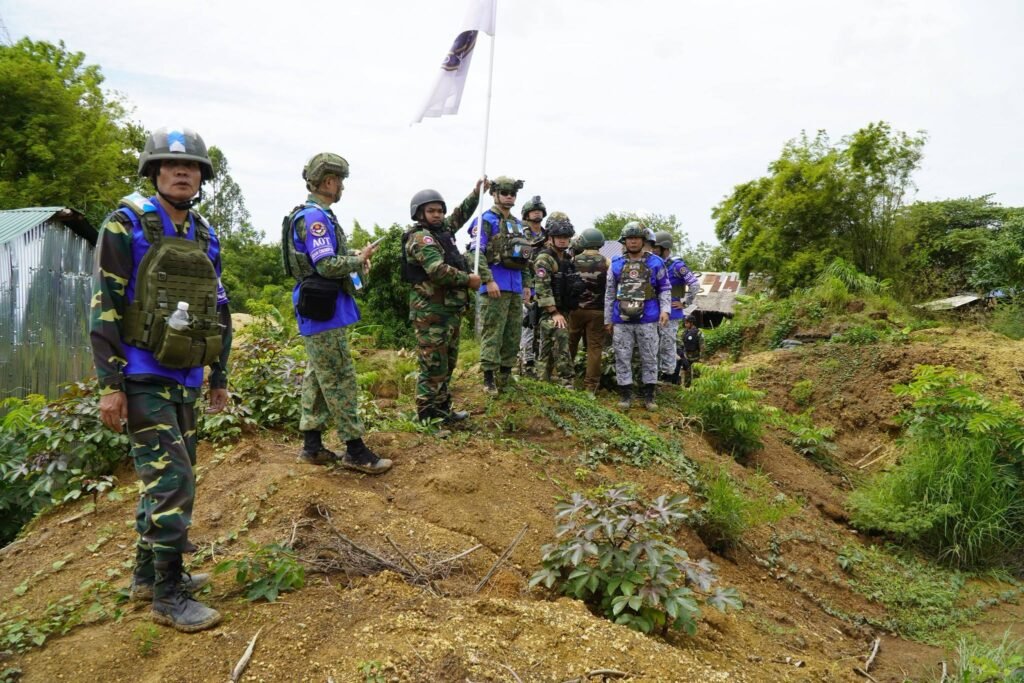
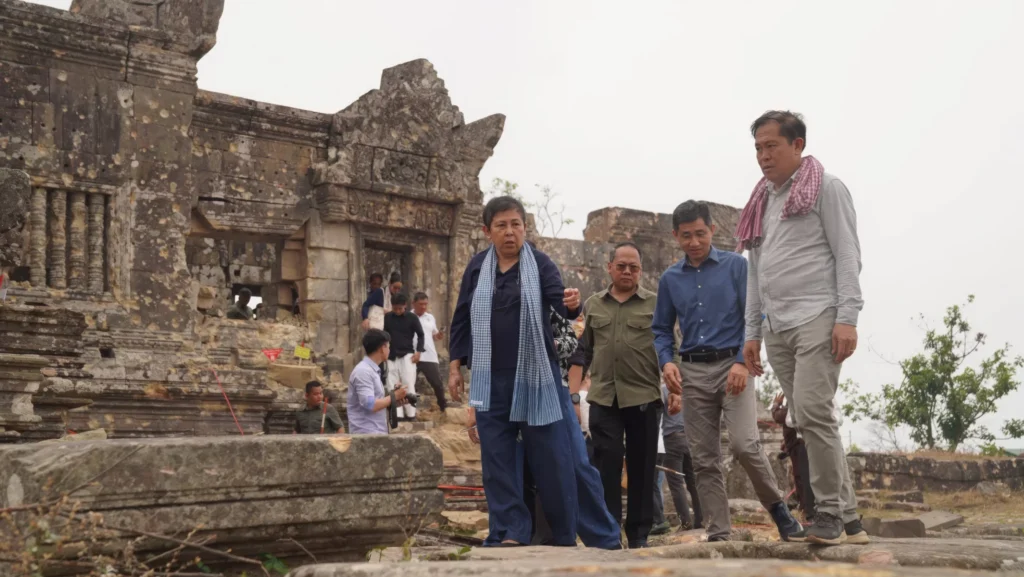
ASEAN Observer Team inspects remains from Thailand – Cambodia border conflict. Source : Facebook/ Cambodia Defense Minstry
Water has its own narrative to tell. According to a WHO situation assessment of public health in the context of the conflict, displacement camps in the border areas suffered problems from contaminated water, insufficient latrine provision, spread of water-borne diseases and mosquitoes from still water. In addition, according to an assessment conducted by a group of Cambodian civil society organizations, there were toxic chemicals found in ponds, lakes and rivers in the border area, an occurrence that Thailand denies involvement. A year later, Cambodian deminers identified about 4,000 square kilometers of land contaminated unexploded ordnance preventing agriculture. These realities are not visible on the picture of a crack in a temple wall.
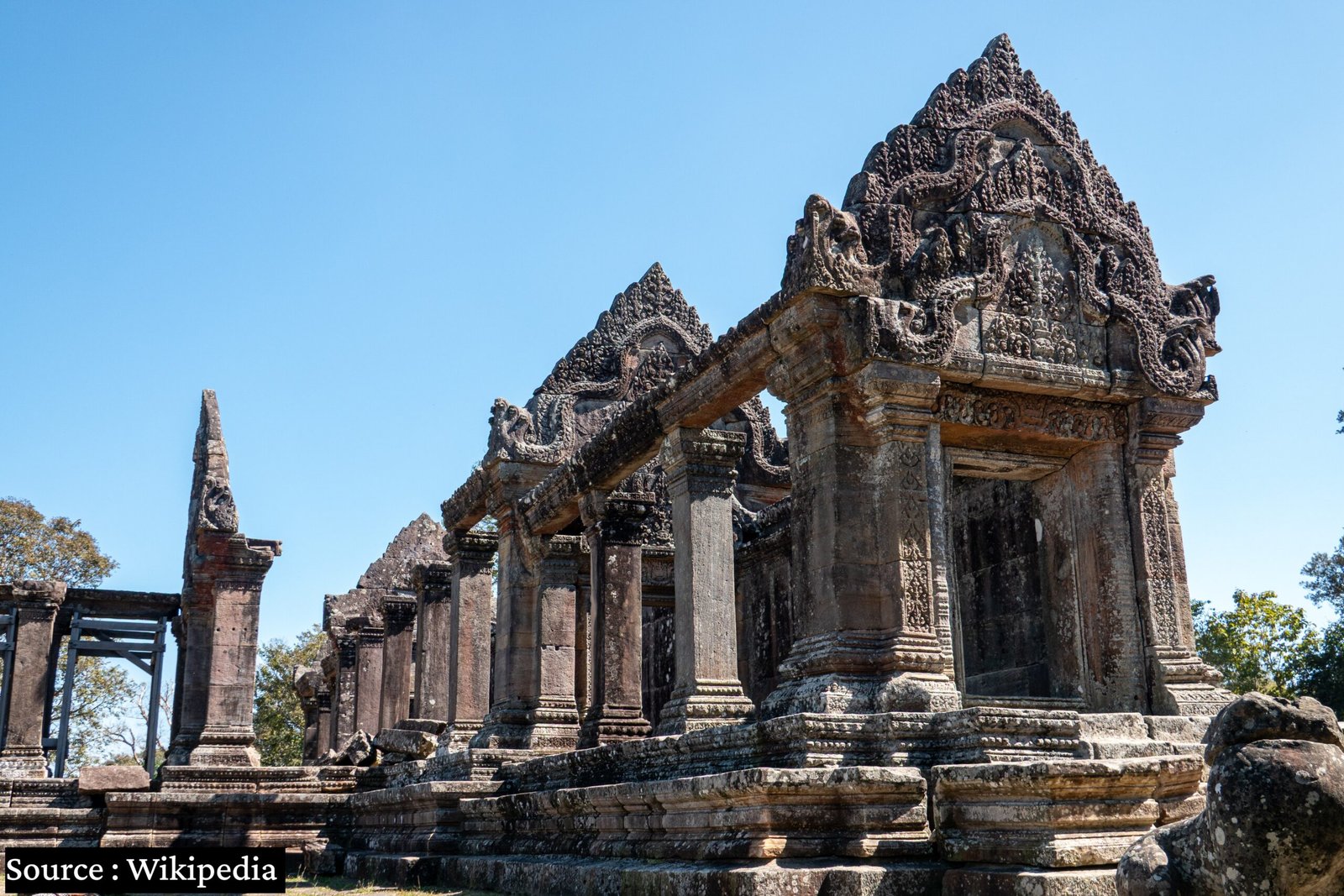
Cambodia’s Culture and Fine Arts Ministry registered a total of 562 damage points after the 2 rounds of firefight in an area that had remained largely untouched for a thousand years. Damage was sustained in all five gate towers of the temple. Three were damaged almost to the point of recognition. This destruction was not limited to the temple’s premises: damage assessment reported at 60 locations outside the temple walls — homes, schools, and pagodas.
Cambodian officials estimate that full restoration will take 20 to 30 years and cost tens of millions of dollars, a process that can only take place once the unexploded ordnances are cleared from the site first. Stabilising the weakened structure alone could take five to ten years.
Cambodia Culture and fine arts minister inspects preah vihar temple Source: mcfa.gov.kh
Despite this, the biggest threat might not be the harm that has already taken place, but in continuing to think of environmental and cultural despoliation as separate problems. Global warming, wars, extinction of species, and destruction of human heritage continue to be seen as different crises when, in reality, all of these things have a common cause; humanity’s inability to understand how essential their relations are to human existence. Temples, forests, rivers, and elephants do not live in separate realms. They exist as one inter-related ecosystem.
Preah Vihear must not become yet another reminder of irretrievable loss. It could become a symbol of the recognition that to secure a common future, humanity must secure both environment and culture together. The World Heritage system always understood the existence of outstanding universal value in some places. The next step is to understand that the places themselves are living ecosystems whose preservation will benefit biodiversity, climate adaptation as well as peace.
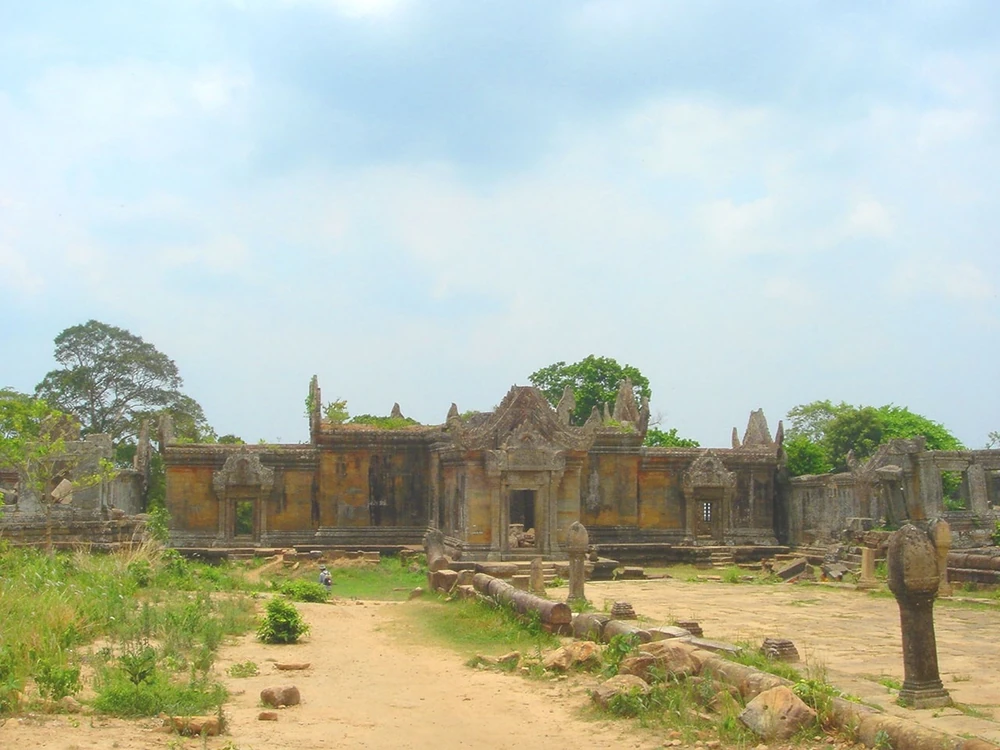
Remnants of Preah Vihear temple. Source : Wikimedia Commons
War can ruin stone architecture in a single afternoon. Restoring the connections between people, landscape and memory requires much more time – generations sometimes. If countries are to defend their common future, they should begin with defending the living landscapes that connect them to a common past.
Ecocide as the devastation of nature during times of war is widely discussed within the international legal community. What took place in Preah Vihear suggests that there is a need for another approach, cultural ecocide, which does not constitute an international legal category but rather a way to interpret the devastation of the living connection between heritage, ecology and collective memory. The landscape under such an impact is not only a physical environment, but also an archive of stories, the embodiment of identity and a connection from one generation to another. When such relations are broken, the resilience of both the ecology and society is compromised.
SokhuonIn is a Cambodian PhD Scholar in International Relations and Politics at Mahatma Gandhi University, India, with a research focus on Southeast Asian politics, international relations, soft power, and peacebuilding.