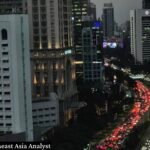
“The government is increasingly ruined, we cannot let this go on for another 3 years”
Editor – Southeast Asia Analyst
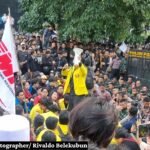
Youth’s pledge day on 28th October in Indonesia was marked by major anti-government protests spread out through the country in numerous provinces. Although students were the majority, they were accompanied and supported by various social groups. A noteworthy aspect from Wednesday’s protest in Jakarta was that they finally managed to bypass police barricades blocking access to the iconic International Hotel roundabout, a location where protestors were denied entry for months on the basis of the area being a strategic economic zone. Media likened their tactic to the trojan horse strategy with protestors dressed in plain clothes onboard minivans who were suddenly dropped off, confusing police officers losing control of the situation.
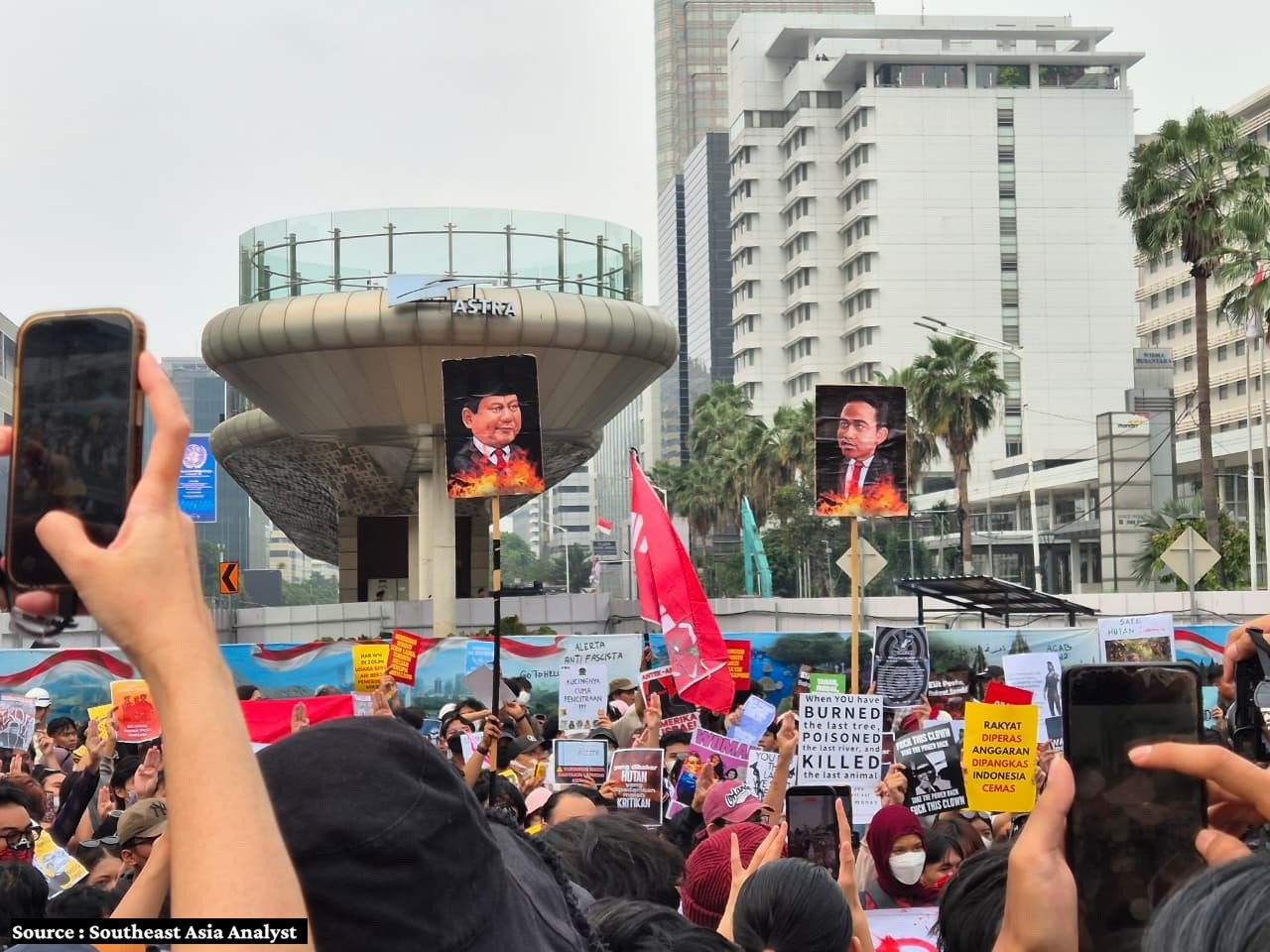
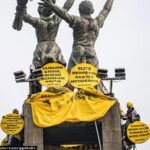
An hour into the demonstration, protestors held up signs and banners that were increasingly provocative in criticizing the government and voicing their demands which includes; declaring the forest fires as a national disaster, stop wasting national budget on populist agendas, reducing cost of living, stopping corruption, collusion and nepotism and finally ending all forms of restriction on freedom of expression and intimidations of citizens. Many of these issues worsened under Prabowo’s administration with notable human rights activists facing political violence such as acid attacks and doxing. A handful of senior citizens were spotted handing out free water and snacks to protestors.
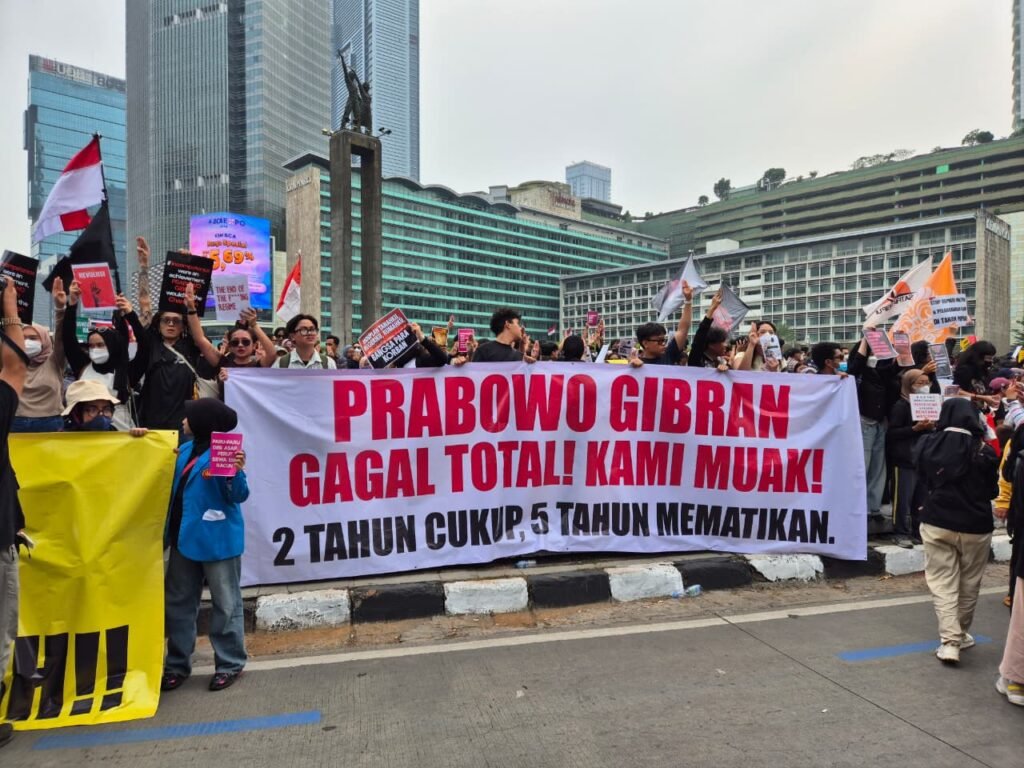
“Prabowo and Gibran totally failed, we’re fed up, 2 years is enough, 5 year will kill us” Source : Southeast Asia Analyst
“Its not only some of us but all Indonesians are disadvantaged by policies that are nonsensical and made by idiots, imagine our brothers and sisters in Kalimantan, for months they can’t even healthy breathing air” said a protestor that Southeast Asia Analyst interviewed. “As Universitas Indonesia alumni and a mother to university students to support their demonstrations” said another. “The government is increasingly ruined, we cannot let this go on for another 3 years” said a student protestor from Universitas Indonesia.
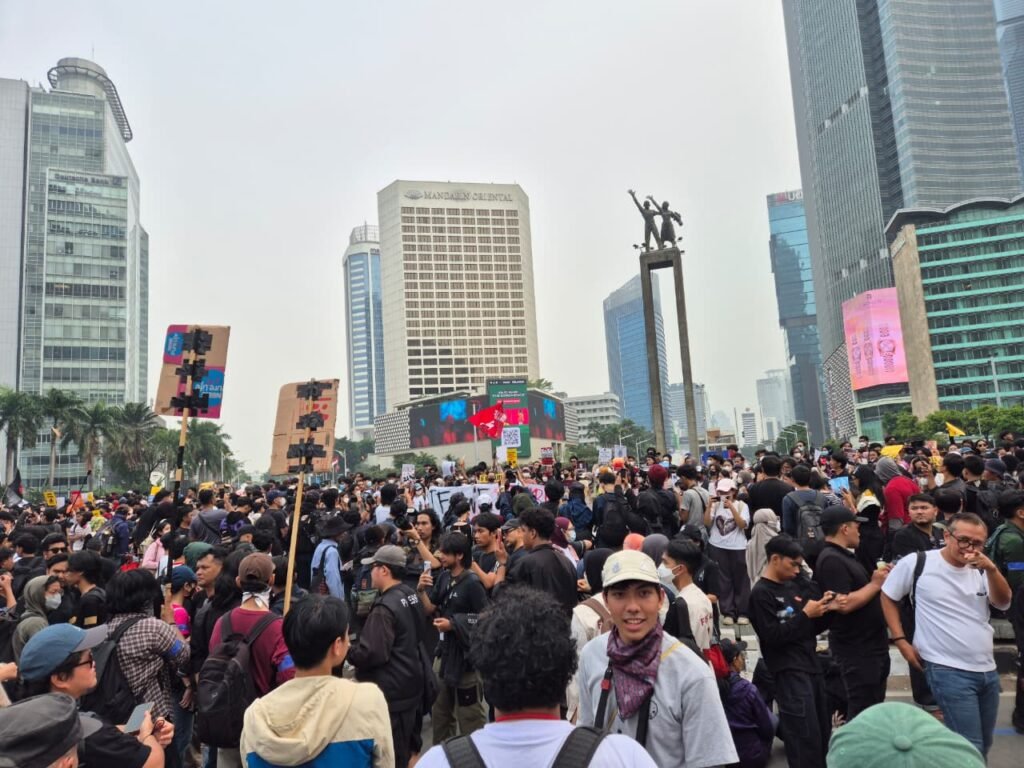
Despite occupying most of the road, the protestors still allowed motorists to pass by. “The traffic jam will occur for a day but the results of actions will remain for years to come, including our kids, they won’t have to face this cruel regime” said another student protestor from Universitas Indonesia when asked about people who complain about large scale protests such as this. “There will be news coverage on this, it could reach international viewers and indirectly it will affect the government” said a protestor. Although large media corporations covered the news, Indonesian political commentators highly doubt that President Prabowo was even made aware of the news. In the past year Prabowo gained a reputation for being surrounded by yesmen who fed him false reports in the interest of keeping their jobs.
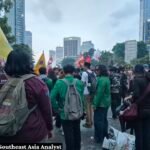
Protestors gathered in Bundaran HI, (International Hotel Roundabout). Source : Southeast Asia Analyst
When asked which of the demands are the most urgent, they all pointed to the the forest fires and having them declared as a national disaster “The smokes even reached Sulawesi, thats tragic, it doesn’t make sense, they (government) don’t care but the cabinet is only getting bigger” said another student protestor “the fact that they still have not labeled the forest fire as a national disaster means that they’re burning it on purpose.” Although the list of private corporations involved in Sumatra and Kalimantan forest fires were made public, the companies have yet to face legal sanctions.
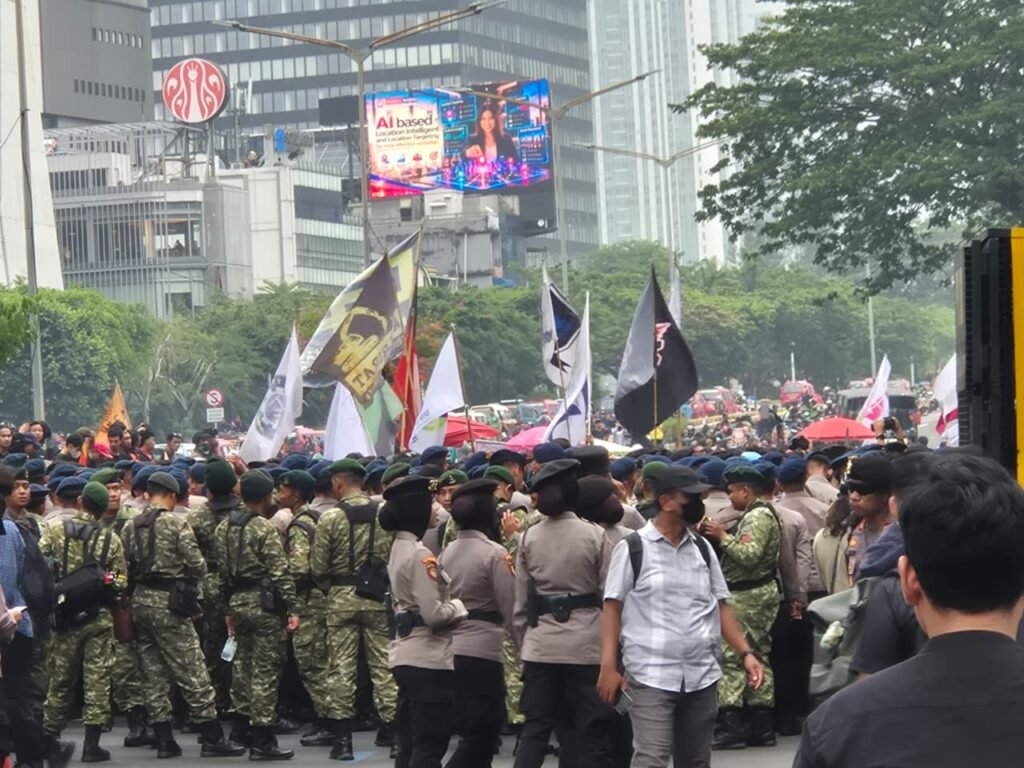
Soldiers and police officers blocking crowds from entering Bundaran HI, (International Hotel Roundabout). Source : Southeast Asia Analyst
The crowd’s peaceful nature did not stop police intimidation tactics. Police and military personnel surrounded the protester standing shoulder to shoulder, Leading figures within the protestors attempted to reason with higher ranking police officials to expand space for the protest but yielded no result, after sundown water cannons and tear gasses were shot at protestors to disperse.
Police violence in different provinces proved to be far more severe. Videos of police personnel stomping, beating and even whipping them as crowd control tactics surfaced and gained virality. In Jakarta alone, up to 19 protestors were arrested and lawyers from democracy advocacy groups attempting to reach them were only granted access after heavy push back from the police.
Han Kyeol Kim is an editor in Southeast Asia Analyst