The fight for civil rights appears even more uphill considering the Muslim majority population and most cultures within Indonesia valuing conformity and collectivism.
Editor – Southeast Asia Analyst.
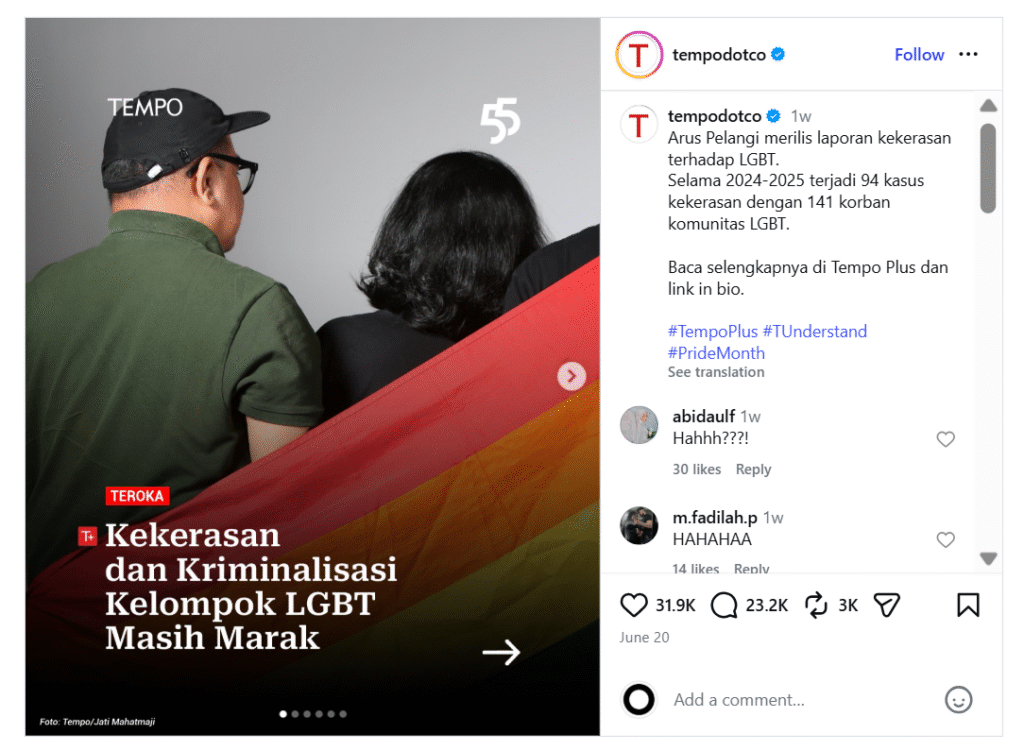
Pride month in Indonesia was marked more by backlash and resistance from anti LGBT rhetoric and actors as opposed to celebration. The intolerance was spread primarily online and particularly surged during in mid to late June when established media Tempo uploaded a post on instagram detailing criminalization and discrimination faced by queer communities in Indonesia. While the post remained on Tempo’s account, it attracted massive pushbacks with comments expressing disappointments and calls for boycotts to the media company.
A student newspaper in the University of Indonesia (UI) shared a similar fate when it uploaded a post titled “Testing humanity during pride month.” UI stated that the post does reflect the institution’s stance. The post was quickly removed, it is still not sure if the post was removed voluntarily or ordered by the university.
Screenshot from Tempo’s instagram page. Source : Instagram/ @tempodotco
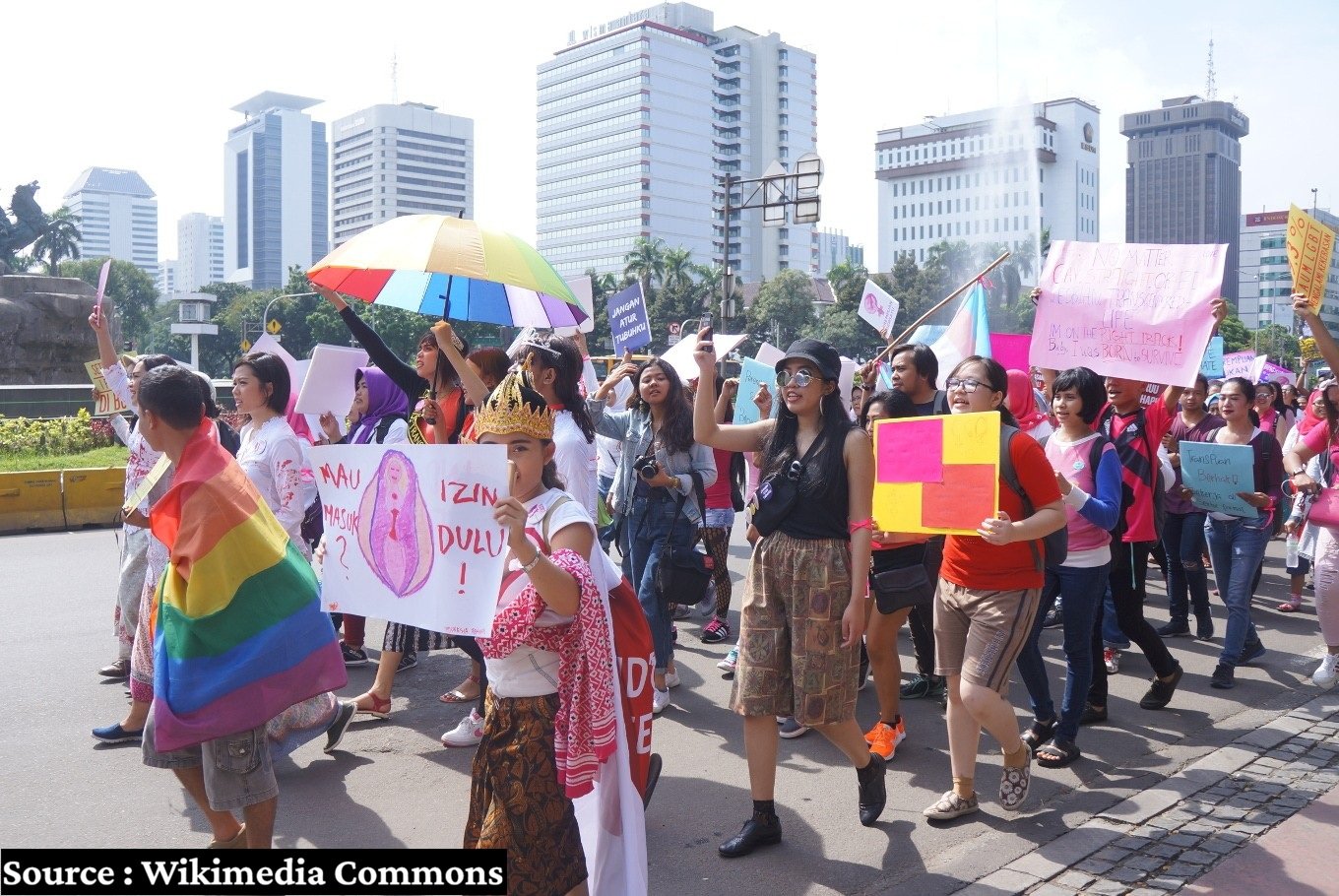
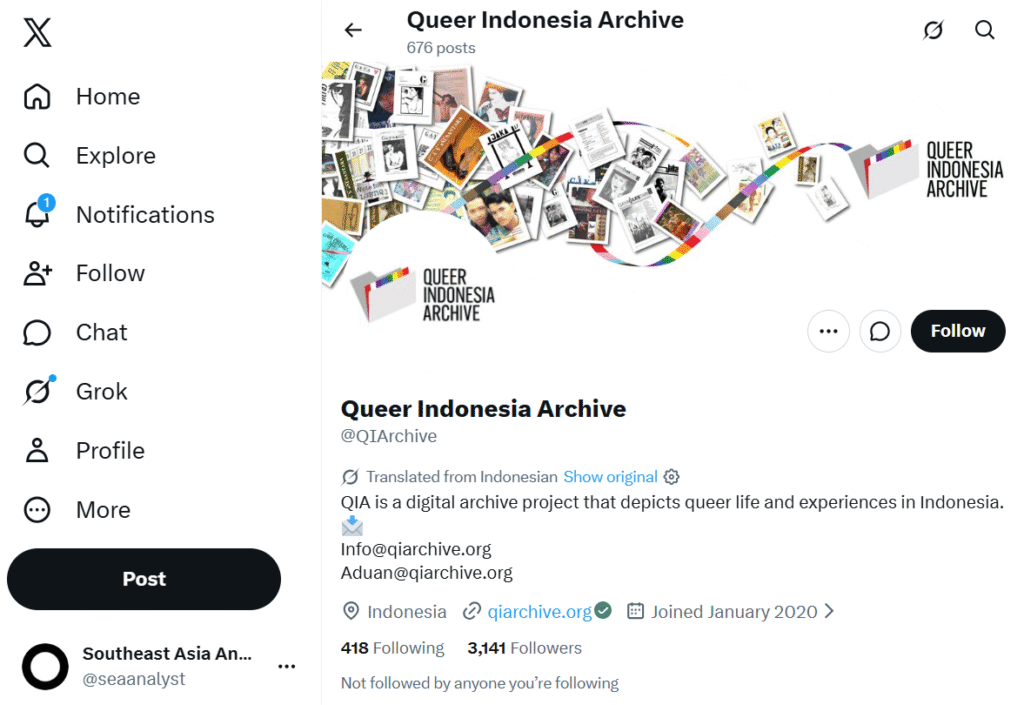
Pride celebrations and events are becoming increasingly difficult to hold in Indonesia, including in the capital, Jakarta. Although LGBT advocacy groups are maintaining their stand, their presence is largely limited to social media and online initiatives such as Queer Archive Indonesia. Queer representation in public spaces existed in Indonesia in the past but were sporadic limited to drag shows, panel discussions and LGBT advocacy groups latching themselves to women’s march. Police raids on private and indoors gay events surged towards the late 2010s under the guise of crackdown on public disorder and violation on pornography laws.
Screenshot of Queer Indonesia Archive’s X account. Source : X.com/ QIArchive
Although there is no widespread grassroots coordinated effort against LGBT communities in Indonesia, the majority of Indonesians bear aversion toward non heteronormative identities. One such person is Mr. A, a 24 year old Jakarta based, IT freelancer who agreed to talk with Southeast Asia Analyst.
Like most from his environment Mr. A cites religious and cultural reasoning to defend his opinions against the LGBT communities in Indonesia.
“I think this (homosexuality) is a disorder, and like all disorders it has a cure, but the sick need to be willing to be treated.” Mr. A claimed “It is not within our Indonesian culture”
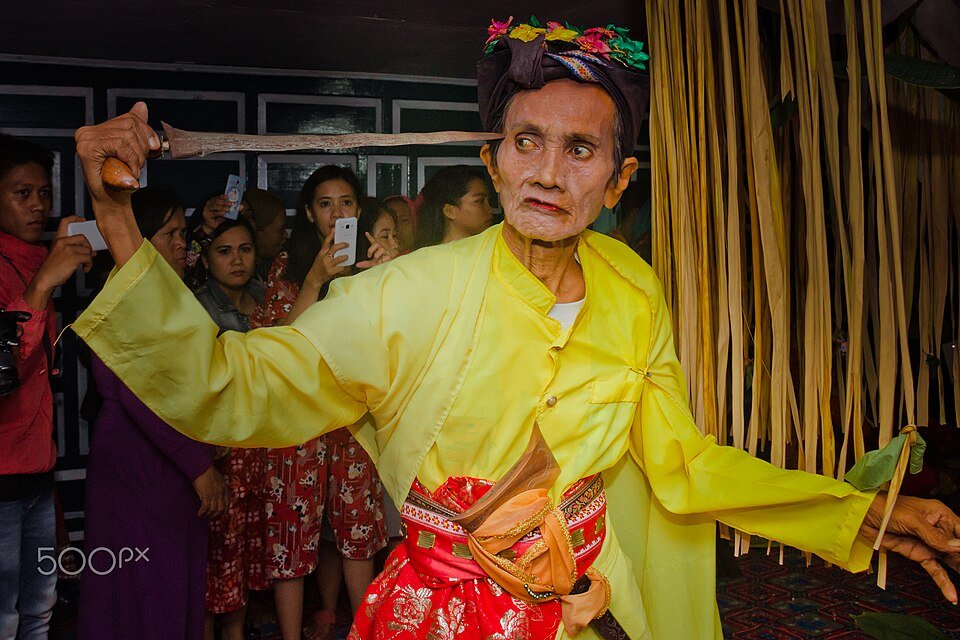
The claim ignores numerous ethnic groups within Indonesia that not only recognizes but embraces queerness such as the 5 genders in Bugis culture, non gender conforming shamans within Ngaju Dayak culture and gender fluid performances in Javanese culture. It also does not take into account state recognized religions that do not discriminate against queerness such as hinduism and buddhism.
Maggiri dance by a bissu priest. Transgender priest in Bugis Culture. Source : Wikimedia Commons.
Despite being presented with these arguments, Mr. A affirmed that homosexuality is immoral.
“The government surely should provide protection for all people, regardless of their identity. But LGBT is not a real identity, it’s simply a distortion. Those people can only exist in places where the norms fit their actions, it’s that simple, they should just migrate” he added.
Other voices are not as harsh but are still rooted in the notion that queerness is inherently wrong. They come from personalities that present themselves as moderately religious figures that speak out against discrimination. However, their rhetoric against hatred ends with a call to action to bring back the queers back to the “right path”.
Some figures within this category call for legal protection against the LGBT community and champion government involvement to provide regulations which will serve as a middle ground between the LGBT community and those who oppose them.
Faced against such rhetoric, members of the Indonesian LGBT community and allies feel that there is no way to convince their opponents otherwise.”It’s more likely that Indonesians accept communism before they accept the LGBT community” claimed Rivaldo Belekubun, a 25 year old content producer based in Jakarta who identifies as an LGBT ally.
“I think the biggest problem is being so strong on your ideology that you forget that imposing it onto others is actually unethical, it’s a problem of human emotions.” Said Mr. N, a 25 year old asexual, Jakartan who works as a shopkeeper. “Best case scenario is people saying ‘I don’t mind gay people but I still think it’s wrong’” he added.
Despite this, advocacy groups refuse to give up and remain hopeful that the LGBT community will be accepted in Indonesia in time.
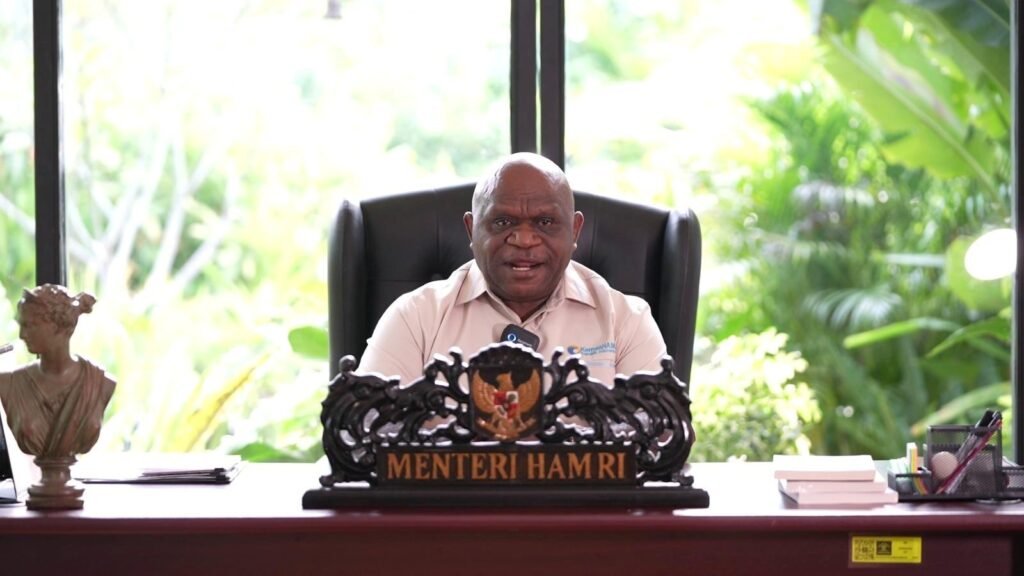
Indonesian Human Rights Minister Natalius Pagai in 2025. Source : Kemenhan.go.id
The government largely stayed away from this discourse throughout pride month until Human rights minister, Natalius Pigai admitted that the Indonesian people are not ready to accept the LGBT community. However he added that their basic and constitutional rights will be guaranteed as long as they are citizens.
The fight for civil rights appears even more uphill considering the Muslim majority population and most cultures within Indonesia valuing conformity and collectivism. There is no telling on what the future holds for the LGBT communities in Indonesia. Some within the wider Indonesian society resist it altogether while others apathetic. The current administration’s lack of interest to uphold human rights and freedom of expression leaves these vulnerable to discrimination and hate crimes.
Primarily arguments that oppose queer movements in Indonesia that are boiled down to religion and cultural reasons does not hold water upon closer inspection to other state recognized beliefs and the archipelago’s diverse culture. Using this foundation, Indonesian queer advocacy groups point towards queer movements in countries as near as Thailand and Philippines as the north star and continue their struggle for equality.
Han Kyeol Kim is an editor in Southeast Asia Analyst.