Whatever the motivation might be, the implication is clear, it further signals political instability, resulting in lower investor confidence.
Editor – Southeast Asia Analyst
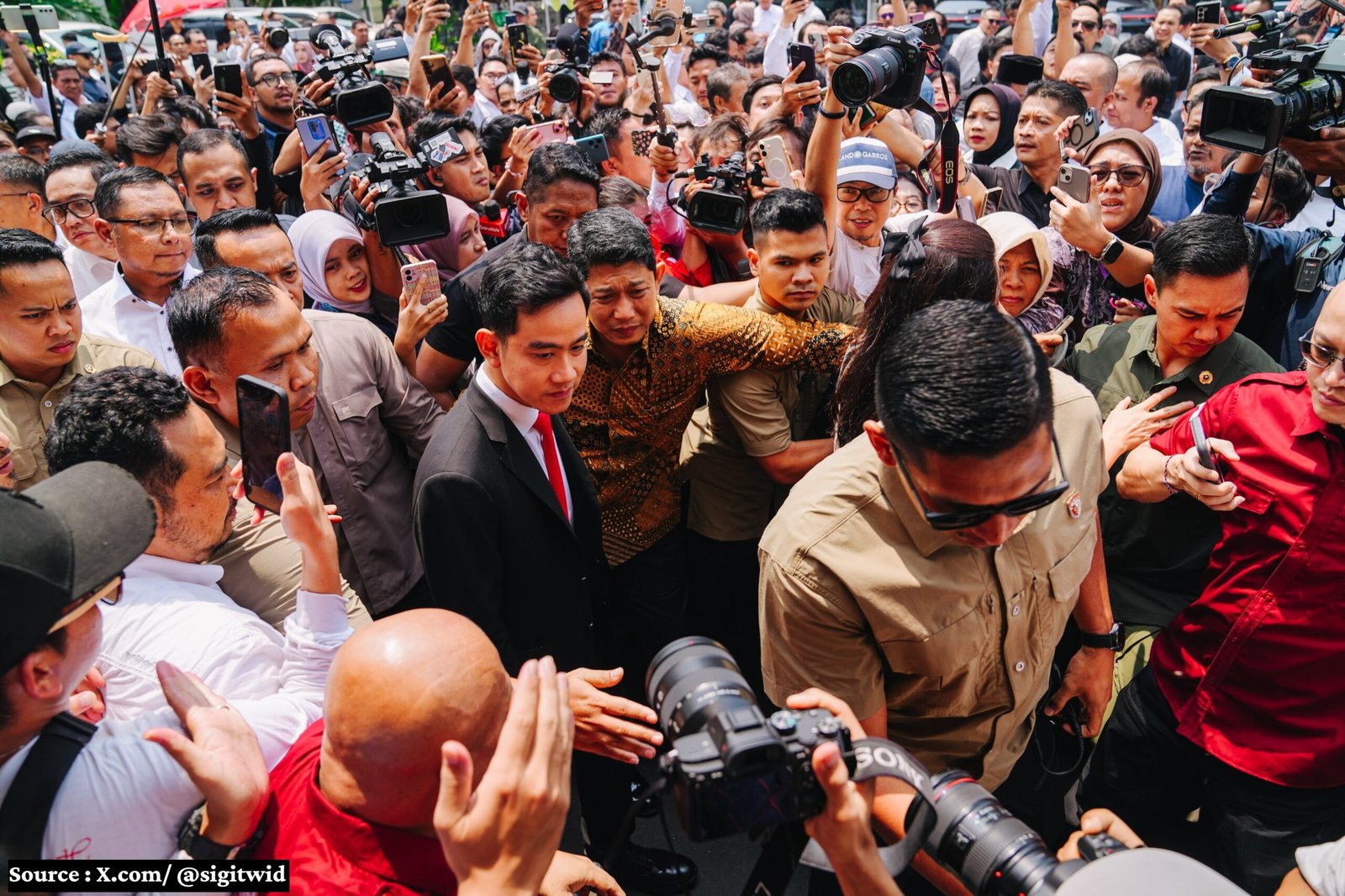
Days of media frenzy and speculation followed since Indonesian Vice President Gibran Rakabuming Raka announced on 10th November, his willingness to resign from his post as legally the second most powerful man in Indonesia. Reporters swarmed the presidential palace demanding clarification. Just as crowded was the former president and Rakabuming’s father Joko Widodo’s residence. “Position is only temporary” the still widely influential former president quipped.
On 12th November, vice president Rakabuming officially submitted his resignation letter to the head of the People’s Consultative Assembly, locking in his decision and starting a 60 day long period to find his replacement. His actions drew mixed reaction from the public and commentators claimed that it confirmed the divorce between Hambalang and Solo political clans.
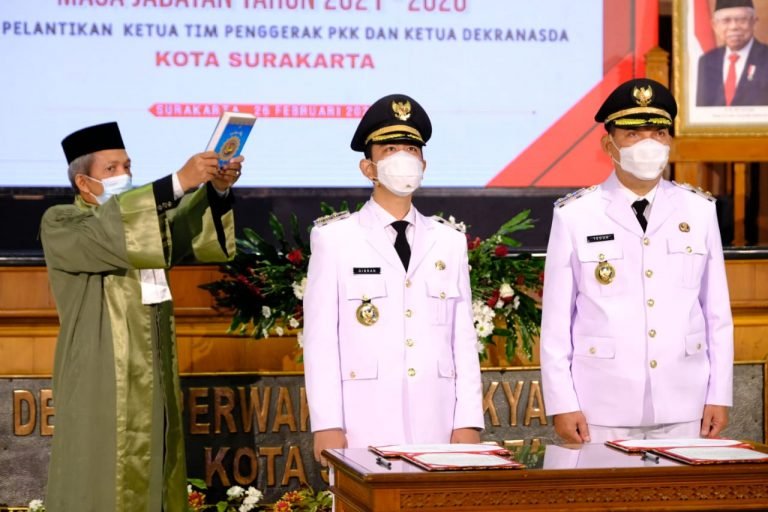
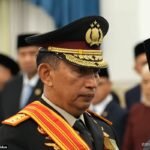
Rakabuming getting inaugurated as Mayor as Surakarta. Source : Wikipedia
Before becoming the current president Prabowo Subianto’s running mate and holding the vice presidential office, Rakabuming is best known for simply being Widodo’s son and former Mayor of Surakarta, a position that was held by his father. He was and remains a controversial figure, although largely unpopular and questioned for his dynastic rise to power, many voted for the Prabowo – Gibran pair, viewing it as a ticket to continuity to Widodo’s governance. His alleged online presence under the username “fufufafa” was the target of Indonesian netizens’ ridicule with his criticisms towards Prabowo being juxtaposed with his decision to run as Prabowo’s vice. Despite his consequential role in winning the election, Rakabuming’s two year tenure was largely uneventful, his assignment to oversee development in the remote Papua region being seen as an attempt to isolate him from Jakarta.
Rakabuming in Papua. Source : wapresri.go.id
Despite the the controversy surrounding the vice president, as per Indonesian law, he remains entitled to benefits such as pension funds, house, bills, supporting staff, health care and state vehicle.
Demands to remove Rakabuming as vice began months ago following a scandal concerning his high school diploma’s authenticity. The public however by in large doubt that he stepped down to save face following this drama. Political instability stemming from nationwide protests demanding lower living costs, anti corruption measures and better environmental policies consumed Indonesia in the past months. Amidst all this the former police chief, a known Widodo loyalist was arrested for wiretapping Prabowo.
This led the public and observers alike to believe, Rakabuming stepping down is a result of Prabowo shunning away Widodo’s inner circle to consolidate power or Widodo no longer having faith in Prabowo’s governance and removing his clan’s association to Prabowo’s. “From the beginning, Prabowo wanted to paralyze Widodo’s power, with the wiretapping case exposed, I think Widodo’s pulling back to protect his political allies” said Ms. S, a 25 year old office employee that agreed to talk to Southeast Asia Analyst. Despite the agitation surrounding the issue, many activists called on to ignore the struggle among the elites and instead focus on the ongoing issue that has more directly implications such as the forest fires and protestors getting arrested.
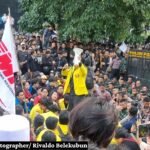
Protestors gathered in Jakarta on late November. Source : Southeast Asia Analyst
Whatever the motivation might be, the implication is clear, it further signals political instability, resulting in lower investor confidence. Moreover the vice presidential seat remains empty, the People’s Consultative Council are to choose and inaugurate a replacement by early December. Prabowo has 14 days until to propose the names of the vice president candidate, speculation remains anybody’s game. Commentators believe that candidates could either be from Prabowo’s own party or any other from within the coalition or even from the semi opposition Indonesia Democratic Struggle Party. Amidst the guessworks, the Democrat Party, a ruling coalition member insisted that it will not propose candidates for vice presidential position, signaling movement away from Prabowo.
Han Kyeol Kim is an Editor in Southeast Asia Analyst