Ultimately, the controversy surrounding Pancatera may say as much about public expectations of the group as it does about the group itself.
Editor – Southeast Asia Analyst
In the midst of Indonesia’s 81st Independence Day celebration, festivities at the Merdeka Palace attracted public attention. Among them was the presence of a particular group called Pancatera. Composed of Marissa Anita, Caroline Soerachmat, Kai Soerja, and Karina Basrewan the group is best known for their podcast, In Her View. Following their appearance at the presidential palace, the group faced criticism across social media, with many questioning whether their presence was consistent with the values they represent through their podcast.
But is the criticism justified?
In Her View, was launched in April 2025. In its introductory episode, the podcast describes itself as a platform that will offer a “fresh intake on what’s happening in the world and onto our daily lives through the eyes of us women.” The podcast promises “…thought-provoking conversations, personal stories, and powerful insights.” With a “ range of topics that would cover daily female challenges and trending topics we would like to cover,” and the main mission to “amplify voices, ignite ideas and connect us all.”
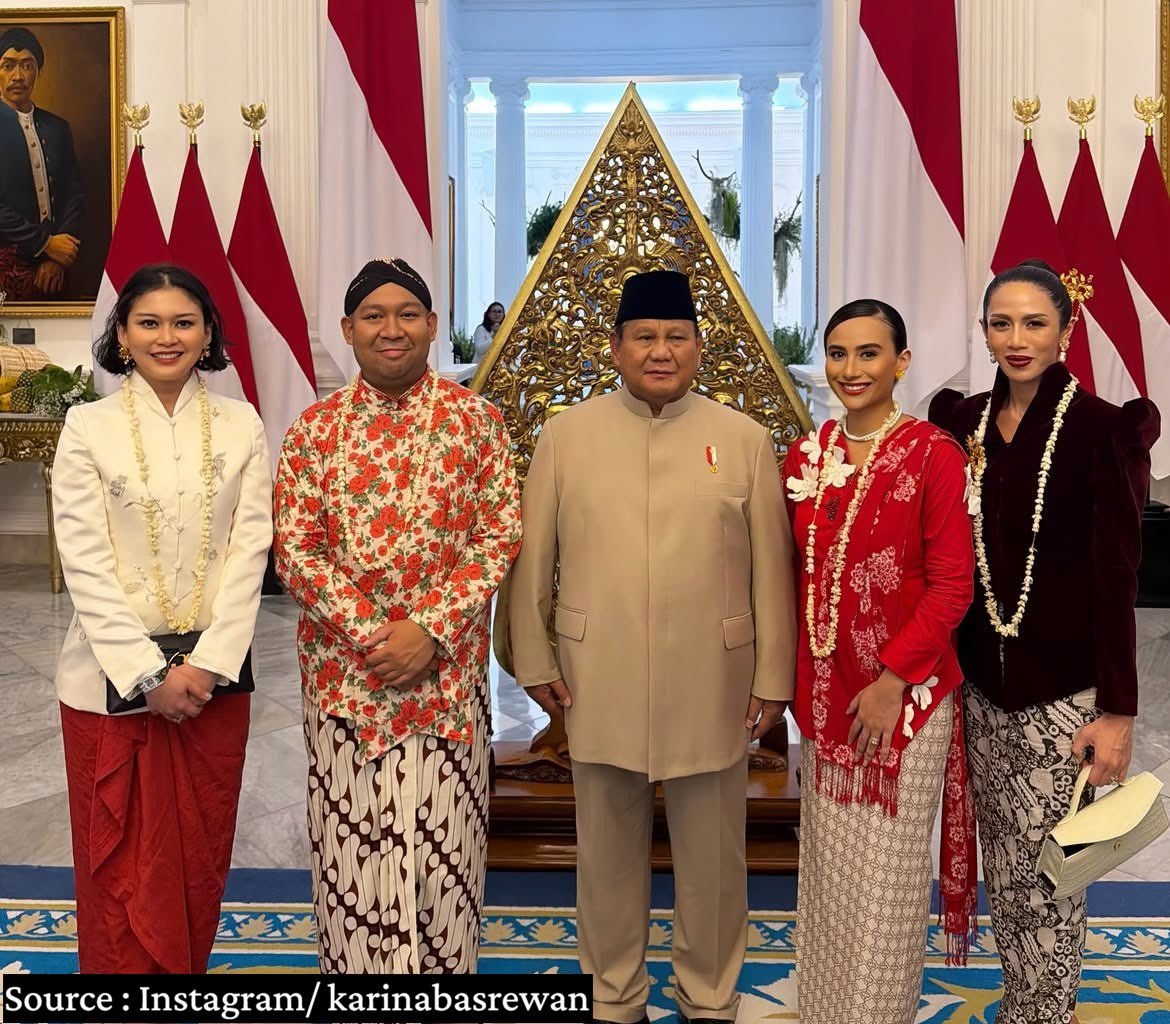
Members of Pancatera and Didit Prabowo. Source : Instagram/ @karinabasrewan
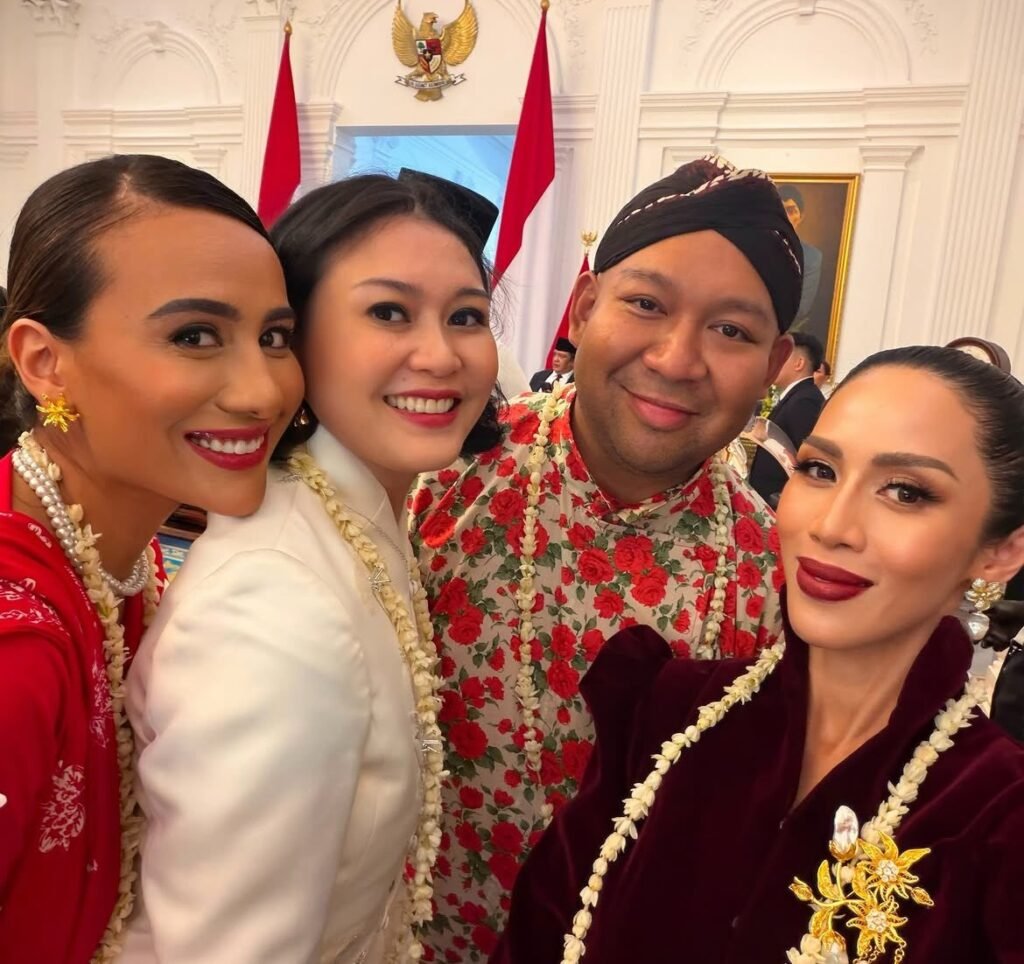
For Indonesia’s 81st Independence Day celebrations, the four hosts were among the attendees at the presidential palace. Several photographs circulated online, in particular, one selfie of three of the hosts alongside President Prabowo’s son, Didit Hediprasetyo. The images prompted criticism, many arguing that the hosts’ presence at the celebration, and their seemingly cordial relationship with the current administration, contradicted the values and perspectives expressed through their podcast.
From the topics themselves, it is visible that the podcast was never political in the first place. Even episodes that might initially appear political or socially activist in nature do not engage with politics directly. For example,Equity or Equality, does not primarily address social struggles or issues like gender equity or equality. Instead, the episode explores the meaning of equity and equality in romantic relationships, which is what the other episode mostly focuses on.
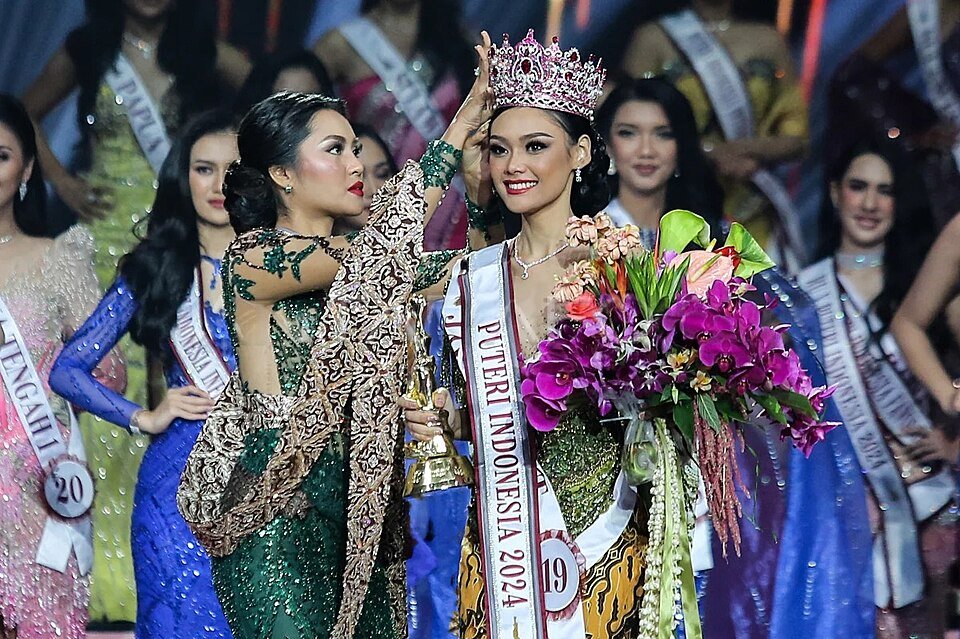
Crowning of Puteri Indonesia 2024. Source : Wikimedia Commons
The podcast further describes its purpose as bringing “a fresh perspective on how to navigate life through the eyes of modern women”’ However, their content and discussions appear to reflect struggles only some ‘modern women’ face. The topics they explore seem largely relatable to women from the upper-middle class.
The podcast rarely engages with the structural challenges faced by lower middle-class Indonesian women such as, economic vulnerability, gendered care responsibilities, and growing expectations of female independence, without the financial resources and institutional support needed to resolve them.
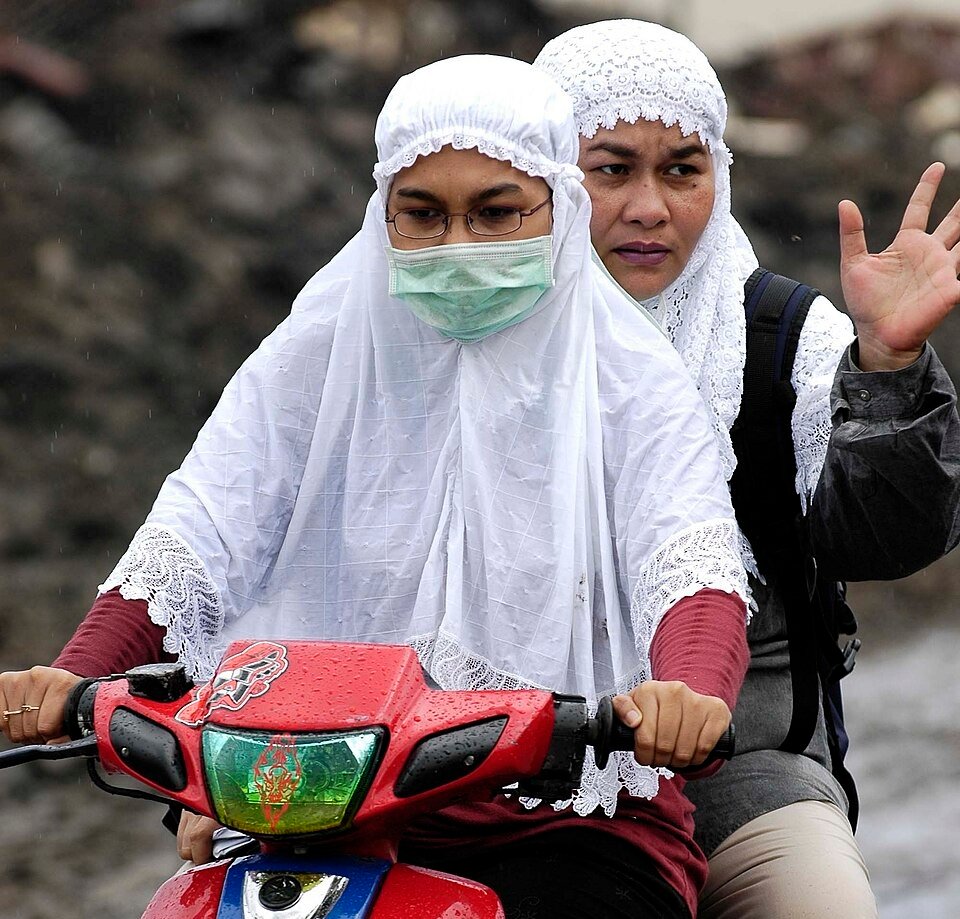
Indonesian Women on a motorcycle ride back from their house, which was, destroyed due to the Tsunami that struck in Banda Aceh, Sumatra, Indonesia. Source : Wikimedia Commons
From many of the criticisms it can be concluded that it is somewhat misplaced. The most impacted of the four, Marissa Anita, is a famous and well known actress. One of her impactful roles was her part in the movie, Istirahatlah Kata-Kata, a biographical drama film about the activist and poet Wiji Thukul who went into hiding after being blamed for the riot that happened in the capital. In the film, Marissa portrays the wife of Thukul, Sipon. Set against the backdrop of Indonesia’s New Order under Soeharto, the film is deeply political and highlights the country’s history of activism and repression.
Given this background, and the fact that all four hosts previously worked as news anchors, it is understandable that some audiences may associate Pancatera with journalism, social commentary, or even activism. Particularly on challenges for women and gender equality in Indonesia. But the simple answer is: it is not. It speaks about women, but not for all women.
Members of Pancatera. Source : Instagram/ @pancatera
Ultimately, the controversy surrounding Pancatera may say as much about public expectations of the group as it does about the group itself. Their presence at the presidential palace is disappointing for many, but it does not necessarily contradict what their platform is about.
The more relevant question may therefore be a different one: if In Her View claims to represent the voice of “modern women,” whose experiences are they actually representing—and whose are missing?
Herza Nabilah is a researcher on foreign policy and women empowerment based in Indonesia.