Reports from the Myanmar Defense and Security Institute, indicate that conscripts now account for about 85% of frontline strength in the military’s active infantry units
Editor – Southeast Asia Analyst
Months following Min Aung Hlaing’s inauguration as president and his decision to systematically implement conscription, an increasing number of men aged 18 to 35 have been forced into serving in the military. Up to 166 conscription-related detainments were made in Yangon from April to early July 2026 by the military and militias that support it according to the Rangoon Scout Network. In recent months, this policy implementation surged with sources reporting detainment and even home raids taking place regardless of day or night. Witnesses claim seeing a young man being forcefully bundled into an unmarked van and quickly sped off.
Highest concentration of street sweeps were made in working-class neighborhoods, South Dagon, North Okkalapa, and Mingaladon townships. This is also the case in Hpa An city where authorities are primarily targeting young casual laborers, masons, shop employees, and commuters traveling to and from work.
Hpa An city. Source : X.com/ @hurfom
With hundreds of Myanmar military combatants getting killed in action in their armed offensive against the resistance forces, the government is taking extreme measures to restock their ranks. Ironically ethnic minority communities who were not considered legal Myanmar citizens were targeted for conscription in the civil war’s early years. Today however, the military is abducting anyone they can, snatching people from tea shops and karaoke bars. Such harsh methods could be coming from the Naypyitaw Central Conscription Supervisory Committee instructing local authorities to recruit in advance for the 28th batch in late August and warning action against officials who failed to meet quotas.
Rohingya refugee in South Asia. Source : facebook/ Arakan Rohingya Students Forum
Families have resorted to paying authorities hefty bribes to negotiate their sons freedom during detainment. With checkpoint spawning on various parts of the city, civilians of military age now live in fear and vigilance.
“Authorities carefully plan their daily abductions to prevent leaks. A friend of mine was arrested a few days ago. He was only released after showing his national identification card (NIC) and proving he lived locally. However, his family still had to pay 1 million MMK in cash,” a Hpa-An resident said.
Checkpoint in Hpa An city. Source : X.com/ @hurfom
The situation raised concerns to the point that a parliamentarian from the junta backed Mandalay regional parliament commented on the issue. “Youth in Mandalay are being taken in a way similar to human trafficking for military service, and some are being released only after paying money. People are afraid and cannot go out at night because they don’t know who will be taken next. These so-called militia groups are moving around with weapons and even unregistered vehicles, and their activities look like an illegal market of forced recruitment. The public is asking what protection the elected government can provide” said MP Ko Ko Htwe.
Myanmar Military conscripts receive training. Source : X.com/ @hurfom
In response, Security and Border Affairs Minister Colonel Nay Lin Soe clarified that authorities are enforcing regulations on militia groups “We are supervising compliance with the 13 codes of conduct for militia groups, and those who violate rules or disobey orders will be taken action against according to the law. Complaints will be investigated and dealt with effectively.” He explained.
Fear spilled over online as well with reddit users from Myanmar confessing their fear of getting older to military age. “As a 17-year-old male, I can’t stop thinking about what could happen when I become eligible for conscription. I’ve heard about drafting letters being sent to young men, and the thought of being taken away from my family against my will genuinely terrifies me. What scares me most isn’t even just being recruited. It’s what could happen afterward. Being sent away from my family, given a weapon, and forced to fight in a war I never chose.”
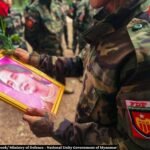
Reports from the Myanmar Defense and Security Institute, indicate that conscripts now account for about 85% of frontline strength in the military’s active infantry units, reflecting a strategy that pits civilians against one another. Information about conscripts, including deaths and injuries sustained in combat remain largely unknown. Deputy Labor Minister U Maung Maung Than said eight personnel from the first four conscription batches had been provided employment opportunities by 8 August 2026 after completing two years of service. Analysts suggest the actual number of conscripts killed or injured in military operations could be significantly higher than publicly reported.
Fish vendor in Mandalay. Source : X.com/ @McCurryStudios
The economic implications of this policy already started to show. Shop managers, factories owners in Mandalay are facing severe labour shortages. Youths who would usually come to Mandalay for jobs are staying away to avoid possible abductions that lead to forced conscription “Previously, when employers needed 10 workers, we could usually find them within two weeks. Now it’s almost impossible,” said one recruiter.
With the military pinned down to controlling only about a quarter of Myanmar’s landmass, desperation will not stop to restock troops. Disregard for human rights aside, the economic side effects will also be ignored by Hlaing and his inner circle as long as they receive funds from China and manage to convince neighbouring Southeast Asian countries to invest in Myanmar.
Manh Chien Nguyen is a Mainland Southeast Asia columnist for Southeast Asia Analyst, based in Hanoi.