The much anticipated Code of Conduct on South China Sea development that was supposed to be finalized this year ended up a failure to be sealed.
Editor – Southeast Asia Analyst
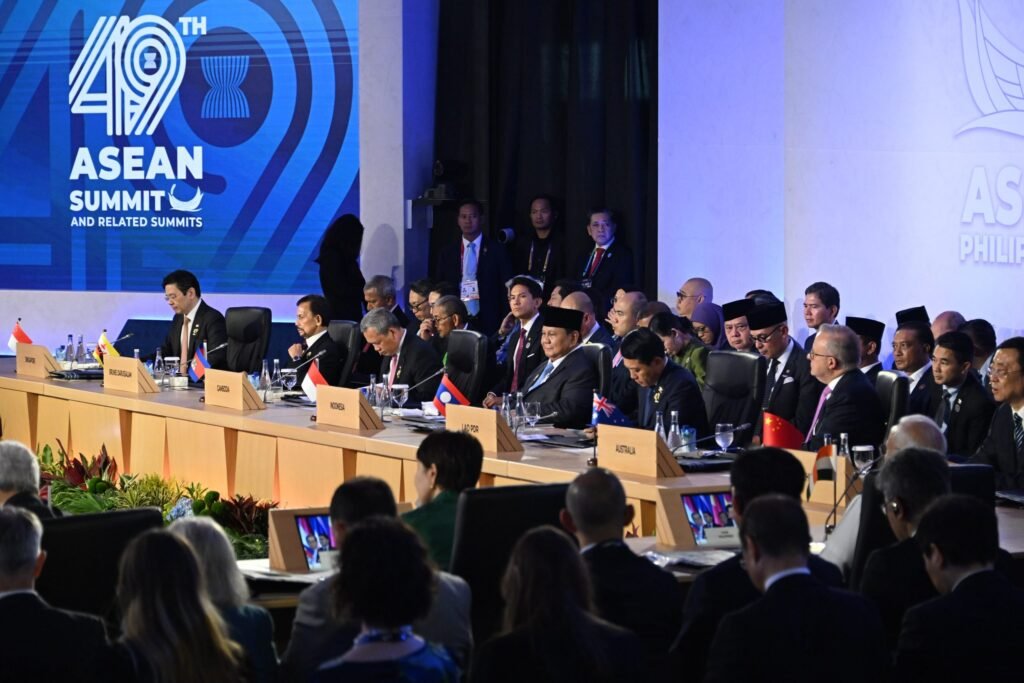
The 49th ASEAN summit took place from 15th to 17th November this year with heads of states from all ASEAN member states except Myanmar along with representatives from some dialogue partners and Brazil. Although faced with various regional issues such as the Cambodia and Thailand border tension, South China Sea disputes and scam centers affecting vulnerable groups in the region, yet again, no extraordinary steps or address were taken to tend to such issues.
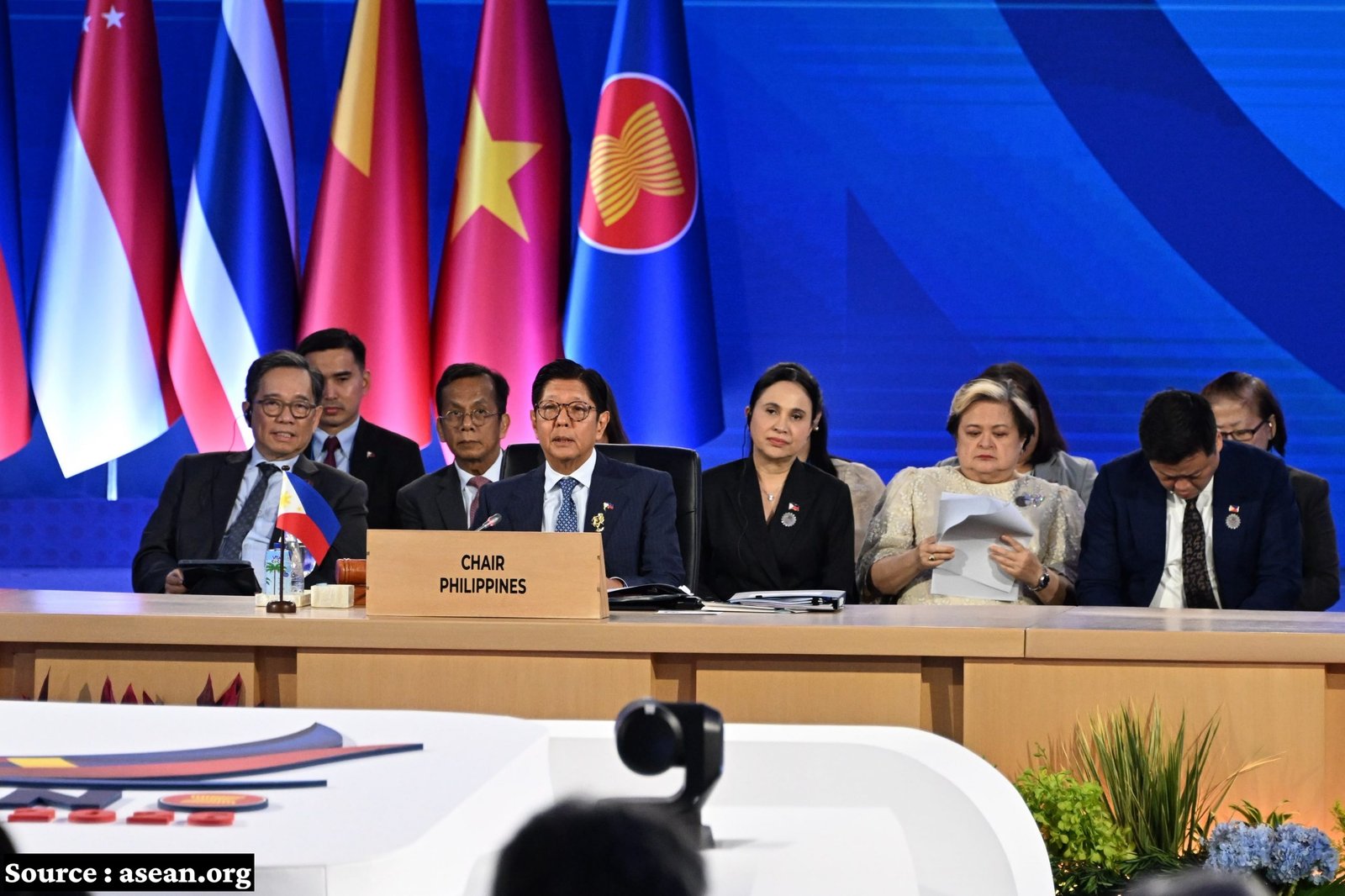
Delegations from ASEAN summit. Source : asean.org
The 2 days long summit was filled with disappointing and lackluster developments that quickly grasped the public’s eye. Addressing the transboundary haze issue originating from Sumatra and Kalimantan, Indonesian president Prabowo Subianto provided a half hearted apology to its archipelagic neighbours. “The haze travelled to Malaysia and Singapore, it’s not our fault but once again we apologize” said Prabowo, as the Malaysian and Singaporean prime ministers looked on uneasily. Netizens from Indonesia, Malaysia and Singapore criticized his statement and called it hypocritical and lacking accountability. Additionally, another collection of “deep concerns” were expressed on the ongoing civil war in Myanmar to which the summit reaffirmed implementing the five point consensus which was already rejected by Myanmar’s parliament and president.
During the summit, the ongoing border conflict between Cambodia and Thailand were brought up by the respective delegations but did not lead to any significant discussions or even a sideline meeting between the two. Although the Cambodian deputy prime minister called for the Joint Boundary Commission to resume during the summit, Thailand’s prime minister disregarded the concern and insisted the border issue be handled bilaterally.
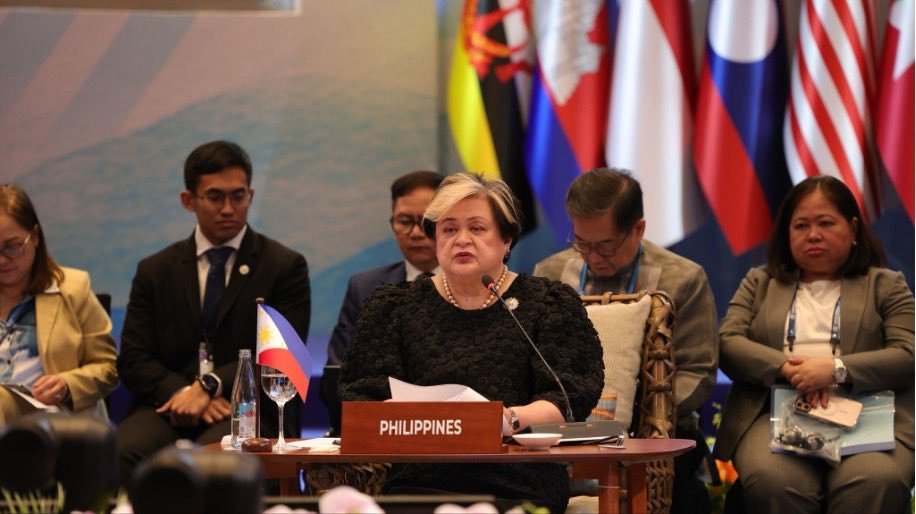
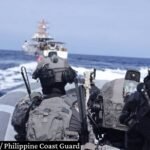
The much anticipated Code of Conduct on South China Sea development that was supposed to be finalized this year ended up a failure to be sealed, although foreign secretary Lazaro denied it as such “We have done 80% or more than that. So I don’t think it’s a failure,” Lazaro told reporters, “Why would we be frustrated? We just needed more time ” she added.
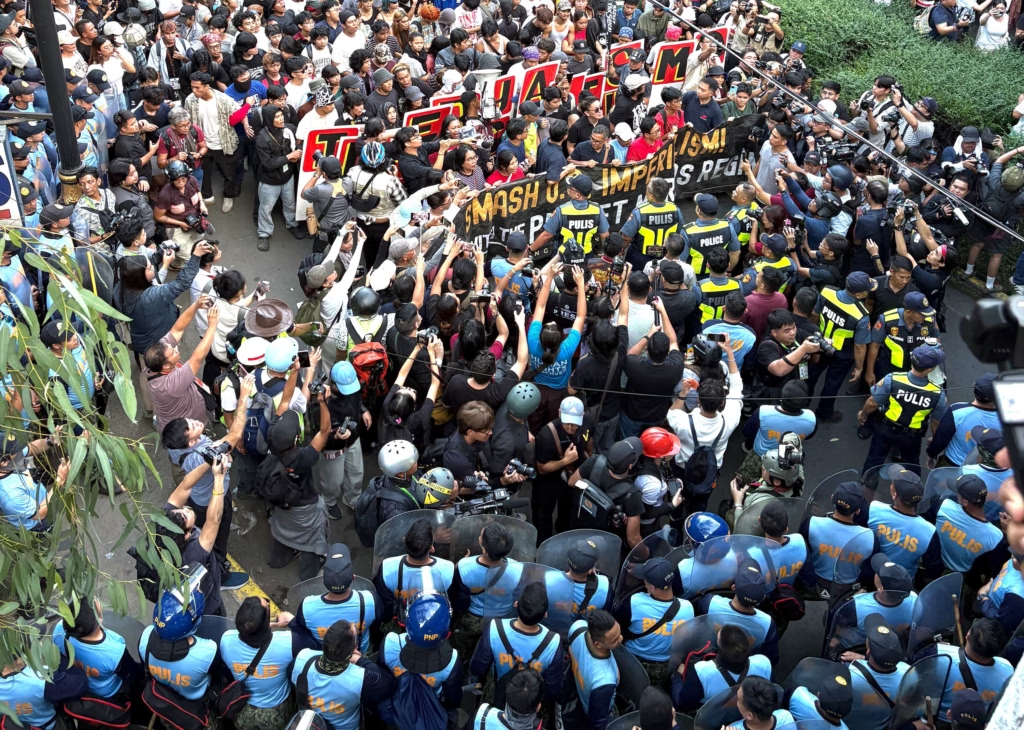
Controversies were not limited to the summit venue as thousands of protestors gathered in Manila to protest US president Trump’s arrival in their opposition against the pax silica plan which is thought to threaten farmer indigenous communities’ lands in search of critical minerals needed for microchips. The crowd carried signs reading “Trump Out Now” and “Reject Pax Silica” as they clashed with police numbers in 5000. According to the Human Rights Watch, the police detained at least 245 protestors.
Protest unfolds in metro manila during ASEAN summit. Source : Human Right Watch
Filipino netizens also pointed out the government’s efforts in rushed efforts to “pretty up” metro Manila ahead hosting foreign guests and even covering up slums with dry wall installations, calling it performative and some jeering it at as ‘Great Wall of the Philippines.’
Jasmine Pingol is an Archipelagic Southeast Asia columnist for Southeast Asia Analyst, based in Manila.